Thailand's SEC Proposes a 5-Million-Baht Daily Cap on Stablecoin Transfers, Aimed Squarely at USDT
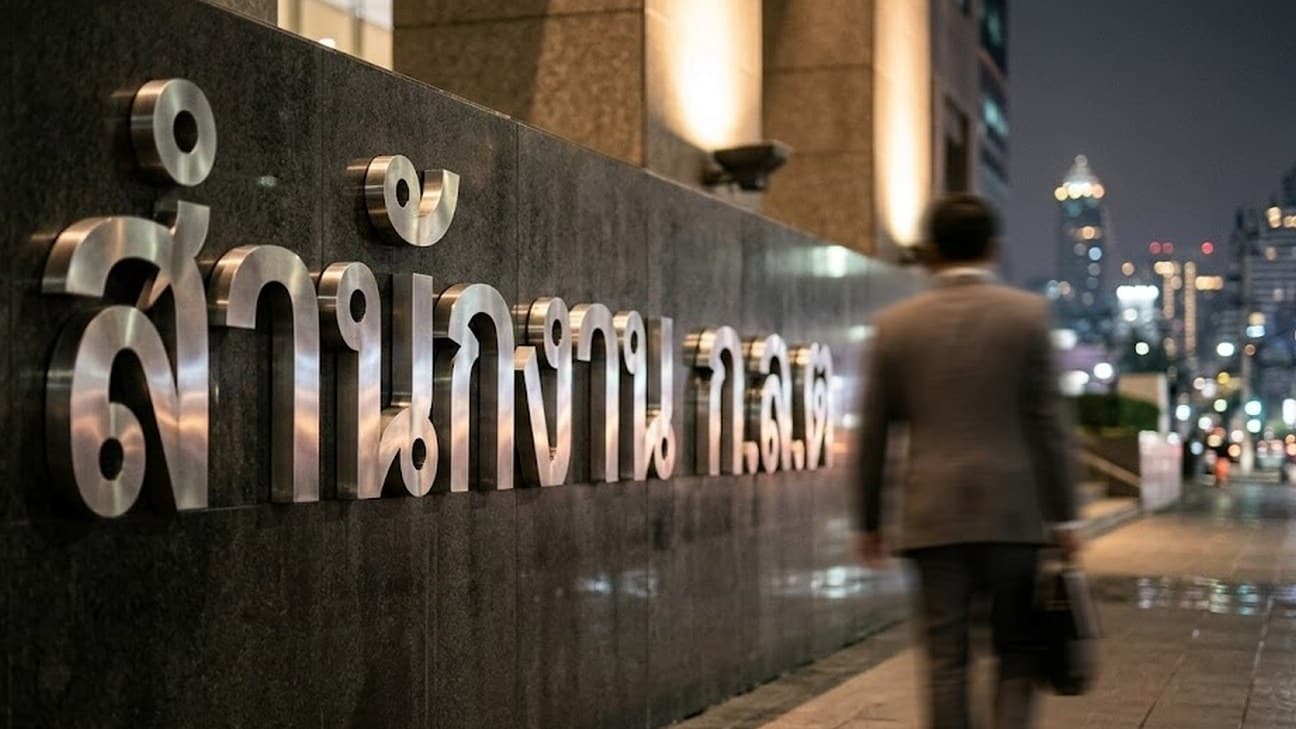
Thailand's Securities and Exchange Commission opened a public consultation on September 11 on new rules that would cap stablecoin transfers through regulated digital-asset operators at 5 million baht (approximately $151,550) per person, per operator, per day — applied separately to inbound and outbound transfers — according to Coin Turk and Crypto Times. The core mechanism is a same-owner rule: deposits and withdrawals could only move between accounts or wallets independently verified as belonging to the same customer, effectively banning third-party transfers through regulated platforms. Peer-to-peer wallet transfers outside those platforms remain untouched by the proposal. The consultation runs through September 25, after which the SEC is expected to finalize the rules.
SEC Deputy Secretary-General Jomkwan Kongsakul said the trigger was an abnormal rise in stablecoin transaction volume, with USDT alone accounting for roughly 50% of Thailand's crypto turnover. The proposed 5-million-baht threshold mirrors Thailand's existing cash-withdrawal limits. Operators would also have to run Travel Rule screening on both ends of a transfer, apply mule-account and watchlist detection, and verify transfer sizes against a customer's documented income. Exemptions would apply to inter-operator transfers where both sides implement the Travel Rule, to business transfers by licensed operators, and to Bank of Thailand-supervised institutions and market makers on a case-by-case basis; full Travel Rule implementation is separately targeted for February 27, 2027.
Fitch's Islamic-Finance Crypto Scorecard Puts Malaysia Ahead on Regulatory Clarity, Behind the UAE on Bank Participation
Fitch Ratings said on September 16 that Malaysia's regulatory framework and formal Shariah rulings give digital assets a clearer route into the country's Islamic-finance market than in most other jurisdictions it tracks, according to The Star. The Securities Commission's Shariah Advisory Council classified Bitcoin, Ethereum, XRP and Stellar as Sharia-compliant between 2020 and the first half of 2026, treating qualifying digital assets as "mal," or property, under Islamic law. Trading value on Malaysia's regulated digital-asset exchanges rose 23% year over year to more than $4 billion in 2025, with ten licensed operators — exchanges, custodians and initial-exchange-offering platforms — in place by mid-2026, though that volume is still just 2.5% of the value traded on Malaysia's domestic equity market. Fitch noted Malaysian banks have so far limited themselves to servicing licensed digital-asset operators rather than offering trading, custody or financing directly (Layer 7 covered Malaysia's side of this report in its September 16 daily brief).
The fuller report, covered separately by Nukta, benchmarks Malaysia against the Gulf's Islamic-finance centers. The UAE is the largest by activity: transaction volumes across entities regulated by Dubai's Virtual Assets Regulatory Authority reached nearly $680 billion in 2025, assets under management topped $2.5 billion, and more than 55 virtual-asset service providers were licensed by September 2026. Unlike Malaysia, some conventional and Islamic banks in the UAE have begun offering crypto brokerage and custody directly, following a 2025 ruling from the UAE's Higher Shari'ah Authority that dealing in Bitcoin is permissible. Bahrain trails both, with nine service providers and a first licensed stablecoin issuer as of June 2026; Qatar has built more digital-asset infrastructure than actual trading activity; and Saudi Arabia has not enacted crypto legislation at all. Fitch flagged that Islamic scholars remain divided on crypto's compliance status generally, and that a recent Pakistani fatwa declaring cryptocurrencies non-compliant with Sharia principles could constrain adoption elsewhere absent a harmonized ruling from international Islamic finance standard-setting bodies.
Ikhlas Capital Closes a $370 Million Second Fund, Widening Its Roster of Sovereign and Pension LPs
Ikhlas Capital, the Singapore-headquartered, pan-ASEAN growth-equity platform, has closed its second fund at $370 million, up from roughly $250 million in its first fund, which backed at least eight regional investments, according to DealStreetAsia and The Philippine Star. The firm — with on-the-ground teams in Kuala Lumpur, Jakarta and Manila alongside its Singapore base — draws its anchor LP base from three of the region's largest state-linked institutional investors: Singapore's Temasek, Malaysia's Employees Provident Fund (EPF) and Malaysia's Kumpulan Wang Persaraan (KWAP). Founding partners include Nazir Razak, the former CIMB Group chairman; Kenny Kim, CIMB's former group CFO; Gita Wirjawan, Indonesia's former trade minister; and Cesar Purisima, the Philippines' former finance secretary.
Ikhlas has already used the enlarged fund to back Philippine deals, including roughly $18 million into cold-chain logistics operator Glacier Megafridge and $21 million into Bank of Commerce. "Given that we've just raised our second fund, we are looking for more opportunities here in the Philippines," Razak said, describing the firm's model as backing companies in one ASEAN market with the capital and networks to expand into neighboring ones: "You can imagine a good business here in the Philippines that wants to go to Indonesia and wants to expand to Malaysia or Singapore."
Eyes on the Week Ahead
Thailand's SEC public-comment window on the stablecoin transfer-cap proposal closes September 25 — the clearest near-term date for exchanges and payment operators to push back on the same-owner rule or the 5-million-baht threshold before it hardens into final rules. Separately, watch for any movement on Vietnam's crypto-exchange licensing process: five applicants cleared initial review months ago, but the Ministry of Finance has yet to issue Vietnam's first license, and that decision starts a six-month clock before domestic traders on unlicensed platforms face enforcement.
Layer 7 Ventures is a research-driven firm focused on AI and cryptocurrency in Southeast Asia. Views expressed are those of the firm and do not constitute investment advice.