Malaysia's Budget 2027 Directs RM450 Million to Startups and RM270 Million to Crowdfunding and P2P Platforms
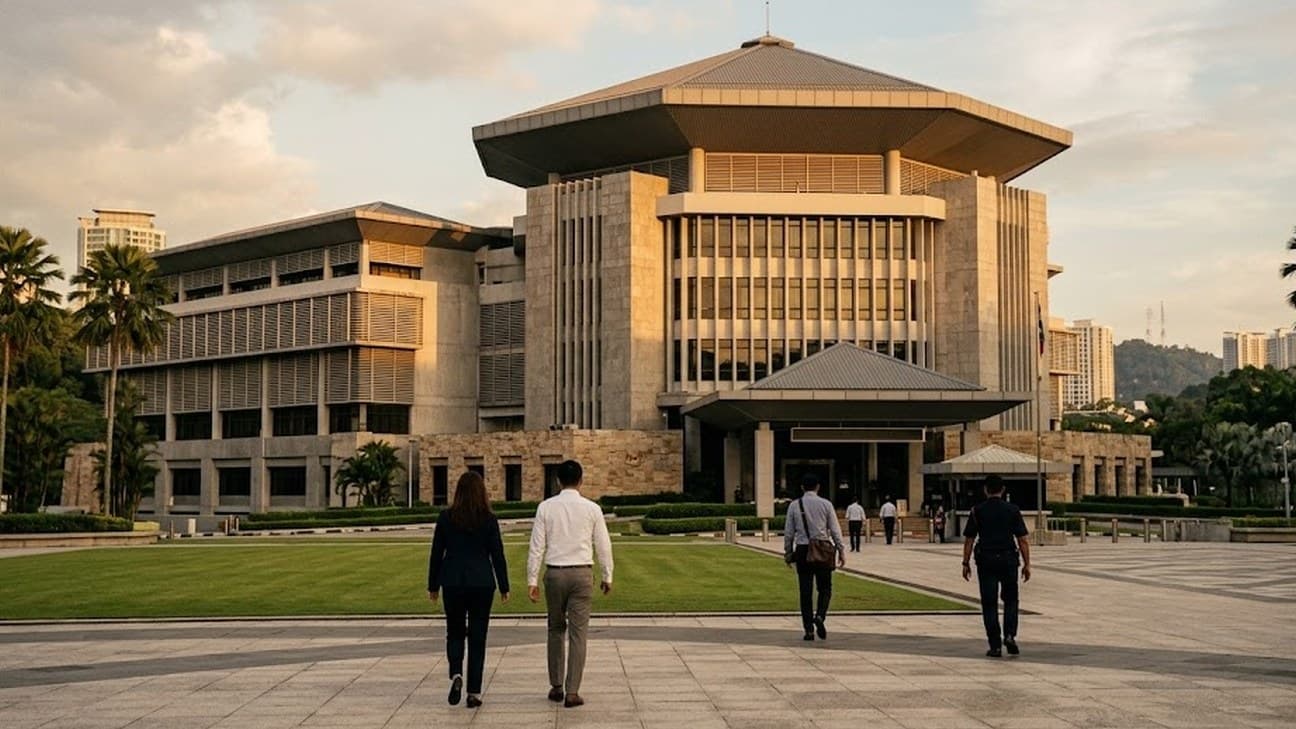
Prime Minister and Finance Minister Anwar Ibrahim told the Dewan Rakyat on 9 October 2026 that Khazanah's Jelawang Capital, Malaysia's National Fund of Funds, and KWAP's Dana Perintis will invest MYR450 million (about US$110.4 million) in developing startups. Separately, MYR270 million is earmarked to support SMEs, mid-tier companies and social enterprises, with private capital to be drawn in through equity crowdfunding (ECF) and peer-to-peer (P2P) platforms. A further MYR41 million goes to Cradle Fund to implement the Malaysia Startup Ecosystem Roadmap.
The tax settings matter as much as the headline sums. P2P loan agreements will carry a fixed stamp duty of RM10 from 1 January 2027 to 31 December 2030, and income tax exemptions for individual ECF investors and for catalytic investors in early-stage technology startups run to 31 December 2030. The Budget speech did not say how the RM270 million will be distributed or which agency will oversee it. The Securities Commission regulates both channels, having introduced its ECF framework in 2015 and its P2P framework in 2016.
Securities Commission Returned RM1.98 Million to 239 Investors in 2025, With RM8.6 Million Set Aside for 933 More
Second Finance Minister Amir Hamzah Azizan told the Dewan Rakyat on 8 October that the Securities Commission Malaysia returned RM1.98 million to 239 investors in 2025 through enforcement action against capital market offences, as reported by Bernama. A further RM8.6 million has been allocated for restitution involving 933 investors.
The same enforcement record shows nine criminal convictions in 2025 with courts imposing fines totalling RM13.1 million, civil court orders for disgorgement and penalties totalling RM2.1 million, and regulatory settlements of RM9.08 million. Over 2024 and 2025, the SC and the Malaysian Communications and Multimedia Commission blocked or suspended 328 websites, 388 Telegram accounts and 60 telephone numbers linked to financial fraud and fraudulent investment schemes.
UOB and AWS Sign an MoU to Explore a Dedicated Singapore Cloud Environment for Its Five ASEAN Markets
UOB signed a memorandum of understanding with Amazon Web Services on 9 October to explore a dedicated cloud environment in Singapore, as part of a proposed hybrid infrastructure model for banking across ASEAN. The design would run UOB's systems and data across on-premises and cloud environments, with an isolated cloud extension that could be deployed in specific countries to meet local rules. Initial focus areas are hybrid cloud architecture, data analytics and AI-powered customer engagement.
UOB would also explore Amazon Bedrock to build on its Enterprise GenAI Platform for conversational banking, personalised services and employee productivity tools, plus AWS training programmes in cloud, GenAI, security and compliance. The companies describe it as the first AWS collaboration with a bank to combine hybrid cloud capabilities in ASEAN with controls tailored to banking regulations. This is an MoU to explore: no financial terms, deal value or timeline were disclosed.
Eyes on the Day Ahead
No dated deadline falls in the next 24 to 48 hours in the sources reviewed, so this looks a few days out instead. The open items are the Budget 2027 mechanics that remain unspecified, namely how the RM270 million for ECF and P2P platforms will be distributed and by whom, and the scope and timeline of the UOB and AWS collaboration. Neither has been scheduled.
Layer 7 Ventures is a research-driven firm focused on AI and cryptocurrency in Southeast Asia. Views expressed are those of the firm and do not constitute investment advice.