Grab Caps Its Combined Take in Vietnam at 32% and Commits About US$112 Million After a Competition Commission Review of Its Fares
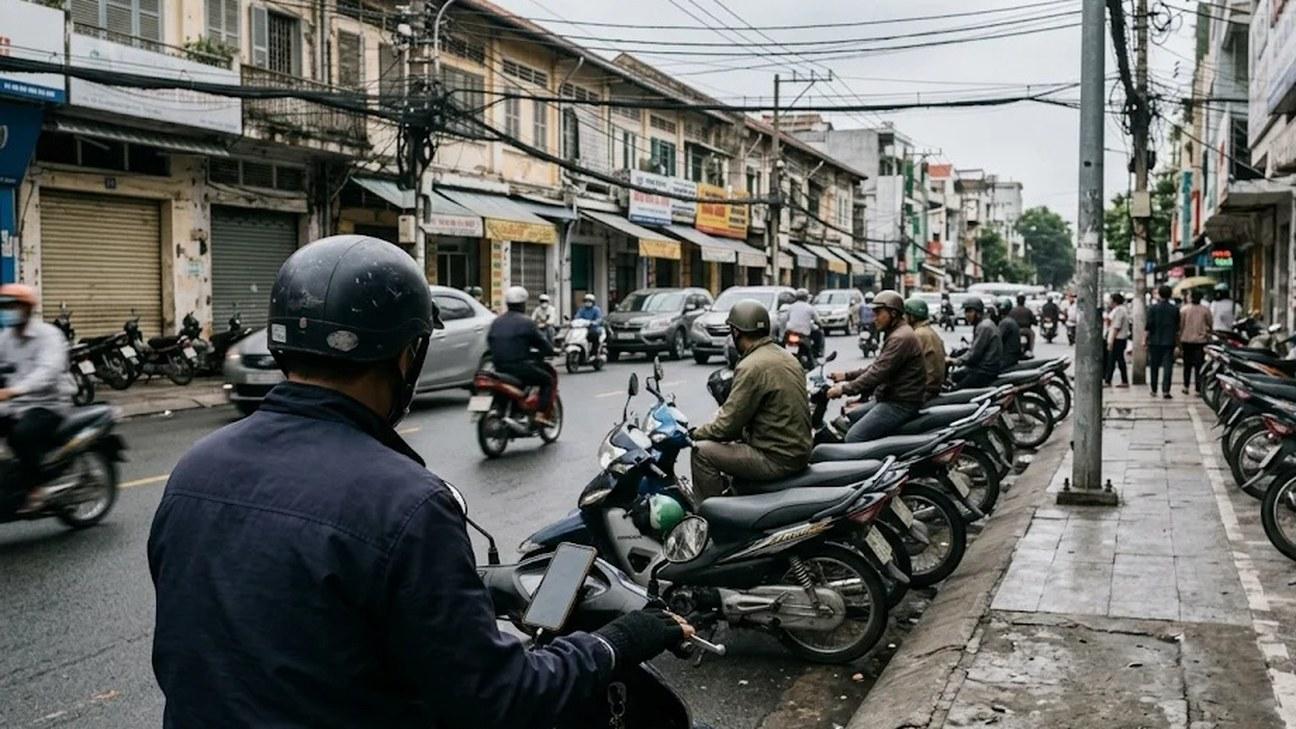
Grab will provide a package worth VND2,950.9 billion (about US$112 million) in fee cuts, driver refunds and incentives, and passenger promotions in Vietnam from November 10, TNGlobal reported on November 5. The package follows a review of Grab's fare calculations by Vietnam's National Competition Commission, which said in a statement that Grab would "proactively" provide it. The review came after drivers called a two-day boycott in September, saying fares on some trips had fallen while deductions grew.
The core change is a ceiling. Grab's total take, combining platform and app-usage fees, will be capped at 32% of passenger payments, down from maximums of 40.60% for GrabBike and 39.81% for GrabCar. The driver app-usage fee range falls from 0-28.76% to 0-25% for GrabBike and from 0-28.28% to 0-25% for GrabCar. After fees and taxes, drivers will keep 60.59% to 85.59% of passenger payments on GrabBike and 59.68% to 84.31% on GrabCar. Passengers get lower platform fees on short trips (up to 6 km on GrabBike and up to 4 km on GrabCar) and 10% off fares on trips of 10 km or more from February 26 to December 31, 2027.
Grab also reviewed about 0.13% of trips since 2024 in which deductions exceeded 35% of shared revenue and will pay VND3.9 billion to affected drivers, attributing the excess to supply-demand swings or algorithm errors. Its fourth-quarter 2026 spending includes VND860 billion for driver incentives, meals, uniforms and hardship support, VND52 billion for fuel and EV charging support, and VND1,808 billion for passenger promotions. A redesigned driver app will show revenue, fees, taxes and deductions for each trip, alongside more contact channels and a dispute form.
Zetrix AI's MyEG Contests RM353 Million in Income Tax Assessments, Opening a Third Government Front Beside the JPJ Claim and the Reported SC Inquiry
MyEG Services, a wholly owned subsidiary of Zetrix AI Berhad, is challenging RM353.13 million in additional income tax assessments, including penalties, issued by the Inland Revenue Board (IRB) for the years 2021 to 2023, Fintech News Malaysia reported on November 2. Of that, RM333.11 million relates to transfer pricing and RM20.02 million to deemed interest, both including penalties. Zetrix AI disclosed the matter in a Bursa Malaysia filing; MyEG received the IRB letter on October 28. The letter also said the government had filed a civil suit against MyEG over the matter. MyEG has appealed the assessments to the Special Commissioners of Income Tax, is seeking an amicable resolution with the IRB, and says it is "confident in its position."
The tax dispute lands on a company already fighting on other fronts. The Road Transport Department (JPJ) suspended Zetrix AI and MyEG's collection services on October 5, and the government has announced plans to take legal action over RM314 million in unpaid collections; on October 29 Zetrix AI said it had not received an official government letter about that action. The Edge Malaysia has reported, citing sources, that Securities Commission Malaysia (SC) officials visited Zetrix AI's headquarters in connection with an investigation; the SC declined to comment. Our October 29 weekly covered the covenant breach on the company's RM2 billion sukuk programme; the November 2 report carries no update on the sukukholder negotiations.
Malaysia Carries Southeast Asia's IPO Market as Indonesia's Pipeline Collapses From 23 Listings to 7
Southeast Asia recorded 56 IPOs raising a combined US$3 billion in the first nine months of 2026, against 76 listings raising US$3.45 billion a year earlier, according to EY figures reported by TNGlobal on November 5. Malaysia recorded 38 IPOs raising US$1.62 billion, up from 37 listings raising US$992 million. Singapore had 8 IPOs raising US$1.28 billion, against 7 raising US$1.54 billion. Indonesia fell to 7 IPOs raising US$121.3 million from 23 raising US$919.6 million, and Thailand to 3 raising US$21.3 million from 8 raising US$57.6 million. In the third quarter alone, the region recorded 20 IPOs raising US$500 million, against 26 raising US$2.1 billion in the same quarter of 2025. The figures do not cover the Philippines or Vietnam.
EY ASEAN IPO Leader Chan Yew Kiang said regulatory reforms and a muted economic outlook had dampened listing sentiment in the second quarter, and that conflicts in the Middle East had led IPO aspirants to take a more cautious approach. EY also cited a US Federal Reserve rate hike and weak post-IPO performance. Chan said Singapore's Equity Market Development Program had added liquidity but that corporates must do more on liquidity and post-IPO performance. Ernst & Young PLT's Nghia Trung Nguyen said Malaysia's stronger proceeds point to continued investor appetite for quality companies with strong growth prospects, and that investors are becoming more selective.
Two of the week's policy and pipeline signals sit against these numbers. Singapore will move prospectus review for Mainboard and Global Listing Board applications from MAS to SGX RegCo from January 4, 2027, with a single submission and a six-to-eight-week target, which our November 4 daily covered. In the Philippines, outside EY's dataset, digital bank Maya now targets a 2027 IPO with its listing venue still unresolved, which our November 1 daily covered.
TNB, IOI and a 12-SME Consortium Plan 500 MW of Solar With 1,000 MWh of Storage Under Malaysia's Corporate Green Power Scheme, as Singapore Insurers Pool US$200 Million for Data Centre Risk
Tenaga Nasional Bhd (TNB) disclosed in a bourse filing that its wholly owned TNB Renewables (TRe) will develop a 500 MW solar photovoltaic project paired with a 250 MW/1,000 MWh battery energy storage system in Bahau, Negeri Sembilan, TNGlobal reported on November 3. TRe will hold 70%, IOI Corporation's wholly owned Luminous Aspect 25%, and CSP 500MW Sdn Bhd, representing a consortium of 12 small and medium enterprises, 5%. A special purpose vehicle, Bahau Energy Ventures, has been incorporated as the renewable energy developer under the Corporate Renewable Energy Supply Scheme (CRESS), which lets developers supply renewable electricity directly to corporate consumers over the open-access network in Peninsular Malaysia.
The project will be funded through shareholder equity and third-party project financing at a debt-to-equity ratio of up to 80:20, and TNB will inject up to RM424.4 million into TRe. The developer's board has seven directors, four appointed by TRe, two by Luminous and one by the SME consortium, and TRe will act as lead shareholder and asset manager. IOI and the SME consortium may bid for civil, mechanical, electrical, installation and commissioning works, subject to TNB's procurement requirements. No offtakers, construction dates or commercial operation date were disclosed, and the filing does not mention data centres.
The demand side is visible elsewhere in the same state and in Johor. In Negeri Sembilan, Google has said it will pay for all power its planned Port Dickson campus uses and is working with consortiums led by Shizen Energy-Solarvest and TotalEnergies on power purchase agreements that add new clean power to the grid, which our November 2 daily covered alongside its US$160 million water project. In Johor, Princeton Digital Group's approximately US$1.3 billion financing for its 200 MW JH1 campus was structured as green financing, which our November 4 daily covered. On the risk side, insurers in Singapore plan to pool US$200 million in capacity for data centre risks across Asia, covering construction, operational, supply chain, design and cybersecurity risks, Fintech News Singapore reported on November 4; MSIG, Gallagher Re, SCOR, Samsung Re and the Cybersecurity Association Singapore were expected to formalise the facility by memorandum of understanding that week. Minister for National Development and MAS Deputy Chairman Chee Hong Tat, who announced it, cited projected Asia-Pacific data centre capacity growth from about 32 gigawatts to 57 gigawatts by 2030 and existing coverage that remains fragmented.
Sources
- TechNode Global — TNB, IOI Corp, SMEs to develop 500MW solar project in Negeri Sembilan
- TechNode Global — Google to invest $160M in shared water infrastructure in Negeri Sembilan for data center
- Layer 7 Ventures — SEA Daily Brief, November 2 2026 (Google water and power commitments)
- Layer 7 Ventures — SEA Daily Brief, November 4 2026 (Princeton Digital Johor financing)
- Fintech News Singapore — Singapore Insurers Plan US$200 Million Facility for Data Centre Risks
FPT Starts Trial Runs at Vietnam's First Domestically Owned Chip Test Plant as the Country Builds Out the Back End of the Chain
FPT said its chip testing plant in Yen Phong II-C Industrial Park, Bac Ninh province, had begun trial operations, TNGlobal reported on November 3. Operated by FPT Analysis Technologies, the 1,600-square-metre plant has six testing lines with a maximum design capacity of 300 million chips a year, running in a Class 10,000 (ISO Class 7) cleanroom. It handles functional testing, in which automated test equipment checks chip functions and performance and handlers sort chips into pass and fail groups, and reliability testing under high temperatures, temperature cycling and combined heat and humidity. FPT describes it as the first plant of its kind in Vietnam owned and operated by a domestic company. FPT announced the plant in January 2026, and a second phase planned for 2028 to 2030 would expand it to about 6,000 square metres with more testing and packaging lines. No investment amount, customer or commercial start date was disclosed.
For scale, FPT reported consolidated revenue of VND40,023 billion for the first nine months of 2026, up 12.4%, and pre-tax profit of VND8,770 billion, up 17%, with its technology bloc contributing 89% of revenue. The plant sits alongside two other recent steps in Vietnam's semiconductor build-out: Viettel and the Government Cipher Committee's 28nm VGC v1.0 security chip, unveiled the same day and covered in our November 3 daily, and Samsung Electro-Mechanics Vietnam's retooling to make substrates for AI servers, covered in our October 29 weekly.
Sources
- TechNode Global — Vietnam's FPT starts trial operations at chip testing-packaging plant
- Layer 7 Ventures — SEA Daily Brief, November 3 2026 (Viettel VGC v1.0 chip)
- TechNode Global — Korea's Samsung to manufacture substrates in Vietnam to serve AI servers, large data centers (covered in our Oct 29 weekly)
Eyes on the Week Ahead
Grab's Vietnam package takes effect on November 10; watch whether the National Competition Commission publishes the findings of its fare review and whether domestic rivals adjust their own fees. In Malaysia, watch for the next Zetrix AI sukukholder meeting on the RM2 billion covenant breach, any formal JPJ legal action, and the progress of MyEG's appeal to the Special Commissioners of Income Tax. Binance's licensing talks with the SC and Bank Negara Malaysia, covered in our November 2 daily, remain without a regulator statement.
In Singapore, watch for the insurers' US$200 million data centre risk facility to be formalised by memorandum of understanding, and note that MAS's proposals on lower capital charges for insurers' infrastructure investments remain open for feedback until December 18. Further out, the Singapore FinTech Festival runs from November 18 to 20, and SGX RegCo's single IPO review takes effect on January 4, 2027.
Layer 7 Ventures is a research-driven firm focused on AI and cryptocurrency in Southeast Asia. Views expressed are those of the firm and do not constitute investment advice.