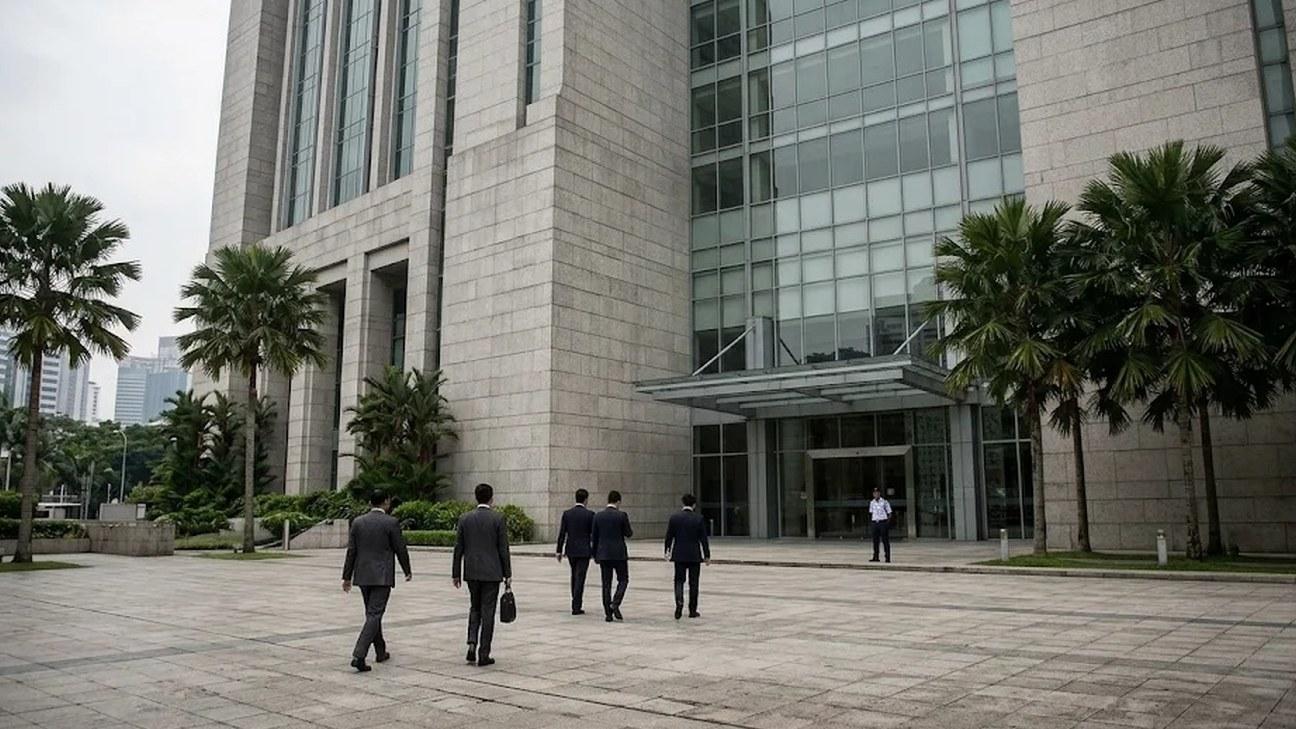
Bank Negara Malaysia, Bank Indonesia, the Bank of Thailand and Bangko Sentral ng Pilipinas Sign a Local Currency Transaction MoU
Four Southeast Asian central banks signed a memorandum of understanding to strengthen the use of local currencies in cross-border settlement, TNGlobal reported on 13 November. The signatories are Bank Negara Malaysia (BNM), Bank Indonesia (BI), the Bank of Thailand (BOT) and Bangko Sentral ng Pilipinas (BSP). The MoU sets up a cooperation framework under the Local Currency Transaction (LCT) Framework, covering bilateral settlement of "trade, investment, and other eligible transactions."
It replaces the bilateral MoUs that BNM, BI and BOT signed in August 2023. The stated aims are more efficient cross-border settlement, lower costs from multiple currency conversions, and more flexibility for businesses managing foreign exchange risk. The report gives no transaction volumes or timelines; the central banks say they will keep developing and implementing the framework, with local currency transactions expected to expand gradually.
Four of Malaysia's Five Digital Banks Posted Wider FY2025 Losses, With GXBank at RM236 Million, as Bank Negara's Foundational-Phase Review Approaches
Four of Malaysia's five digital banks reported wider losses for FY2025 than for FY2024, Fintech News Malaysia reported on 13 November, citing the Malaysia Fintech Report 2026. GXBank had the largest loss at RM236 million. Ryt Bank's loss rose from RM66 million to RM109 million, the biggest increase. AEON Bank and KAF Digital Bank also widened their losses. Boost Bank was the only one to narrow, by RM1 million, to RM68 million. Ryt Bank and GXBank each held about RM1.6 billion in deposits at the end of FY2025.
Digital banks have up to five years in a "foundational phase" to show they can deliver their value propositions. BNM assesses compliance with laws and regulations, at least RM300 million in capital funds not eroded by losses, and progress on the business plan. A bank that meets all three can have its business limitation lifted; one that falls short could face enforcement, including a directive to implement its exit plan. As of July 2026, none of the banks offered credit cards, investment or trade finance products, and GXBank and Boost Bank are each targeting profitability in 2028.
The Bank of England, MAS and Bank of Thailand Complete a Trial of Synchronized Cross-Currency FX Settlement Under Project Meridian FX APAC
The Bank of England, the Monetary Authority of Singapore and the Bank of Thailand completed a trial of synchronized cross-currency settlement under Project Meridian FX APAC, TNGlobal reported on 13 November. The Reserve Bank of Australia and BSP joined as observers, and Partior built and tested the Synchronization Operator prototype. The trial tested payment-versus-payment FX settlement and multilateral net FX settlement across three central banks' test environments, covering both real-time gross settlement (RTGS) and distributed ledger (DLT) based systems.
The central banks concluded that synchronized settlement worked across systems with different technologies and capabilities, and that multilateral net settlement can reduce settlement risk and improve liquidity efficiency. The report gives no quantitative results. Three publications were released, an executive summary, a technical report and a policy report, and future work could extend the approach to more jurisdictions, currencies and industry participants, along with the legal, operational and governance arrangements needed for real-world use.
Eyes on the Day Ahead
No confirmed regulatory deadline falls in the next 24 to 48 hours, so this looks to the next five days. Watch for whether any of the four central banks publishes its own statement or implementation detail on the Local Currency Transaction MoU, and for any BNM comment on digital bank capital ahead of the foundational-phase reviews. The Project Meridian FX APAC reports are now published, so commentary from participating central banks may follow.
Layer 7 Ventures is a research-driven firm focused on AI and cryptocurrency in Southeast Asia. Views expressed are those of the firm and do not constitute investment advice.