S&P Puts a Number on Malaysia's Data-Centre Ceiling: a US$20 Billion Funding Gap Its Banks Cannot Bridge — and a Power Bill That Only Grows
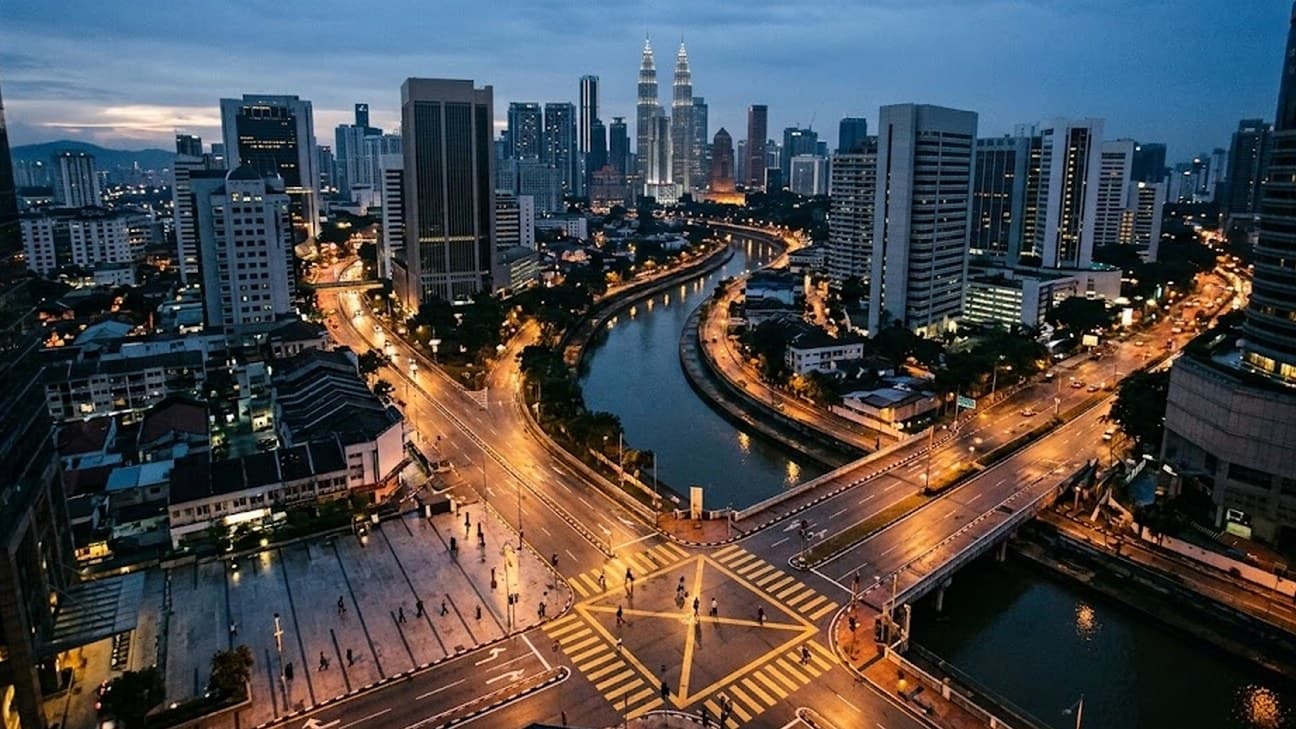
On July 20, S&P Global Ratings published an assessment that reframes Malaysia's data-centre story from a growth narrative into a constraint one. The agency estimates the sector's developers will need more than US$20 billion (about RM81.9 billion) over the next three years to fund powered shells, power and cooling infrastructure, and equipment — a figure that explicitly excludes the cost of the advanced chips that go inside. The daily brief flagged the headline number on July 20; the more consequential detail is where that money is supposed to come from.
S&P's answer is: not primarily from Malaysia's banks. Although the domestic banking sector is well capitalised, the agency notes that sector-concentration limits and the sheer scale of individual projects mean local lenders "might not be able to measure up" to the financing required. Developers will instead have to lean on project financing, private credit, and structured financing such as asset-backed securitisation as more facilities reach completion. In other words, the marginal data centre in Johor will increasingly be funded by international private-credit desks and capital-markets structures rather than by a syndicate of Malaysian banks — a shift in who holds the risk, and on what terms.
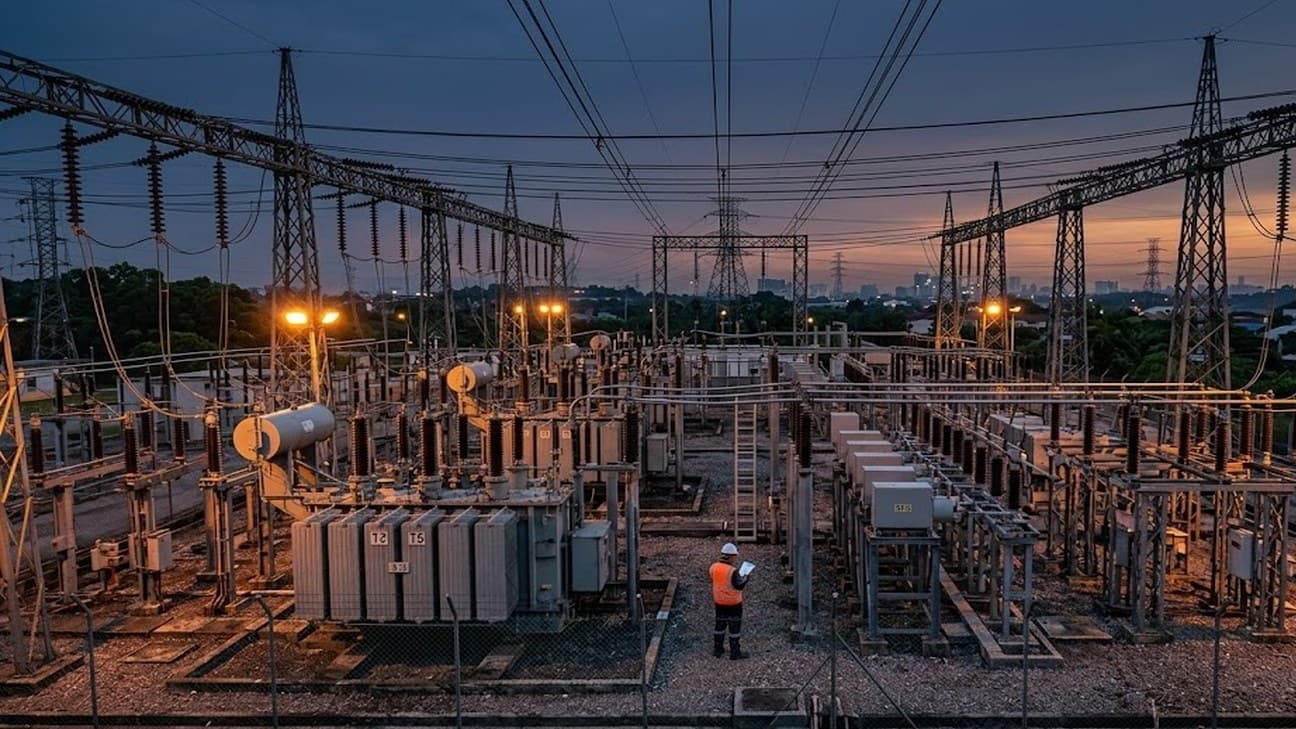
The parallel ceiling is power. S&P projects Malaysia's data-centre capacity to nearly triple by 2030, a roughly 32% compound annual growth rate, with Johor alone holding about 80% of leased capacity. Sustaining that trajectory implies data centres consuming close to 31% of the country's electricity by 2035, up from around 7% today, and national power capacity expanding from roughly 27GW toward 40GW. S&P is blunt that "delays in the planned power or water rollouts would be a growth bottleneck," and that operators with the strongest access to financing will be the ones that pull ahead. Tenaga Nasional has already contracted supply to dozens of operating and under-construction sites totalling several gigawatts of maximum demand.
The competitive backdrop makes the financing-and-power question urgent rather than academic. Across the strait, Indonesia is courting the same capital: on July 14, Australian infrastructure firm Firmus and Singapore's DayOne confirmed a 360MW Nvidia "DSX AI Factory" campus in Batam, part of a national pipeline of about 1.3GW that Jakarta values at US$15–20 billion and that could carry up to US$30 billion in committed offtake over six years, with GPU deployment beginning in early 2027. Malaysia's advantages — proximity to Singapore, connectivity, cheaper land and power than the island — remain real, but they are no longer uncontested, and Batam is being built explicitly to capture demand that Johor's grid or approvals process cannot.
Sources
- The Edge Malaysia — Malaysian data centres need alternative funding for US$20b expansion, says S&P
- The Rakyat Post — Malaysian banks might not have enough money to loan to data centres
- Jakarta Globe — Firmus, Nvidia lead Indonesia's AI data centre push (Batam 360MW campus)
- Layer 7 Ventures — SEA Daily Brief (Jul 20): S&P flags Malaysia's US$20b data-centre financing gap
Nvidia's New Compliance Whitelist Removes More Than Half Its Asian Chip Buyers — and Malaysia Is Named in the Diversion Concern
The supply side of the same AI-infrastructure story tightened sharply this month. According to a Financial Times report carried on July 13, Nvidia has implemented a "whitelist" compliance system for its Asian customers under which more than half of its previous buyers — neo-cloud providers in particular — failed the initial review and were removed from the approved list. The heightened scrutiny is concentrated on three markets central to the region's data-centre boom: Singapore, Malaysia and Japan.
The review process is unusually hands-on for a chip vendor. Nvidia staff now conduct in-person visits to customers' physical data centres to verify that the claimed facilities exist and have the appropriate infrastructure, validate purchase contracts to confirm legitimate end users, and interview the people actually operating the sites. Layered on top is a US Commerce Department guidance issued in May 2026 that adds an ownership test: a buyer must demonstrate that its ultimate parent company is not headquartered in China or another restricted jurisdiction, even if the buyer itself is incorporated in Singapore, Japan or Malaysia. The Commerce Department is providing oversight and political backing for the effort.
Malaysia is not incidental to this. The Commerce Department has specifically flagged concern that Nvidia's cutting-edge Blackwell processors may have been routed to Chinese-linked entities via countries such as Malaysia despite US restrictions — the same trans-shipment worry that led Kuala Lumpur to place high-performance US-origin AI chips on its Strategic Items List and require a strategic trade permit and 30-day pre-notification for their movement. The result is that a Malaysian or Singaporean operator's ability to actually take delivery of GPUs now depends on passing a due-diligence gauntlet that many recently-formed cloud providers cannot.
Cumberland Wins a Full MAS Payment Licence, and Singapore's Licence-the-Compliant, Squeeze-the-Rest Posture Comes Into Focus
On July 13, Cumberland — the digital-assets trading arm of Chicago-based DRW — secured a Major Payment Institution (MPI) licence from the Monetary Authority of Singapore, authorising it to provide Digital Payment Token services and cross-border money-transfer services in the city-state. The full licence follows an in-principle approval granted in March 2026, completing a process that required the firm to satisfy additional anti-money-laundering and consumer-protection conditions. Cumberland framed Singapore as continuing to "set a high standard for digital asset regulation."
The approval reads most clearly as one half of a deliberate two-track policy. In the same period, MAS revoked Bsquared Technology's MPI licence after finding false or misleading statements, weaknesses in risk management, conflict-of-interest controls and outsourcing arrangements — and the regulator has separately flagged anti-money-laundering control gaps across a swathe of Singapore crypto firms, as the daily brief covered on July 16. Set against that enforcement, the licences MAS is choosing to grant — to institutional market-makers and custodians such as Cumberland, BitGo, Coinbase, Anchorage, Gemini and OKX — describe the kind of firm the regulator wants domiciled in Singapore: well-capitalised, institution-facing, and built for compliance rather than retail speculation.
The contrast with the rest of the region is instructive. Indonesia's OJK is still rolling out prudential requirements over exchanges; Vietnam is only now shortlisting five applicants for a capital-heavy pilot; Thailand is building its market around a tourist-conversion sandbox and a still-forthcoming baht-stablecoin framework. Singapore, by comparison, is not building a market so much as curating one — using the MPI licence as a filter that admits the institutional layer of the digital-asset stack while methodically pruning the firms that cannot meet its standards.
Eyes on the Week Ahead
The near-term calendar keeps the AI-and-digital-asset thread running. Malaysia Blockchain Week 2026 lands on July 29–30 at the World Trade Centre Kuala Lumpur, with a speaker roster spanning Tron's Justin Sun, Binance global policy lead Steven McWhirter, Visa's Asia-Pacific digital-currencies head and Anchorage Digital's APAC lead — a lineup that will test how forcefully Malaysia positions itself as a regional Web3-and-AI hub even as its data-centre and chip constraints sharpen. Watch for any Securities Commission or Bank Negara signalling on the sidelines, particularly on the promised end-2026 clarity for ringgit stablecoins and tokenised deposits under the central bank's Digital Asset Innovation Hub.
Further out but worth tracking: Vietnam continues to target a Q3 2026 launch for its regulated crypto-asset market, having shortlisted five exchange applicants that must each meet a roughly US$380 million charter-capital threshold — the first concrete test of whether a capital-heavy, institution-first model can pull the country's large offshore trading volumes onshore. Against Singapore's curated licensing and Malaysia's infrastructure squeeze, Vietnam's pilot is the region's clearest experiment in building a compliant market from a standing start, and its first approvals will set the tone for how quickly that transition happens.
Layer 7 Ventures is a research-driven firm focused on AI and cryptocurrency in Southeast Asia. Views expressed are those of the firm and do not constitute investment advice.