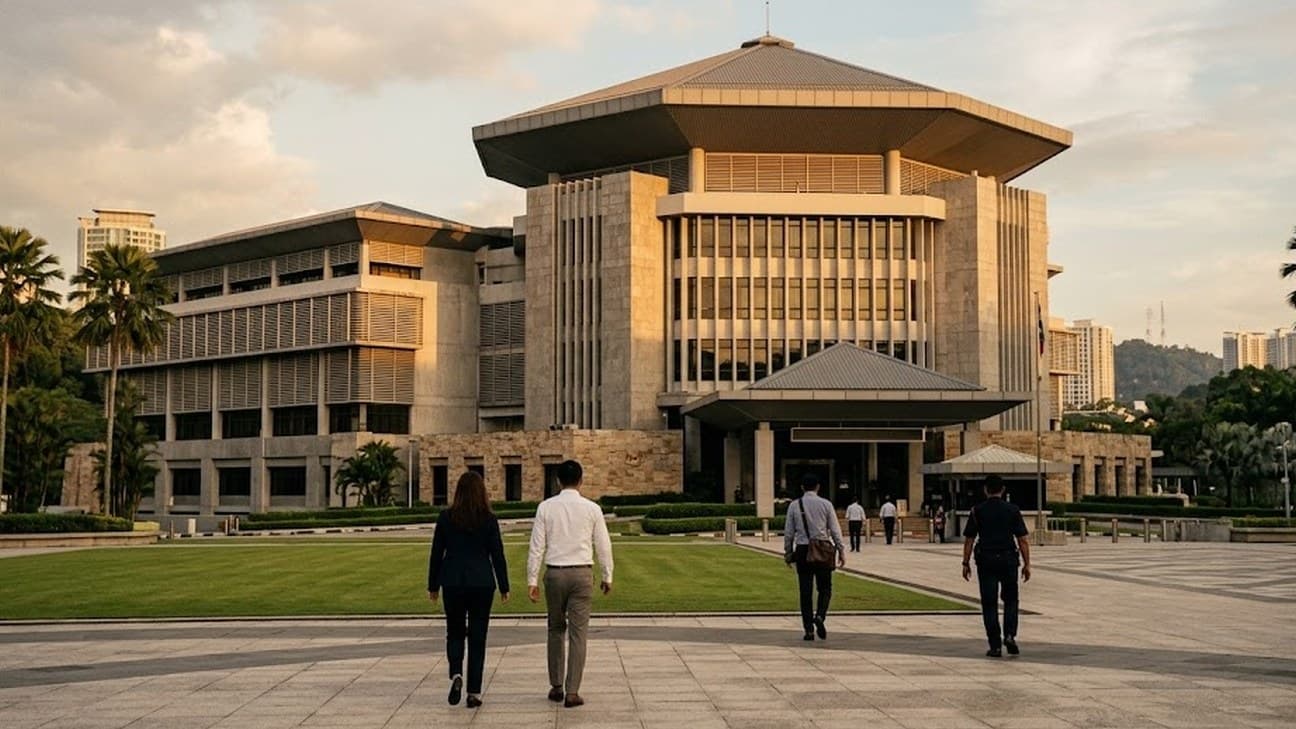
Bank Negara Fines Petronas' Setel and Two Standard Chartered Units RM901,500 Over Sanctions-Screening Failures
Bank Negara Malaysia announced on August 26 that it fined Setel Ventures Sdn Bhd — the e-wallet and fuel-payment subsidiary of national oil company Petronas — RM637,500, and Standard Chartered Bank Malaysia Berhad and Standard Chartered Saadiq Berhad RM132,000 each, for breaches of targeted financial sanctions requirements. A combined RM901,500. BNM found that Setel had not promptly updated its sanctions-screening database after Malaysia's Domestic List was published, failed to comprehensively screen existing customer records against the updated list, and did not adequately investigate potential matches its systems flagged. The regulator attributed the gaps to weaknesses in Setel's standard operating procedures and screening system. The two Standard Chartered entities separately failed to update their own sanctions databases without delay following Domestic List publications, meaning screening ran against outdated data for a period — though BNM confirmed no sanctioned individual or entity was actually onboarded or transacted with at either bank.
The penalties trace back to conduct in and around April 2024. Setel paid its fine on May 6, 2026, and both Standard Chartered entities paid on June 15, 2026; BNM's public announcement came more than two months after the last payment cleared. All three firms say they have since remediated the gaps — Setel through tightened SOPs and system fixes, Standard Chartered through faster database-update cycles and strengthened oversight.
Qualcomm's CEO Tells Vietnam's Top Leader He Wants the Country to Become the Firm's Third-Largest Global AI R&D Hub
Qualcomm CEO Cristiano Amon met Vietnamese Communist Party General Secretary and President To Lam in Hanoi on August 27 and said the company wants to grow its Vietnam presence into its third-largest artificial-intelligence research and development center worldwide. Qualcomm opened an AI R&D center in Vietnam in June 2025 after acquiring the generative-AI research unit of VinAI, a Vingroup subsidiary — one of only three Qualcomm research facilities located outside the United States. Amon said the center's researchers are focused on generative and agentic AI across smartphones, PCs, extended reality, automotive and IoT applications, and noted Qualcomm has invested more than $100 billion in R&D globally to date.
To Lam pressed Amon to go further: expanding long-term investment across AI, semiconductors, robotics, 5G/6G and data centers, strengthening technology transfer and management-expertise sharing with Vietnamese agencies, and deepening cooperation with domestic firms, universities and research institutes so local companies can move up the global supply chain rather than stay confined to assembly work.
CIMB Ends Password-Only Approval, Mandates Biometric SecureTAC for Online Transactions From September 19
CIMB will require customers to approve every online transaction made through CIMB Clicks Web and merchant websites using SecureTAC, its in-app authorization layer, from September 19. Approval will only be accepted via Face ID, fingerprint, or a device passcode entered inside the CIMB OCTO App — password-based approval, previously an option, will no longer be supported. When a customer submits a qualifying transaction, they receive a push notification on their registered device to review and approve or reject it. Customers who have not enabled biometric authentication or a device passcode on their phone will hit an error when they try to approve a transaction, meaning setup is required before the deadline for continued access to online and merchant-site payments.
CIMB frames the change as a fraud-prevention measure: tying transaction approval to something a customer physically has and biologically is, rather than something they merely know, closes off the credential-phishing and account-takeover vector that a reused or stolen password leaves open.
Eyes on the Days Ahead
Nothing with a fixed date lands in the next 24-48 hours, so widen the lens: the International Conference on Fintech Innovations and Digital Finance opens September 8-9 in Hai Phong, Vietnam. Separately, Vietnam's Ministry of Finance still has not set a target date for its first licensed crypto-exchange approval — that decision, whenever it lands, starts the six-month clock after which domestic investors must route covered crypto trading through a licensed local platform, and is worth watching alongside this week's Qualcomm courtship as a second read on how fast Hanoi is willing to move on digital-asset infrastructure versus AI infrastructure.
Layer 7 Ventures is a research-driven firm focused on AI and cryptocurrency in Southeast Asia. Views expressed are those of the firm and do not constitute investment advice.