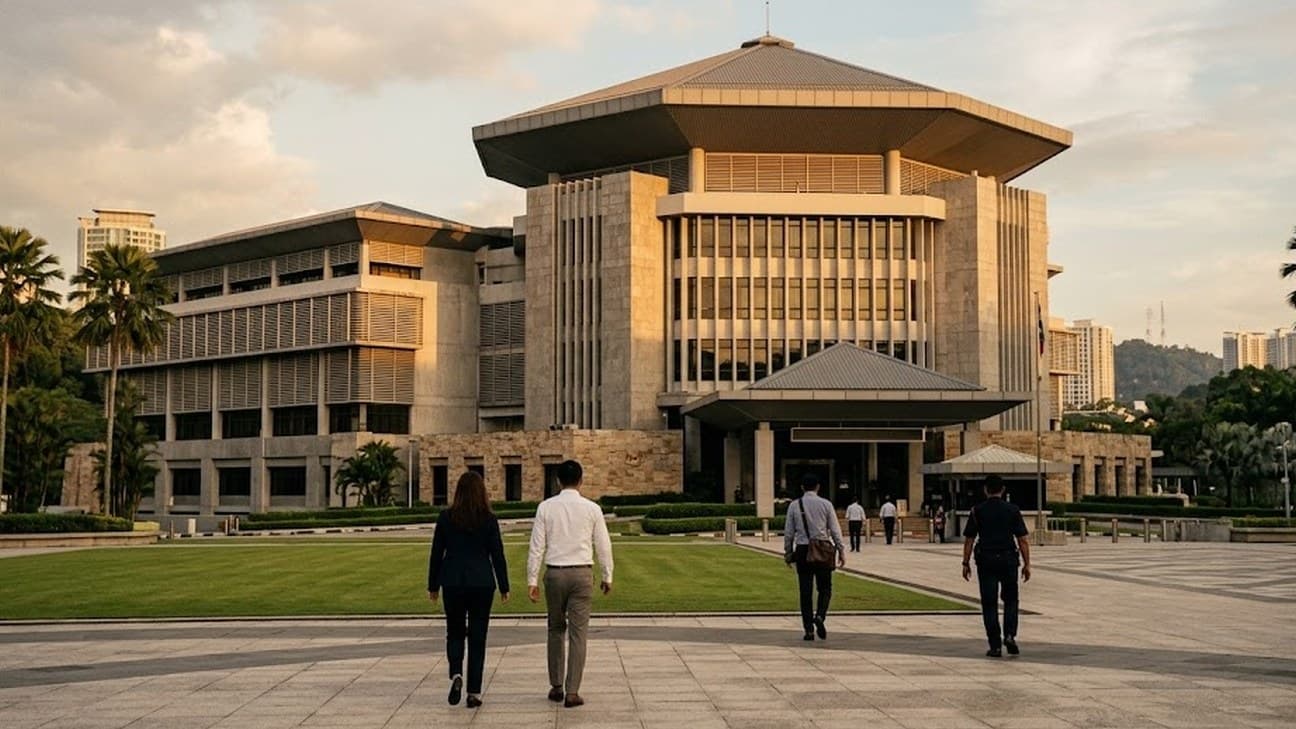
Indonesia's OJK Maps a 2026-2031 Roadmap for Stablecoins, Tokenization and a Single Crypto Investor ID
Indonesia's Financial Services Authority (OJK) laid out its regulatory direction for digital finance and crypto assets through 2031, built around four priorities: elevating licensed crypto service providers to formal financial-institution status, rolling out a Single Investor Identification (SID) system that mirrors existing capital-market identity rules, regulating stablecoins as transaction instruments rather than payment tools in coordination with Bank Indonesia, and finalizing rules for tokenizing real-world assets including gold, government bonds and property rights. Adi Budiarso, OJK's chief executive for financial-sector technology innovation and crypto-asset supervision, framed the direction around a "same activity, same risk, same regulation" principle that would hold digital-asset businesses to governance and risk-management standards comparable to traditional financial firms.
The roadmap comes against a fast-growing base: OJK counted 22.69 million crypto consumers as of June 2026, with monthly transaction value of IDR 28.58 trillion, up 24.2% from May. Budiarso pointed to the scale of what the new rules are trying to catch up to — global stablecoin supply has grown from roughly $200 billion in early 2025 to $317-320 billion in early 2026, while the global real-world-asset tokenization market has grown 256.7% year-over-year to about $33.5 billion.
Singapore's Scam Losses Fall 17.9% to S$410.6 Million in H1 2026, but Crypto Still Drives 16% of the Bill
The Singapore Police Force's Mid-Year Scam and Cybercrime Brief 2026, released August 26, recorded 18,391 scam and cybercrime cases in the first half of the year, down 17.9% from 22,397 cases in H1 2025. Total losses fell by the same margin, to approximately S$410.6 million from S$500.2 million. Investment scams remained the largest category at S$169.8 million, followed by government-official impersonation scams at S$90.8 million and business email compromise at S$57.3 million. Cryptocurrency-related losses fell 43% year-on-year to S$65.5 million but still accounted for 16% of total losses, with Tether, Ethereum and USD Coin the most commonly used assets. The Anti-Scam Centre froze S$97.7 million in scam-linked accounts during the period.
Authorities are proposing fines of up to S$10 million for online services that fail to meet anti-scam requirements under the Online Criminal Harms Act, and are testing recognizable number prefixes for calls from public agencies to make impersonation scams easier to spot.
Alibaba Brings Two Free AI Tools to Malaysia's 100,000-Youth AI Untuk Rakyat Programme
Alibaba Cloud announced on September 2 that it is joining Malaysia's AI Untuk Rakyat initiative as a technology provider, contributing two tools: MuleRun, an AI agent platform for building and deploying workflow-automation agents via natural-language instructions, and WonderClip, an AI video-creation tool covering script analysis, storyboard generation, video synthesis and post-production using Alibaba's HappyHorse, Wan and Qwen models. The programme, run by MyDIGITAL Corporation under Malaysia's Ministry of Digital via the Rakyat Digital platform, targets 100,000 Malaysians aged 18 to 30; participants who complete the required learning modules receive three months of free access to each tool.
The announcement follows AI Untuk Rakyat's Merdeka Day launch on August 31 and builds on Alibaba Cloud's earlier positioning in Malaysia, where the company has described the country as the only Asian market with a "100% AI investment commitment." Alibaba Cloud Malaysia general manager Choong Hon Keat framed the contribution as a way to let "young people from diverse backgrounds create, innovate and participate more meaningfully in the digital economy."
Eyes on the Day Ahead
Bank Negara Malaysia's Monetary Policy Committee meets tomorrow, September 3, to decide the Overnight Policy Rate. Consensus expects the OPR to hold at 2.75%, where it has sat since early 2026, with second-quarter growth of 6% and contained inflation giving the central bank little reason to move either direction.
Layer 7 Ventures is a research-driven firm focused on AI and cryptocurrency in Southeast Asia. Views expressed are those of the firm and do not constitute investment advice.