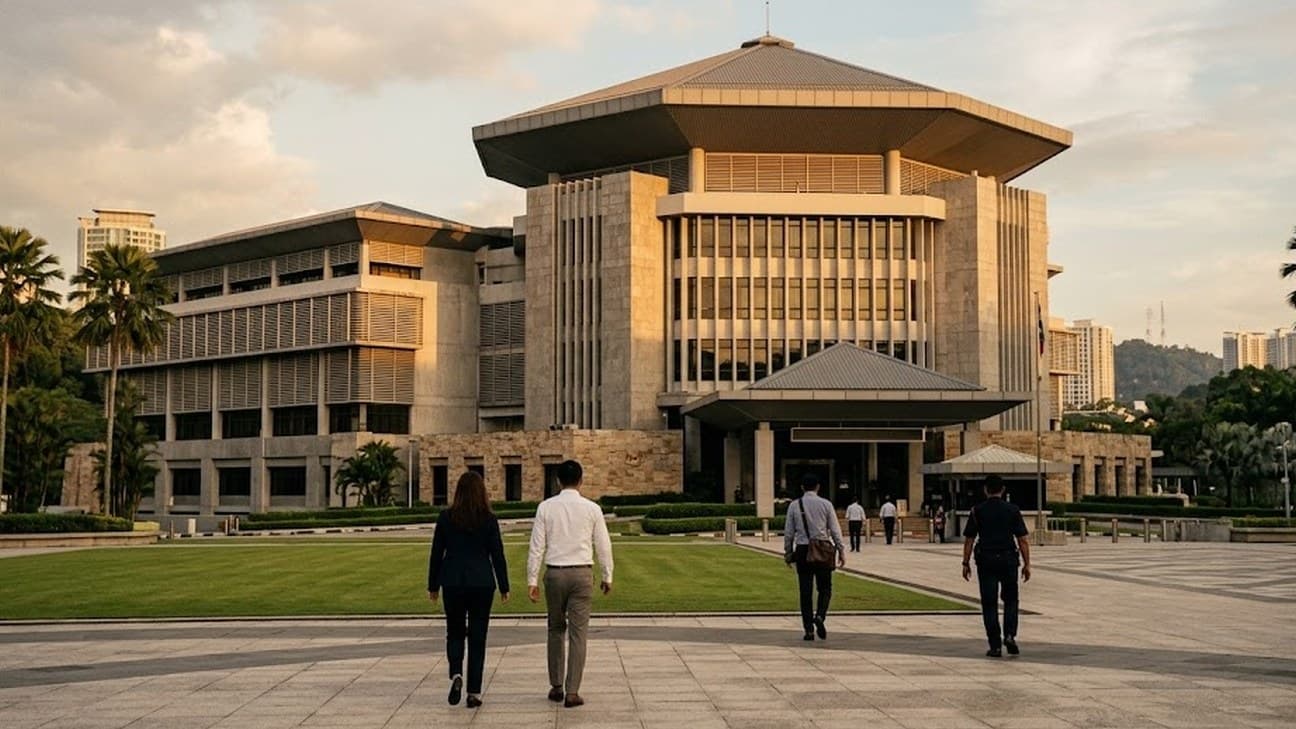
Oxford Economics Puts a Number on Malaysia's Compliance Stack: a 26% Hit to Startup Venture Capital in the Restrictive Case
On July 16, Digital Prosperity Asia (DPA) published a study conducted by Oxford Economics that, for the first time, attaches hard numbers to a complaint Malaysian founders have voiced for two years: that the country's fast-accumulating digital rulebook has become a structural operating cost. Surveying Malaysian startups, venture capitalists and incubators, the study finds that 88% of startups report operational constraints from digital regulations, 81% say the rules have raised their compliance-related costs, and 67% report diverting financial resources away from research and development to meet them. A majority now spend more than 5% of operating costs on compliance, and 39% spend more than 15% — a level of overhead that, for an early-stage company, competes directly with product and hiring.
The headline figure is a modelled projection, and its framing matters. Oxford Economics estimates that under a more restrictive regulatory path, venture-capital funding into Malaysian startups could fall 26% between 2026 and 2035 — roughly RM792 million (about US$170 million) less each year. The mirror case is a more enabling environment, which the model associates with a 6% increase, or around RM198 million more per year. The regulations in question are not hypothetical: the Personal Data Protection Act was amended across 2024–2025 to add breach-notification and data-protection-officer duties, the Cyber Security Act 2024 stood up a separate regulator in NACSA, the Online Safety Act's risk-mitigation code took effect on June 1, 2026, and the AI Governance Bill went to Cabinet in June and opened for public consultation this month. Each is defensible on its own terms; the study's argument is that their cumulative, uncoordinated weight is what founders actually experience.
Two caveats keep this honest, and the weekly should state them plainly rather than launder the number into a verdict. First, DPA is not a neutral source: it is an advocacy coalition whose consistent position is that digital rules should stay light-touch and data should flow freely across borders, so its commissioned research is designed to make the cost of regulation legible. Second, the RM792 million figure is explicitly the downside scenario — a "major change of direction" toward restriction that Malaysia has not adopted — and the study's own recommendation is "not less regulation, but better-designed regulation," pointing at coordination failures between agencies rather than at the existence of rules. This is a warning about how Malaysia regulates, not a case that it should stop.
The context that gives the number teeth is where Malaysia's capital is not going. Southeast Asia's tech funding more than doubled to US$7.4 billion in the first half of 2026, but Singapore captured roughly 94% of it — a concentration that leaves Kuala Lumpur competing hard for the residual. When the marginal Series A can incorporate in Singapore or Kuala Lumpur with near-identical access to regional markets, a compliance overhead measured in double-digit percentages of operating cost becomes a live variable in that choice, not a rounding error.
PolicyStreet Tops Malaysia's Largest Insurtech Round to US$26 Million as Khazanah, Cool Japan Fund and BlueOrchard Back an Embedded-Insurance Thesis
On July 14, Kuala Lumpur-based insurtech PolicyStreet said it had added US$5 million from BlueOrchard — a global impact-investment manager owned by the Schroders Group — to its Series C, taking the round to US$26 million. BlueOrchard deployed the capital through its InsuResilience Investment strategy, which targets climate- and protection-gap risk in emerging markets. The top-up follows the round's initial US$21 million close in April 2026, which PolicyStreet described as the largest insurtech funding round in Malaysia's history. The investor list is the tell on why this matters beyond a single deal: alongside BlueOrchard it includes Malaysia's sovereign wealth fund Khazanah Nasional, Japan's state-backed Cool Japan Fund, and regional venture firms Altara Ventures and Gobi Partners.
PolicyStreet's business is embedded insurance — protection sold not as a standalone policy but built into another company's product, from a ride-hailing trip to an e-commerce checkout to a gig-work platform's onboarding. The company says it has served more than 10 million customers, facilitated over US$10 billion in sum insured, and reached more than 50,000 SMEs across Asia since it was founded nine years ago. Its stated targets are pointed at exactly the segment traditional insurers underserve: 1.5 million gig workers and 300,000 micro, small and medium enterprises by 2030. Nearly one in ten of its current customers is a gig worker — a group that sits at the intersection of insurance's distribution problem and Southeast Asia's thin social-protection net.
The capital use is regional, not domestic consolidation. PolicyStreet says the fresh funding will support growth across the region, strengthen its technology stack, and expand its embedded-insurance partnership network — the distribution flywheel that lets an insurtech reach customers through platforms it does not own. That regional framing is the reason the round belongs in the same read as the regulation story above: a Malaysian company is raising to expand outward across ASEAN, and the presence of both a domestic sovereign fund (Khazanah) and a foreign impact investor (BlueOrchard, via Schroders) signals that capital with a long horizon still underwrites Malaysian fintech that can articulate a cross-border thesis.
Eyes on the Week Ahead
In Malaysia, the file to track is the AI Governance Bill's public consultation, which opened this month — how far the drafters lean toward the coordinated, single-interface approach the Oxford Economics study argues for will tell investors whether the compliance-cost curve bends up or flattens. Watch too for any signal on Bank Negara Malaysia's promised end-2026 clarity on ringgit stablecoins and tokenised deposits under its Digital Asset Innovation Hub, and for further movement on the Bursa Malaysia IPO pipeline after a strong first half, with TNG Digital's mooted listing the marquee name to watch. On the capital-formation question the two features raise, the cleanest forward indicator is simply whether the next large Malaysian fintech round is announced onshore or routed through a Singapore holding company.
Across the strait in Jakarta, a quieter policy shift is worth flagging as a crypto watch item. Bank Indonesia's tightened foreign-exchange rules took effect on July 1: the threshold for buying US dollars without underlying documentation was cut from US$25,000 to US$10,000 per person per month, and the ceiling for undocumented overseas transfers fell from US$50,000 to US$25,000, both framed as measures to defend the rupiah. The second-order question for this readership is whether restricting access to physical dollars pushes savers toward dollar-pegged stablecoins as the path of least resistance — a substitution effect that would sit awkwardly beside Indonesia's own supervisory tightening and is worth watching for in the coming weeks' on-chain and exchange-flow data.
Layer 7 Ventures is a research-driven firm focused on AI and cryptocurrency in Southeast Asia. Views expressed are those of the firm and do not constitute investment advice.