Thailand's SEC Opens Consultation on Spot Bitcoin and Ether ETFs — Listed Only on the SET, With Onshore Custody as the Default
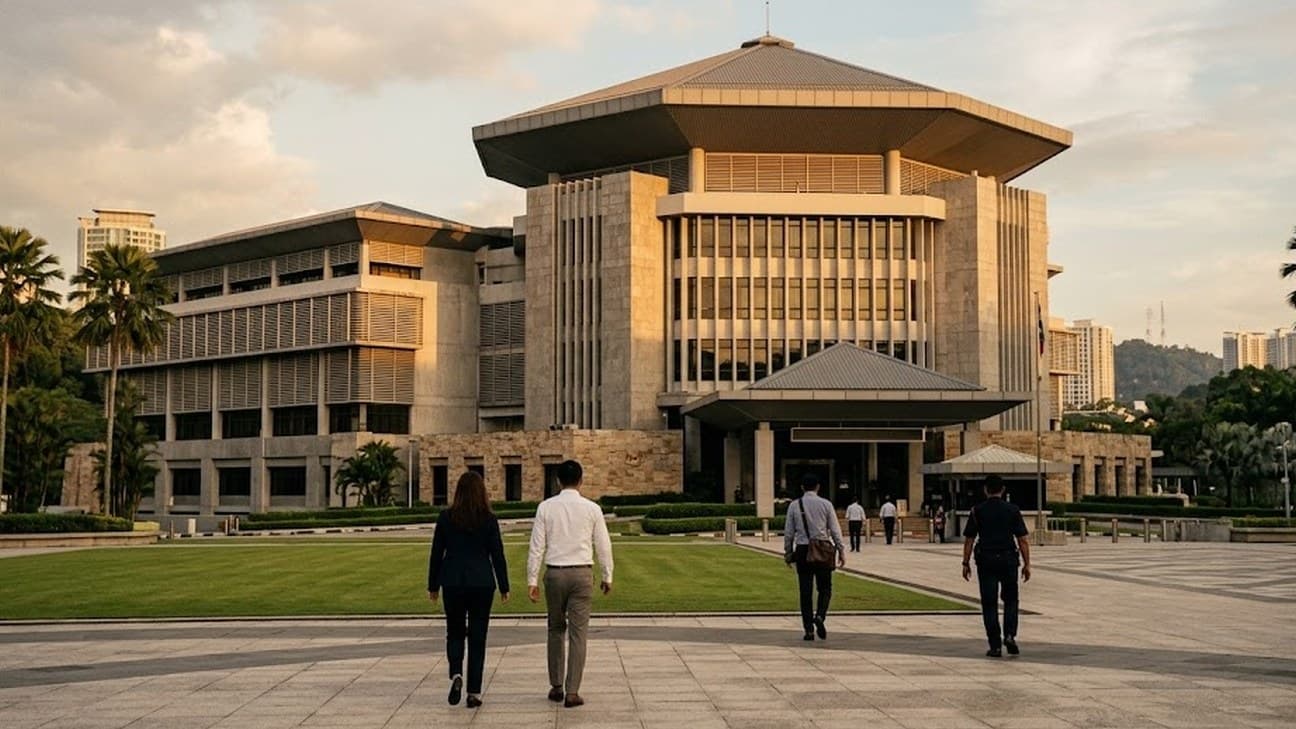
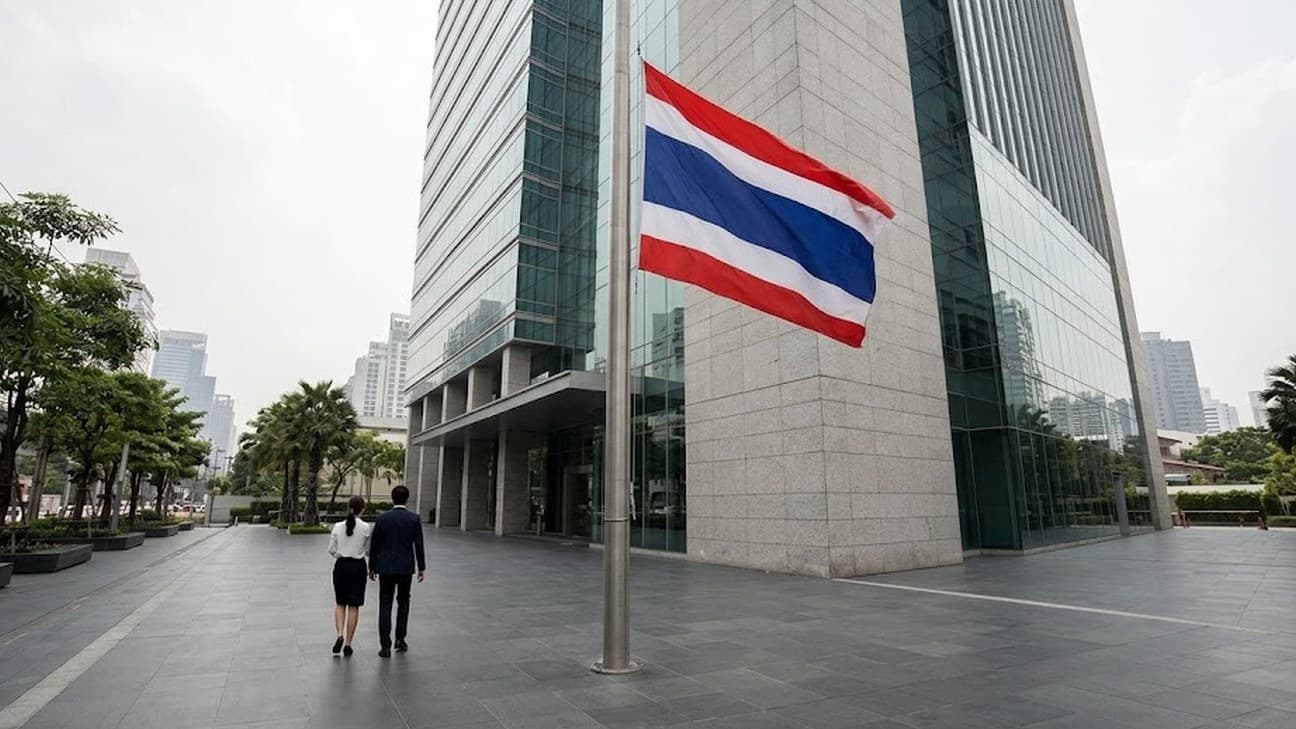
On 25 August, Thailand's Securities and Exchange Commission opened a public consultation on draft rules that would permit spot Bitcoin and Ether exchange-traded funds to list domestically — the most concrete step any major Southeast Asian market has taken toward packaging crypto into a regulated, exchange-traded wrapper. The comment window runs until 20 September, after which the SEC will revise the framework before finalising it. This is a consultation, not an approval: no ETF has been authorised, and the draft may change materially before it becomes rule.
The design is deliberately conservative. Eligible underlying assets are limited, at least initially, to Bitcoin and Ether. The funds would be passive, single-asset vehicles required to maintain an average net exposure of at least 80% of net asset value to the tracked cryptocurrency across each accounting year, and they would trade exclusively on the Stock Exchange of Thailand rather than on the country's licensed digital-asset exchanges. Thai mutual and private funds would be permitted to invest in these domestically listed products, while depositary receipts tied to overseas crypto ETFs remain excluded for now — a choice that keeps the exposure, and the oversight, inside Thailand.
Custody is the other half of the package, and the SEC issued a second, separate consultation paper on it. The default is onshore: domestic digital-asset custodians serve as the primary safekeeping layer in the early phase. Qualified foreign custodians would be permitted only "when necessary and appropriate," and only where their home regulator demonstrates supervision and investor-asset-protection standards the Thai SEC deems adequate. That two-tier structure directly answers custody concerns raised in an earlier April consultation round, and signals the regulator wants the asset base anchored in Thai-supervised entities before it opens the door wider.
The consultation is not a standalone gesture. It sits inside the SEC's 2026–2028 strategic plan, which names spot Bitcoin and Ether ETFs and the formalisation of a crypto-futures market as explicit third-quarter priorities, alongside a broader push on tokenisation being developed with the Bank of Thailand. Thailand is positioning digital assets as a formal investment class routed through its incumbent capital-markets infrastructure — the exchange, licensed asset managers, regulated custodians — rather than leaving that demand to offshore platforms.
Visa Becomes the First Card Network in Singapore's BLOOM Stablecoin-Settlement Project, Piloting Round-the-Clock Settlement With Nium
Also on 25 August, Visa announced it had joined BLOOM — the Monetary Authority of Singapore's initiative to test how regulated stablecoins and tokenised bank liabilities can plug into conventional payment rails. Visa is the first card network to enter the programme, and it did not join empty-handed: it named cross-border payments firm Nium as its first pilot partner, with the stated goal of testing settlement that runs seven days a week, including weekends and public holidays, in stablecoins backed by major currencies such as the US dollar and the euro.
BLOOM — an acronym for Borderless, Liquid, Open, Online, Multi-currency — was launched by MAS in late 2025 to develop settlement systems built on tokenised bank liabilities and regulated stablecoins, and to test interoperability between traditional rails and digital-asset networks. It is deliberately institutional in scope: the stated aim is to expand the settlement options available to banks and other regulated institutions, not to push a retail coin. The roster reflects that. Existing participants include Circle, DBS, OCBC, Partior, Stripe and UOB, and Maybank Singapore recently joined — a mix of card networks, stablecoin issuers, local banks and payment infrastructure that maps the full settlement chain.
The specific friction Visa and Nium are targeting is the settlement calendar. Conventional correspondent-banking rails effectively close on weekends and holidays, trapping liquidity and forcing institutions to pre-fund accounts to keep cross-border payments moving. A regulated-stablecoin settlement layer that clears every day of the week is a direct attack on that idle, pre-funded capital — the reason banks tie up balances they cannot deploy. Visa framed the exercise around whether stablecoins can support faster, more flexible settlement "without compromising security, resilience and compliance standards," which is the qualifier that keeps this inside MAS's supervised perimeter rather than in the open market.
The status to keep precise: this is a pilot inside a regulatory initiative, not a launched settlement product. Nothing here changes how a Visa transaction settles today. What it establishes is that a global card network is now willing to test stablecoin settlement under a central bank's direct supervision — and that Singapore has assembled the counterparties, from issuers to banks to acquirers, to run that test end to end.
Vietnam's National Assembly Folds Crypto-Asset Services Into Its Anti-Money-Laundering Law, Effective 1 December
On 24 August, Vietnam's National Assembly passed amendments to three linked statutes — the Law on the State Bank of Vietnam, the Law on Anti-Money Laundering and the Law on Credit Institutions — with 94.6% of lawmakers voting in favour. The most consequential change for the digital-asset sector is the addition of Article 33a, which for the first time names crypto-asset service providers as reporting entities and sets out 15 specific "suspicious" indicators in the crypto sector. State Bank of Vietnam Governor Phạm Đức Ấn presented the report explaining the amendments before passage; the new rules take effect on 1 December 2026.
The indicators are concrete rather than aspirational. They include multiple large crypto-asset transactions in a short window with no clear business purpose; rapid deposit-trade-withdrawal cycles immediately after an account is opened; the use of identity-masking tools such as VPNs to access platforms; structuring transactions below reporting thresholds; and converting assets into multiple types without a legitimate investment rationale. Where a provider has reasonable grounds to suspect that the assets involved are proceeds of crime, it must file a suspicious-transaction report with the State Bank — and the Ministry of Finance gains inspection authority over crypto-sector reporting entities when the government assigns it.
The sequencing is the notable part. Vietnam's January 2026 Law on the Digital Technology Industry formally recognised crypto assets for the first time, and the government has been assembling a five-year pilot to license a small number of exchanges — a process that has moved slowly, with a VND 10 trillion (roughly US$400 million) charter-capital bar deterring applicants. The AML amendment arrives ahead of those licensed venues, applying a compliance perimeter to a market that is already vast in practice: local officials cite roughly 17 million digital-asset traders and more than US$120 billion in annual transaction value. Vietnam is choosing to install the reporting obligations before, not after, it formally opens the regulated market.
The Region's Scam Economy Is Migrating, Not Shrinking — and AI Is Cutting Its Costs
The week's regulatory tightening did not happen in a vacuum. Fresh reporting on 21 August underscored why Southeast Asian regulators are racing to bolt down the financial-crime perimeter: the region's industrial-scale online-scam economy is adapting to enforcement faster than enforcement can shut it down, and artificial intelligence is lowering its operating costs. As crackdowns — many driven by US pressure — displace operations out of established hubs in Cambodia and Myanmar, the networks are reconstituting elsewhere rather than disbanding, with Sri Lanka emerging as one clear destination for the displaced tail of the industry.
The scale is the reason this belongs in a fintech briefing at all. The UN Office on Drugs and Crime, in its February assessment, estimated that roughly 300,000 people are working in scam operations across Southeast Asia, with trafficked workers drawn from at least 66 countries and 74% of identified compounds concentrated in the Mekong region — an operation the UNODC valued at more than US$43.8 billion a year in the Mekong alone. The financial machinery is explicitly crypto-enabled: proceeds are typically laundered through mule and proxy bank accounts, converted into cryptocurrency, and moved through layered digital channels before re-entering the formal banking system, with stablecoins increasingly serving as the connective tissue.
Enforcement has landed real blows without closing the system. Analysis from the Lowy Institute earlier in the year put annual global losses to these networks near US$40 billion and noted that US authorities seized more than US$14 billion in cryptocurrency tied to the Prince Group in October 2025 — one of the largest crypto seizures on record. Yet the same analysis warned that pressure in one jurisdiction simply displaces the networks to the next: as compounds are raided, operators shift to smaller, more mobile footprints — hotels, guesthouses, dispersed apartments — and to countries with lighter enforcement and easier visa access. Sri Lanka saw scam-linked arrests in the first months of 2026 already exceeding half of the prior year's total.
This is the demand-side case for the compliance rails the rest of this week's report describes. Vietnam's suspicious-transaction indicators, Singapore's insistence that stablecoin settlement stay inside a supervised sandbox, and Thailand's preference for onshore custody are all, in part, responses to a laundering economy that runs on exactly the crypto channels these frameworks are trying to make legible. The regulated on-ramps and the enforcement fence are being built by the same hands, for the same reason.
Eyes on the Week Ahead
The nearest hard deadline is Thailand's: the SEC's twin consultations on spot Bitcoin and Ether ETFs and on foreign-custodian qualifications remain open for comment until 20 September, and the shape of the industry's response — particularly from Thai asset managers, the Stock Exchange of Thailand and custody providers — will signal whether a Q4 finalisation and a first regional filing are realistic. In Vietnam, the clock is now running on the 1 December effective date for crypto-sector AML reporting; watch for implementing guidance from the State Bank of Vietnam that fleshes out how the 15 suspicious indicators translate into concrete monitoring obligations, and whether it lands before or after the long-delayed exchange-licensing pilot produces its first named licensee.
On the infrastructure side, watch Singapore's BLOOM programme for any move from participant announcements to reported settlement volumes or a named live corridor — the metric that separates a sandbox from a rail. And across the region, the interplay between the enforcement and on-ramp tracks bears watching: further scam-center crackdowns or crypto seizures would reinforce the case that ASEAN's AML tightening is structural, while any displacement of operations into a lighter-touch neighbouring jurisdiction would flag where the next regulatory gap — and the next round of bank de-risking — is likely to open.
Layer 7 Ventures is a research-driven firm focused on AI and cryptocurrency in Southeast Asia. Views expressed are those of the firm and do not constitute investment advice.