Malaysia and Hong Kong Are Weeks From a Simplified Dual-IPO Framework — a Structural Bet That Kuala Lumpur's Growth Companies Need a Greater Bay Area On-Ramp
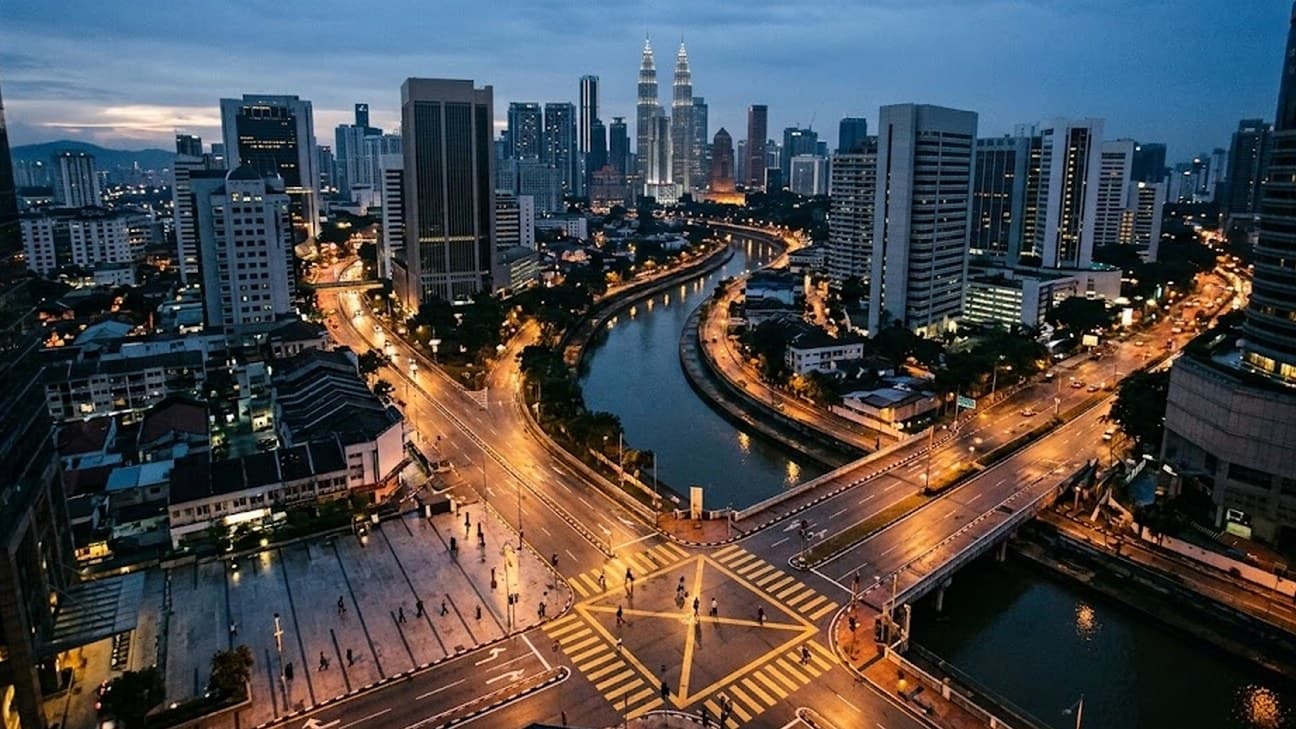
The most consequential Malaysian capital-markets development of the week is not a deal but a piece of plumbing. At the Think Business Think Hong Kong 2026 symposium in Kuala Lumpur, which drew roughly 1,600 participants and produced 10 memoranda of understanding and more than 300 business-matching meetings, it was confirmed that the simplified dual initial-public-offering framework agreed between the Securities Commission Malaysia (SC) and Hong Kong's Securities and Futures Commission (SFC) will come into force in September 2026. That timing turns a July agreement into an imminent operating reality: the framework is now weeks, not quarters, away.
The mechanics are the point. The SC and SFC signed the underlying memorandum of understanding on 23 July 2026 — executed by SC executive chairman Datuk Mohammad Faiz Azmi and SFC chief executive Julia Leung, and witnessed by Finance Ministry secretary-general Tan Sri Johan Mahmood Merican. Under the simplified framework, an issuer pursuing simultaneous primary and secondary listings across the two markets can submit a single set of documents, including one prospectus, rather than running two parallel regulatory processes. The same MOU broadens the mutual recognition of funds between the jurisdictions to include exchange-traded funds — futures-based, leveraged, inverse and commodity ETFs among them — as well as real estate investment trusts. This is regulatory-recognition infrastructure, the unglamorous layer that determines whether cross-border listings are merely legal or actually practical.
The asymmetry of the two markets explains the strategic logic. The Hong Kong exchange lists more than 2,900 companies, ETFs and REITs; Bursa Malaysia hosts a little over 1,300. For a Malaysian growth company, a streamlined path to a Hong Kong listing is a path to a far deeper pool of institutional capital and, through Hong Kong, to the Guangdong–Hong Kong–Macao Greater Bay Area and mainland China. Azmi framed the objective as encouraging "greater foreign portfolio investment flows between our capital markets" while widening the menu of investable products on both sides. Notably, this is a portfolio-investment channel, not a foreign-direct-investment one — precisely the mechanism a fund manager warned last week that Malaysia lacked when she pointed out how thinly technology is represented on the country's own equity indices.
The status to keep precise: this is a signed regulatory framework with a stated September commencement, not a live pipeline of dual listings. No issuer has yet been named as the first to use it, and cross-border listing frameworks are only as good as the companies that choose to run through them. The test is not the launch date but the first cohort — whether Malaysian technology, digital-infrastructure and Islamic-finance names actually elect the dual route, or whether the framework sits idle while issuers keep listing at home.
Singapore Has Licensed Just 37 Crypto Firms From ~300 Applicants — and Is Now Layering OECD Tax Reporting Onto the Survivors
Singapore's digital-asset regime is often described as open; the numbers this week show it is better described as selective. Since the licensing framework took effect in 2020, the Monetary Authority of Singapore has approved 37 digital-payment-token service providers out of roughly 300 applications — an approval rate of around 12%. MAS chairman Gan Kim Yong put the funnel plainly: "Most applications have either been rejected or withdrawn after applicants determined they could not meet MAS' requirements." The scarcity is the policy. A Singapore licence is valuable precisely because the regulator has declined to hand most of them out.
On top of that gate, the state is now adding a transparency layer. Singapore is implementing the Crypto-Asset Reporting Framework (CARF), the OECD standard for automatic exchange of crypto tax information, administered by the Inland Revenue Authority of Singapore (IRAS). Under the framework, exchanges will have to determine each customer's tax residency, identify the beneficial owners behind business accounts, and obtain verified self-certification from new customers beginning in 2027, with existing customers required to complete self-certification by 31 December 2027. Reportable activity is broad: crypto purchases and sales, crypto-to-crypto trades and transfers, and crypto payments for goods or services above US$50,000, with exchanges reporting both transaction value and quantity.
The compliance calendar makes the direction of travel clear. Providers must register with IRAS by 31 March 2028; from 1 January 2028 they cannot process covered transactions for a customer who has not self-certified; the first CARF returns are due by 31 May 2028; and Singapore's first cross-border information exchange under the framework is expected in September 2028. IRAS will share the data with tax authorities in jurisdictions where users are resident and with which Singapore has CARF agreements, and providers must retain records for at least five years. Failing to register, absent reasonable excuse, becomes an offence under the Income Tax Act.
Read together, the two moves describe a coherent regulatory posture rather than two separate news items. Singapore is not chasing volume; it is curating a small set of well-capitalised, compliant operators and then wiring them into the global tax-transparency apparatus. That is a deliberate contrast with jurisdictions competing on permissiveness, and it raises the fixed cost of operating a compliant exchange from Singapore — a cost only larger, better-resourced platforms can comfortably carry.
Bank Negara Launches RM10 Billion in SME Guarantees — but the Real Instruction to Banks Is to Underwrite on Data, Not Collateral
Bank Negara Malaysia (BNM) formally launched the RM10 billion BNM–Credit Guarantee Corporation Portfolio Guarantee schemes at CGC's 31st Awards on 11 August, converting a programme first flagged in June into a live facility. The structure is generous by design: eligible micro, small and medium enterprises can access financing of up to RM10 million each, with tenures of up to 10 years, guarantee coverage of up to 85% and guarantee fees from as low as 1%, with an estimated 12,100 MSMEs expected to benefit. It sits within a broader credit-guarantee overhaul BNM is coordinating with CGC and Syarikat Jaminan Pembiayaan Perniagaan, drawing on World Bank technical support for targeting and data strategy.
But the more forward-looking signal was the governor's instruction to lenders. BNM governor Datuk Seri Abdul Rasheed Ghaffour urged financial institutions to look past the collateral-and-credit-history model that shuts out younger, asset-light firms, and to assess creditworthiness using alternative data — cash flows, transaction records, electronic invoices, payment behaviour and supply-chain data. The guarantee scheme lets banks share risk without loosening their underwriting standards; the alternative-data push is aimed at the more durable constraint, which is that thin-file SMEs are structurally invisible to traditional credit assessment even when they are viable.
Rasheed also reframed the yardstick. "The ultimate measure of success is not the amount of financing provided, but whether the businesses supported become stronger, resilient, competitive and contribute meaningfully to the economy," he said — a pointed move away from disbursement volume as the headline metric. For context, CGC has facilitated more than RM103 billion in guarantees and financing to over 544,000 SMEs since its establishment, so the institution making this argument is the one with the longest track record of standing behind Malaysian small-business credit.
The status to be precise about: the RM10 billion is a guarantee capacity that de-risks lending, not a pool of loans already extended, and the alternative-data underwriting is regulatory guidance and encouragement rather than a mandate with a compliance deadline. Its impact depends entirely on whether banks operationalise data-driven credit models — the same capability that Malaysia's digital banks were licensed to pioneer, and that the country's e-invoicing rollout is quietly making possible at scale.
Singapore's Digital Banks Finally Show a Profit Split — the MSME-Focused Ones Are Winning, the Consumer Plays Are Still Bleeding
The clearest evidence that Southeast Asia's digital-finance story is shifting from permission to profitability came out of Singapore this week, in a 2026 review of the city-state's five digital banks. Green Link Digital Bank became the first of them to post a full year in the black, reporting S$16.1 million in profit for FY2025 on S$71.8 million of total operating income — 56 times its 2022 level — by targeting micro, small and medium enterprises through supply-chain financing, with non-bank deposits above S$1 billion and loans of S$676 million. Trust Bank, the Standard Chartered–NTUC venture, recorded its first profitable month in March 2026 and cut its FY2025 loss by 42% to S$53.5 million, growing income 39% to S$135 million, passing one million customers — 70% acquired through referrals — and building deposits toward S$4 billion.
The other three are still spending. GXS Bank, the Grab–Singtel venture aimed at early-career workers and gig participants — a quarter of its borrowers have no credit history — posted the largest losses of the five, though it has narrowed them for two consecutive years. MariBank, built inside Sea's Shopee ecosystem, grew income fastest at 53% to S$37.4 million but saw losses widen to S$55.6 million on a still-modest S$222 million loan book. ANEXT Bank's income fell 5% to S$42.6 million as losses widened by roughly a third to S$49.8 million, which management frames as deliberate investment "ahead of the demand it expects to serve."
The pattern is more instructive than any single bank's result. The two moving toward or into profit — Green Link and Trust — are the ones anchored to a concrete lending engine: MSME supply-chain finance in one case, rapid deposit-and-referral scale converting into a real loan book in the other. The laggards are, broadly, the broad-based consumer plays still buying growth. It is a reminder that a digital-banking licence is a permit to compete, not a business model, and that the model that clears is a lending margin, not a user count.
Scale keeps the whole cohort honest. Singapore's incumbent trio dwarf the challengers: DBS earned S$13.1 billion in pre-tax profit last year — about 819 times Green Link's annual profit — with OCBC at S$9.12 billion and UOB at S$5.66 billion. The digital banks are proving unit economics can work; they are nowhere near proving they can take material share from the incumbents.
Eyes on the Week Ahead
The near-term watch items all sit on the same seam between permitting digital finance and pricing it. On Malaysia's dual-IPO framework, the tell in the coming weeks is any signal on the first issuers to use it once it commences in September — a technology or digital-infrastructure name choosing the Hong Kong route would validate the framework far more than the launch itself. On the SME-credit push, watch for any Malaysian bank or digital lender to report guaranteed financing actually deployed to thin-file borrowers, and for movement in the e-invoicing data that would make cash-flow underwriting operational at scale.
In Singapore, the compliance countdown has begun: expect exchanges and their advisers to start signalling how they will meet the CARF self-certification requirement that binds new customers from 2027, and watch whether MAS's tight licensing posture drives further consolidation — an acquisition of a licensed entity is now a faster route into the market than a fresh application. And with the region's digital banks having shown their first real profit split, the next earnings updates from GXS, MariBank and ANEXT are the practical test of whether the consumer-first models can close the gap on the MSME-lending leaders before their backers' patience runs out.
Layer 7 Ventures is a research-driven firm focused on AI and cryptocurrency in Southeast Asia. Views expressed are those of the firm and do not constitute investment advice.