All reports
Daily Brief · FinTech · Crypto

SEA Daily Brief: Partior-LSEG's 24/7 Bank Liquidity Layer, dtcpay's SBI-Backed Raise, and TrueMoney's Embedded Wallet Push

Partior and LSEG's Digital Settlement House unveiled a multi-bank liquidity framework — with J.P. Morgan, Deutsche Bank and Standard Chartered already testing it — designed to give cross-border payments always-on settlement liquidity without pre-funded nostro accounts. Singapore's dtcpay extended its Series A to $25 million with Japan's SBI Group joining as a strategic investor, betting on a stablecoin-payments corridor between Japan and Southeast Asia. In Thailand, TrueMoney embedded Fireblocks-powered wallets directly into its app for phase two of its programmable baht pilot, opening the door to 20,000 retail participants.

September 18, 20264 min readSingapore · Thailand · Stablecoins · Tokenization · Payments
Photorealistic aerial photograph directly overhead of Singapore's Marina Bay financial district skyline at night, illuminated skyscraper office windows forming a lit grid pattern against dark water, long-exposure light trails from cars on the roads below, and tiny anonymous pedestrians crossing a plaza far below.
Singapore-anchored settlement infrastructure was the throughline across today's stories, from bank-to-bank liquidity rails to stablecoin payment corridors.

Partior and LSEG DiSH Build a 24/7 Liquidity Bridge for Cross-Border Settlement Banks

Partior, the Singapore-headquartered blockchain-based clearing and settlement network backed by DBS, J.P. Morgan, Standard Chartered and Temasek, and the London Stock Exchange Group's Digital Settlement House (DiSH) announced on September 17 a Multi-Settlement Bank (MSB) solution designed to give banks always-on settlement liquidity for cross-border payments, according to TechNode Global and LSEG's own newsroom. The solution combines LSEG DiSH's omnibus trust-account framework with Partior's multi-currency clearing network, letting participating banks move settlement liquidity across multiple settlement banks and currencies around the clock rather than being bound by conventional payment cut-off times. J.P. Morgan's Kinexys unit, Deutsche Bank and founding shareholder Standard Chartered are already testing the product.

The stated aim is to reduce banks' dependence on pre-funded bilateral nostro and vostro relationships — the correspondent-banking arrangements that tie up capital and slow settlement outside business hours — while laying groundwork for payment-versus-payment and delivery-versus-payment settlement capabilities. Testing is underway now; Partior and LSEG DiSH are targeting a production launch and commercial onboarding of additional settlement banks from the first quarter of 2027.

dtcpay Extends Its Series A to $25 Million as SBI Group Bets on a Japan-Southeast Asia Stablecoin Corridor

Singapore stablecoin-payments firm dtcpay announced on September 18 that it has extended its Series A round to $25 million, with Japan's SBI Group joining as a strategic investor through SBI Ventures Asset and the SBI-NTU-Kyobo Digital Innovation Fund, according to Fintech News Singapore and TechNode Global. The round originally closed at $10 million in an initial tranche led by Vertex Ventures Southeast Asia & India in April 2026; existing investors Genedant Capital and Kwee Liong Tek also increased their commitments in the extension. dtcpay holds a Major Payment Institution licence from Singapore's MAS and an Electronic Money Institution licence in Luxembourg, and offers a real-time stablecoin-fiat swap engine, point-of-sale support for digital payment tokens, and a Visa card that lets customers spend across fiat and stablecoins at Visa-supported merchants.

Founder and CEO Alice Liu framed the capital as validation that "stablecoin payments are not a distant vision but an infrastructure being built right now," and the company said the funds will go toward a revamped enterprise business portal and new consumer app features through the rest of 2026.

TrueMoney Embeds Fireblocks Wallets in Thailand's Programmable Baht Pilot

TrueMoney, the e-wallet arm of Ascend Group and one of Thailand's most widely used payment apps, added Fireblocks-powered digital asset wallets to the second phase of its Thai Baht TrueMoney (THBT) pilot, according to Fintech News Singapore and Deal Street Asia. THBT is a digital unit referenced to the Thai baht and backed 1:1 by baht reserves held in local bank accounts, built on Coinbase's Base chain and tested under the Bank of Thailand's Enhanced Regulatory Sandbox for programmable payments. The Fireblocks integration places a wallet directly inside the TrueMoney app, letting users create and manage it without handling seed phrases or private keys, with assisted recovery if credentials are lost.

The expanded pilot phase opens to up to 20,000 Thai and international participants through December 31, 2026. Users can spend THBT on digital coupons through THBTStore or swap it for six supported digital assets, while tourists and expatriates can convert supported digital assets into THBT and then into Thai baht for everyday transactions.

Eyes on the Day Ahead

Thailand's SEC public consultation on draft rules for locally listed spot Bitcoin and Ether ETFs, and on qualification standards for foreign digital asset custodians, closes September 20 — two days from now — and will shape whether Thailand's crypto ETF framework takes effect as planned later this year.

Layer 7 Ventures is a research-driven firm focused on AI and cryptocurrency in Southeast Asia. Views expressed are those of the firm and do not constitute investment advice.

More Research

A shopkeeper in a plaid shirt and a helmeted delivery rider face each other across the counter of a Kuala Lumpur shophouse in harsh midday sun, with a card payment terminal and stacked cartons on the counter and motorbikes parked at the kerb.
Daily Brief · FinTech · Geopolitics4 min

SEA Daily Brief: Malaysia Lifts SME Financing to RM57 Billion and Tops Up BNM's Relief Facility, Thailand Plans an SME Credit Portal, and Vietnam Wins Its First Investment-Grade Rating

Malaysia's Budget 2027 raises SME loan facilities and financing guarantees to RM57 billion from RM50 billion, while Bank Negara Malaysia adds RM5 billion to its SME Stabilisation Relief Facility after RM3.8 billion of the first tranche was approved. The Bank of Thailand outlined an SME credit portal, an alternative data exchange and a five-year guarantee scheme aimed at about 100 billion baht of new SME lending a year, after a four-year decline. Japan's R&I upgraded Vietnam to BBB-, the first investment-grade rating from an international agency, while Moody's, S&P Global and Fitch still rate it sub-investment grade.

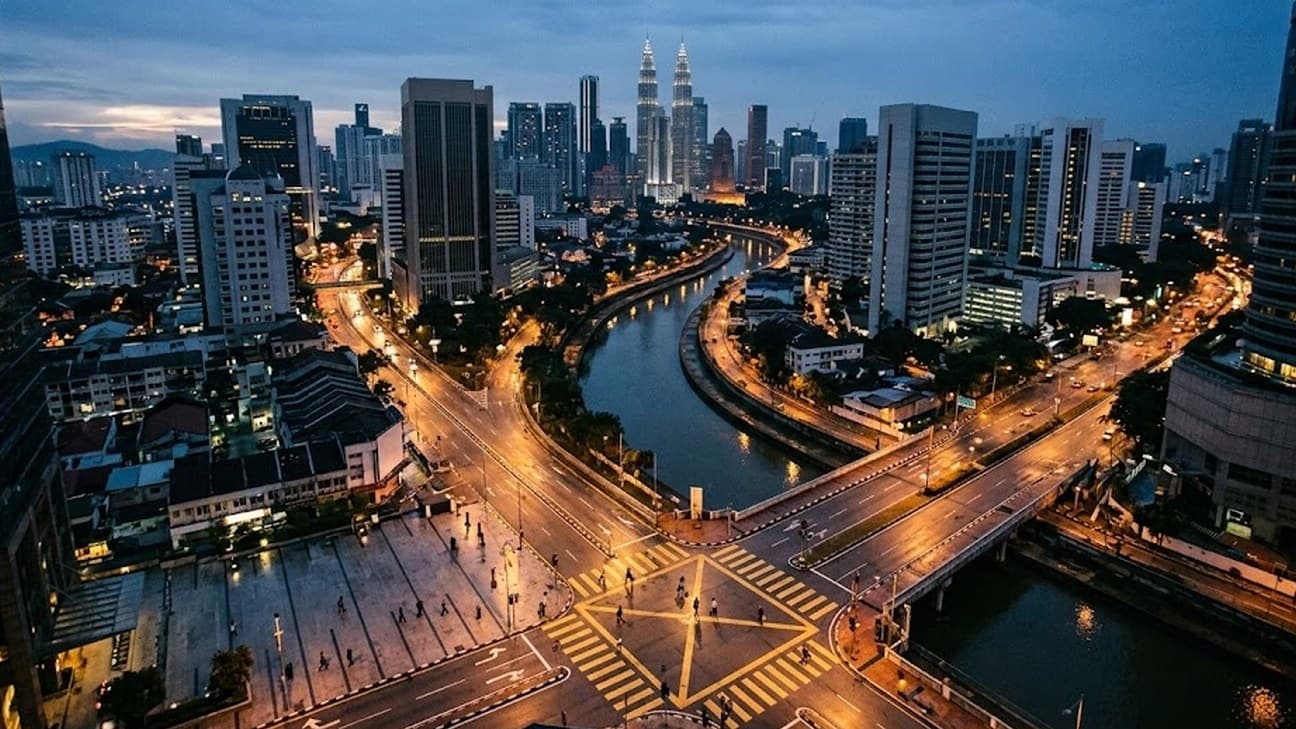
High-angle view of a Kuala Lumpur financial district at pre-dawn blue hour, with office towers, a river bend and a few tiny pedestrians crossing a floodlit plaza and a marked crosswalk.
Daily Brief · FinTech · AI4 min

SEA Daily Brief: Malaysia's Budget 2027 Backs Startups and Crowdfunding, the SC Reports 2025 Restitution Figures, and UOB Explores a Dedicated AWS Cloud for ASEAN

Malaysia's Budget 2027, tabled on 9 October, earmarks RM450 million for startups through Jelawang Capital and Dana Perintis and RM270 million to draw private capital into equity crowdfunding and P2P platforms, with no distribution mechanism disclosed. The Securities Commission told Parliament it returned RM1.98 million to 239 investors in 2025 and has set aside RM8.6 million for 933 more. UOB signed an MoU with AWS to explore a dedicated Singapore cloud environment for its five ASEAN markets, with no financial terms or timeline given.

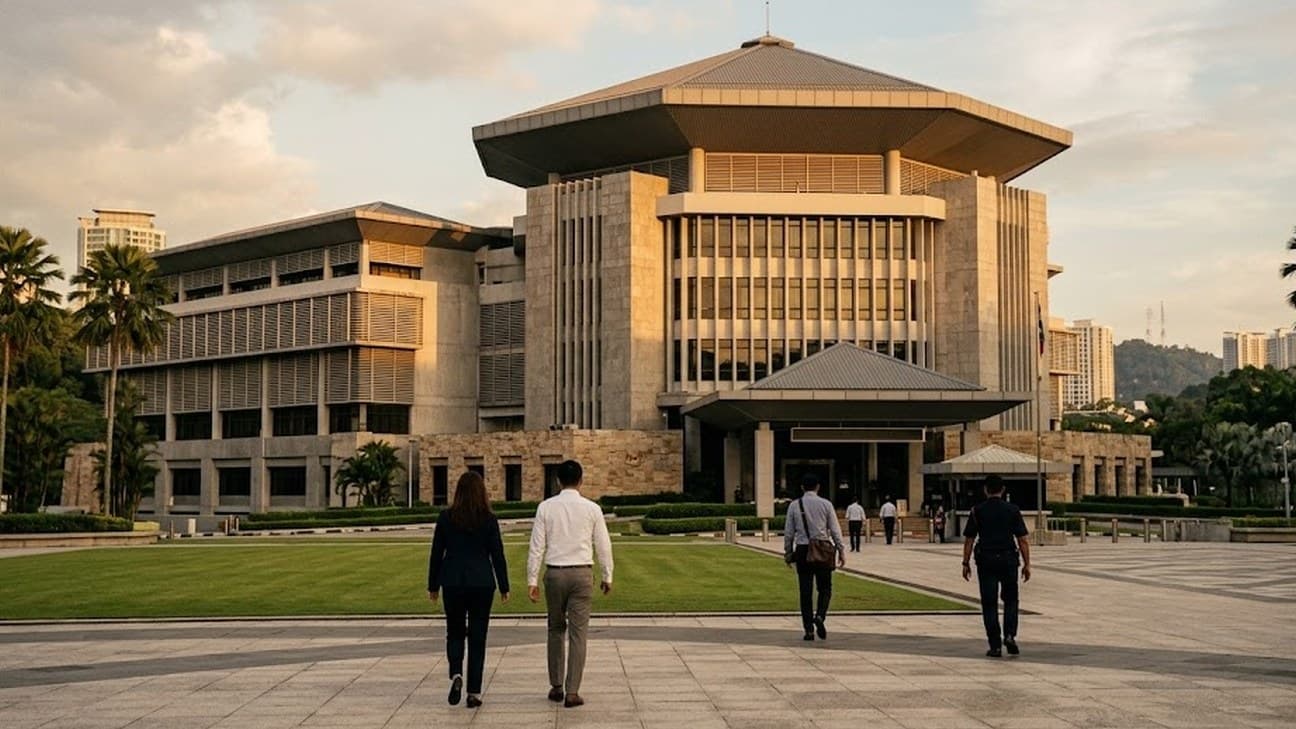
Office workers and a security guard walk across a stone forecourt toward a modern government building with a sweeping roofline in Kuala Lumpur, lit by low golden-hour sun with palm trees and a lawn in the foreground.
Daily Brief · FinTech · Crypto · AI4 min

SEA Daily Brief: Malaysia's Budget 2027 Proposes Tokenised Retail Sukuk, Singapore Licenses Large Data Centres, and the NSRC Plans an AI Scam-Check App

Prime Minister Anwar Ibrahim proposed a blockchain-based retail savings sukuk in Budget 2027, tabled on 9 October, with no launch date, minimum investment or return disclosed. Singapore's Parliament passed the Digital Infrastructure Bill on 7 October, creating licensing regimes for data centres of 10MW or more and large cloud providers. Malaysia's National Scam Response Centre also plans an AI application to check suspicious numbers, accounts and links, with no funding or launch date stated.

Stay Informed

Get the next report in your inbox.