Mastercard, Visa and Ant International Move to Build a Shared Way to Vet AI Agents Making Payments
Mastercard, Visa and Ant International are exploring an interoperable Know-Your-Agent framework intended to help payment networks, digital wallets, agent platforms and marketplaces identify AI agents transacting on a customer's behalf and verify who operates them, according to Fintech News Singapore. Each network keeps its own verification process, but the goal is to share trust signals so a customer or merchant doesn't have to pass the same identity check separately on Visa's Trusted Agent Protocol, Mastercard's Verifiable Intent, and Ant International's Agentic Mobile Protocol.
The work runs through BuildFin.ai, an industry platform convened by the Monetary Authority of Singapore, and builds on the Safeguards for Agentic Finance at Runtime (SAFR) white paper MAS and industry partners published in July, which set out checkpoints for authorising and auditing an AI agent's actions before execution. Mastercard chief digital officer Pablo Fourez said interoperability across Know-Your-Agent frameworks "is essential to making agentic commerce work at scale."
Singapore Arms MAS With Loss-Absorbing Capacity Powers Over Systemically Important Institutions
Singapore's Financial Services and Markets (Amendment) Bill 2026 had its first reading in Parliament on September 8, giving the Monetary Authority of Singapore the power to require systemically important financial institutions to hold a minimum level of total loss-absorbing capacity (TLAC) — a buffer of ordinary shares, eligible debt and other instruments that can absorb losses and recapitalise a distressed institution without destabilising the wider system, according to Fintech News Singapore.
MAS gains discretion over how much capacity an institution must hold, how it's calculated, which instruments qualify, and what must be disclosed, with the ability to set different requirements across institution classes and adjust them firm by firm. The power complements MAS's existing bail-in authority to convert or write down qualifying debt. Non-compliance carries a fine of up to S$250,000 on conviction, plus a further S$25,000 for each day a breach continues. MAS consulted publicly on the proposal between May and June 2026 before finalising the bill, which also updates financial-crime provisions to align with revised Financial Action Task Force standards on weapons-of-mass-destruction financing.
Malaysia's Key ASIC Signs an MOU With Hong Kong's CT Vision for a 300MW Green AI Data Centre
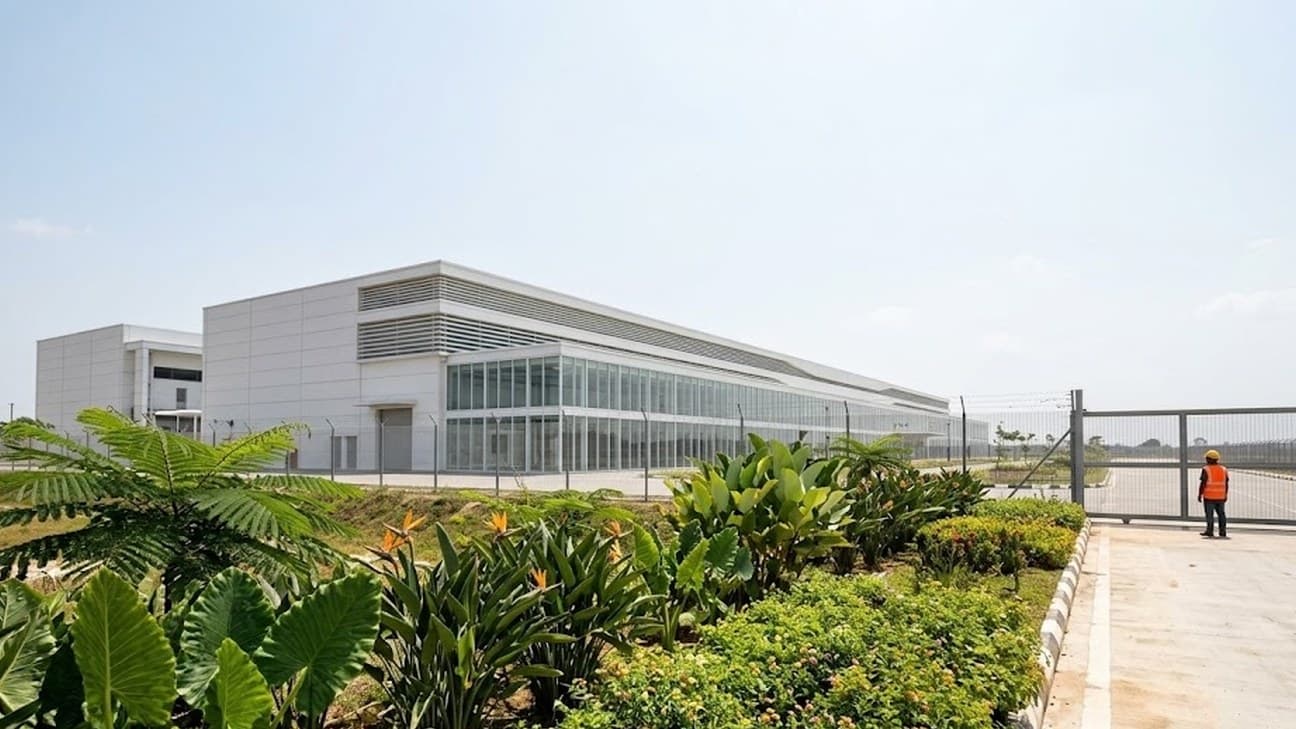
Malaysia-listed Key ASIC Berhad signed a memorandum of understanding with Hong Kong-listed CT Vision (International) Holdings Limited on September 4 to jointly plan a green AI data centre in Malaysia with a targeted IT load of about 300MW within five years of commercial launch, according to w.media and The Star. The project targets 100% renewable energy penetration, with more than 50% self-generated on-site, and a power usage effectiveness ratio at or below 1.20 — well under the roughly 1.5-plus PUE typical of older Southeast Asian facilities.
Key ASIC would contribute energy-efficient chip design, power-management technology and local execution capability; CT Vision brings international financing experience and renewable-energy technology spanning solar, wind, natural gas and biomass. Key ASIC chief executive Eg Kah Yee said the tie-up "represents a paradigm shift: we are not merely constructing a data centre, but building a green energy-to-AI ecosystem." The MOU is structured as an initial 10-year framework, with commercial and technical terms — including pricing and payment schedules — left to separate definitive agreements both companies are targeting for execution by the end of the fourth quarter of 2026.
Eyes on the Day Ahead
Singapore's Financial Services and Markets (Amendment) Bill 2026 moves to a second reading in the coming weeks; watch for the specific TLAC instrument criteria and which institution classes MAS designates as systemically important. Separately, Thailand's SEC consultation on retail access to overseas crypto derivatives closes September 30, and Key ASIC and CT Vision's Q4 target for definitive agreements on the Malaysia data-centre MOU is a milestone worth tracking over the next several weeks rather than the next day or two.
Layer 7 Ventures is a research-driven firm focused on AI and cryptocurrency in Southeast Asia. Views expressed are those of the firm and do not constitute investment advice.