All reports
Daily Brief · Crypto · AI · Geopolitics

SEA Daily Brief: Circle's $400 Million Tazapay Deal, the Philippines' $34.4 Billion AI Roadmap, and Malaysia's Rate Hold Amid an Oil Shock

Circle agreed to buy Singapore's Tazapay for $400 million, extending USDC's reach into a firm that already settles 60% of its $25 billion in annualized volume in stablecoins. The Philippines unveiled a $34.4 billion, seven-year plan to grow its AI data-centre capacity thirtyfold by 2033, betting on compute over its traditional BPO base. And in Malaysia, Bank Negara held its policy rate steady even as a Middle East-driven spike in oil prices past $100 a barrel put fresh pressure on the region's inflation outlook.

September 9, 20264 min readSingapore · Philippines · Malaysia · Stablecoins · AI Infrastructure · Central Banks
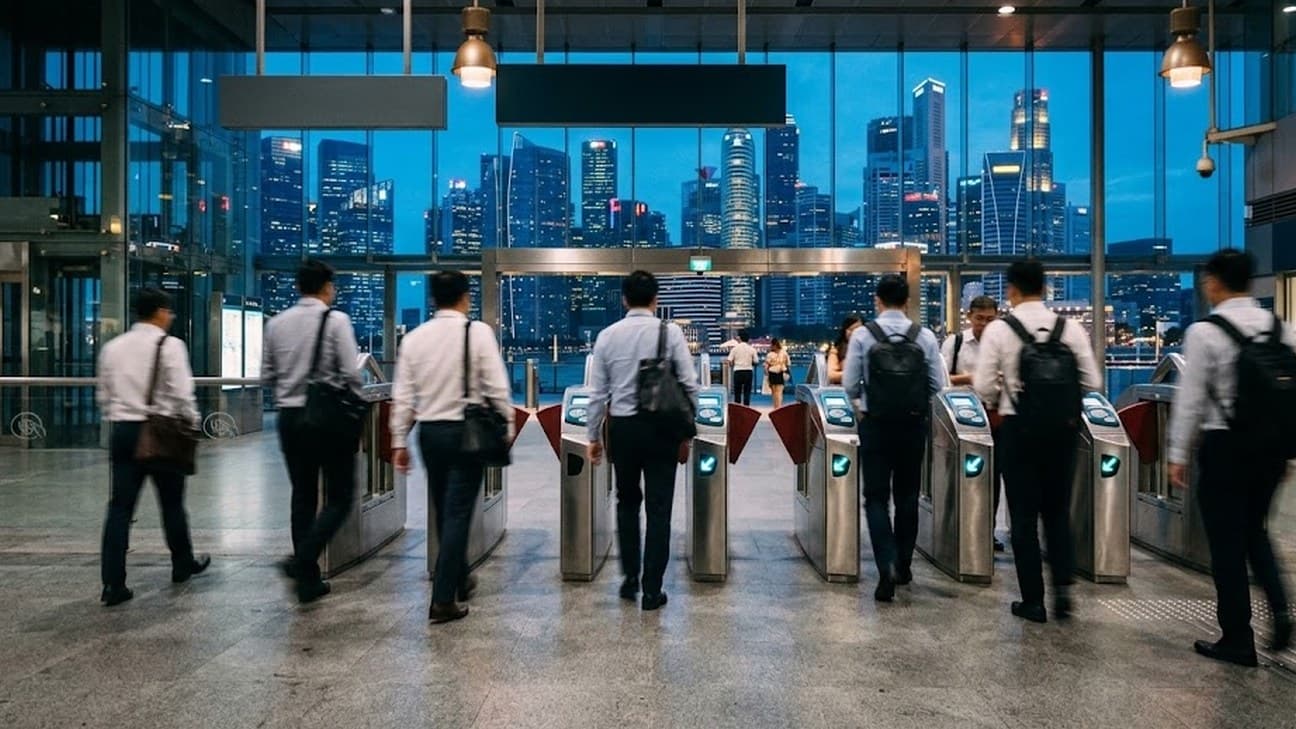
Photorealistic photograph of commuters walking away from camera through elevated payment turnstile gates in a Singapore MRT station concourse at pre-dawn blue hour, tapping contactless cards and phones against payment readers, with the city's financial-district skyline lit up through floor-to-ceiling glass in the background.
Circle's acquisition of Singapore's Tazapay extends USDC's reach into the cross-border payment rails that move money across Asia-Pacific.

Circle Agrees to Buy Singapore's Tazapay for $400 Million to Push USDC Deeper Into Cross-Border Payments

Circle Internet Group agreed to acquire Singapore-headquartered Tazapay in an all-stock deal valued at roughly $400 million, according to Fintech News Singapore and TechNode Global. Tazapay provides business-to-business cross-border payment infrastructure to payment service providers and financial institutions, processing more than $25 billion in annualized volume across more than 100 markets through partnerships with over 60 banking and fintech organizations.

Circle said approximately 60% of Tazapay's transaction volume already settles in stablecoins, and Tazapay had served as a design partner for Circle's payments network since 2025. The deal is expected to close in 2027 pending customary conditions and regulatory approval, including sign-off from the Monetary Authority of Singapore; Circle will also grant $25 million in restricted stock units to retained Tazapay staff, with closing conditioned on keeping at least 75% of identified employees.

Philippines Unveils a $34.4 Billion, Seven-Year Roadmap to Become a Regional AI Infrastructure Hub

The Department of Information and Communications Technology and the Department of Energy unveiled a $34.4 billion masterplan running through 2033 to build out the Philippines' AI infrastructure, according to BusinessWorld and The Star. The plan targets a roughly 30-fold expansion of data-centre capacity, from about 50 megawatts today to some 400 megawatts by 2030 and 1.5 gigawatts by 2033, with around $21 billion of the total expected to come from private investment.

Officials project the buildout could add 10% to 12% to national GDP through AI-driven productivity gains and create more than 500,000 AI-related jobs alongside roughly 175,000 additional construction and infrastructure jobs, with energy sourcing targeting 40% renewables by 2033 and nuclear power under longer-term consideration.

Bank Negara Holds Its Rate at 2.75% as a Middle East Oil Shock Pushes Brent Past $100

Bank Negara Malaysia's Monetary Policy Committee held the Overnight Policy Rate at 2.75% on September 3, citing headline and core inflation averaging 1.8% and 2% respectively over the first seven months of 2026 and first-half GDP growth of 5.7%, according to the central bank's own statement. The MPC flagged "uncertainties surrounding the Middle East conflict" and "elevated global commodity prices" as the principal downside risks to watch.

That risk materialized this week: Brent crude rose above $100 a barrel on September 9 for the first time since May, up 2.85% on the day, after the US said it had destroyed five Iranian tankers and Houthi militants targeted Saudi Arabia's Jazan refinery, according to Malay Mail. The FBM KLCI closed essentially flat at 1,714.34, with Berjaya Research's Kenneth Leong warning that sustained higher energy costs could "raise the prospects of monetary tightening."

Eyes on the Day Ahead

Nothing firm is scheduled in the next 24-48 hours, so pivoting slightly further out: Malaysia's Ministry of Investment, Trade and Industry heads to Kuala Lumpur on September 14 for MIDA's Data Centre Nexus 2026 conference, where more than 400 policymakers, hyperscalers, cloud operators and technology suppliers are set to discuss the country's AI compute and connectivity buildout — the next scheduled venue for any fresh signal on Malaysia's data-centre investment pipeline.

Layer 7 Ventures is a research-driven firm focused on AI and cryptocurrency in Southeast Asia. Views expressed are those of the firm and do not constitute investment advice.

More Research

A shopkeeper in a plaid shirt and a helmeted delivery rider face each other across the counter of a Kuala Lumpur shophouse in harsh midday sun, with a card payment terminal and stacked cartons on the counter and motorbikes parked at the kerb.
Daily Brief · FinTech · Geopolitics4 min

SEA Daily Brief: Malaysia Lifts SME Financing to RM57 Billion and Tops Up BNM's Relief Facility, Thailand Plans an SME Credit Portal, and Vietnam Wins Its First Investment-Grade Rating

Malaysia's Budget 2027 raises SME loan facilities and financing guarantees to RM57 billion from RM50 billion, while Bank Negara Malaysia adds RM5 billion to its SME Stabilisation Relief Facility after RM3.8 billion of the first tranche was approved. The Bank of Thailand outlined an SME credit portal, an alternative data exchange and a five-year guarantee scheme aimed at about 100 billion baht of new SME lending a year, after a four-year decline. Japan's R&I upgraded Vietnam to BBB-, the first investment-grade rating from an international agency, while Moody's, S&P Global and Fitch still rate it sub-investment grade.

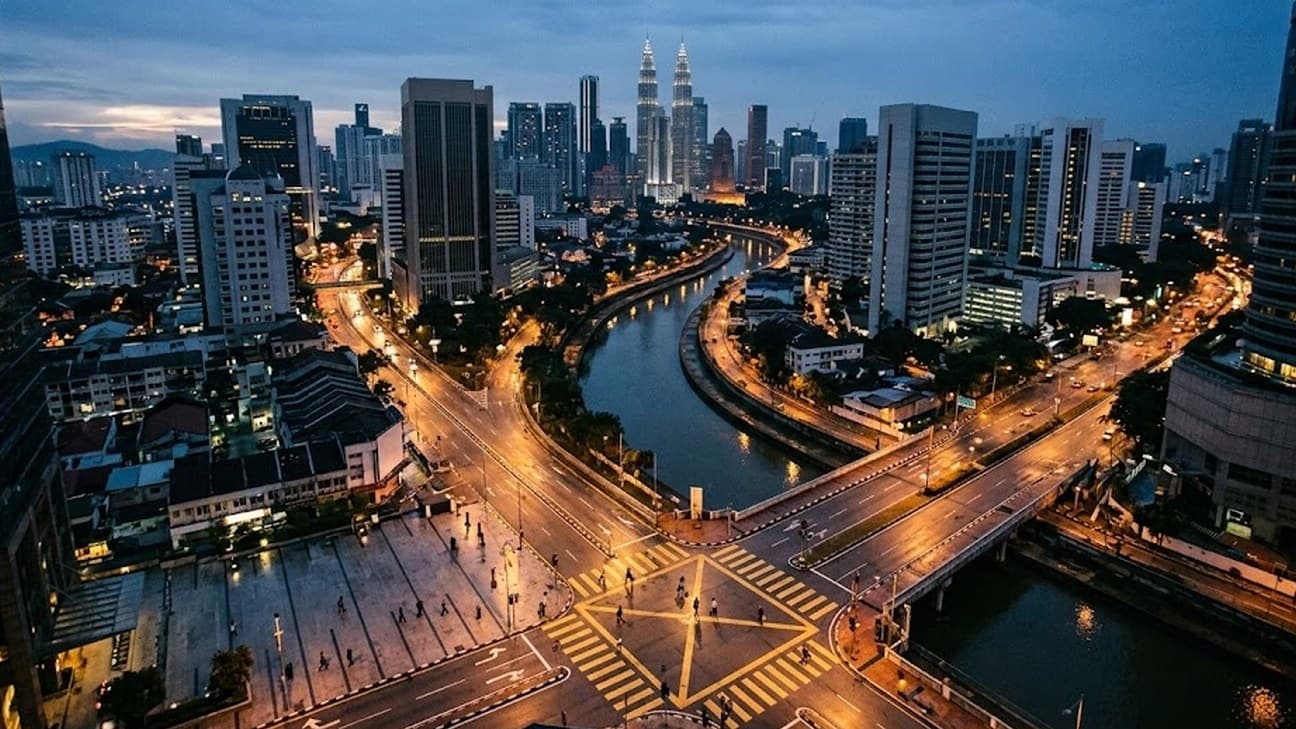
High-angle view of a Kuala Lumpur financial district at pre-dawn blue hour, with office towers, a river bend and a few tiny pedestrians crossing a floodlit plaza and a marked crosswalk.
Daily Brief · FinTech · AI4 min

SEA Daily Brief: Malaysia's Budget 2027 Backs Startups and Crowdfunding, the SC Reports 2025 Restitution Figures, and UOB Explores a Dedicated AWS Cloud for ASEAN

Malaysia's Budget 2027, tabled on 9 October, earmarks RM450 million for startups through Jelawang Capital and Dana Perintis and RM270 million to draw private capital into equity crowdfunding and P2P platforms, with no distribution mechanism disclosed. The Securities Commission told Parliament it returned RM1.98 million to 239 investors in 2025 and has set aside RM8.6 million for 933 more. UOB signed an MoU with AWS to explore a dedicated Singapore cloud environment for its five ASEAN markets, with no financial terms or timeline given.

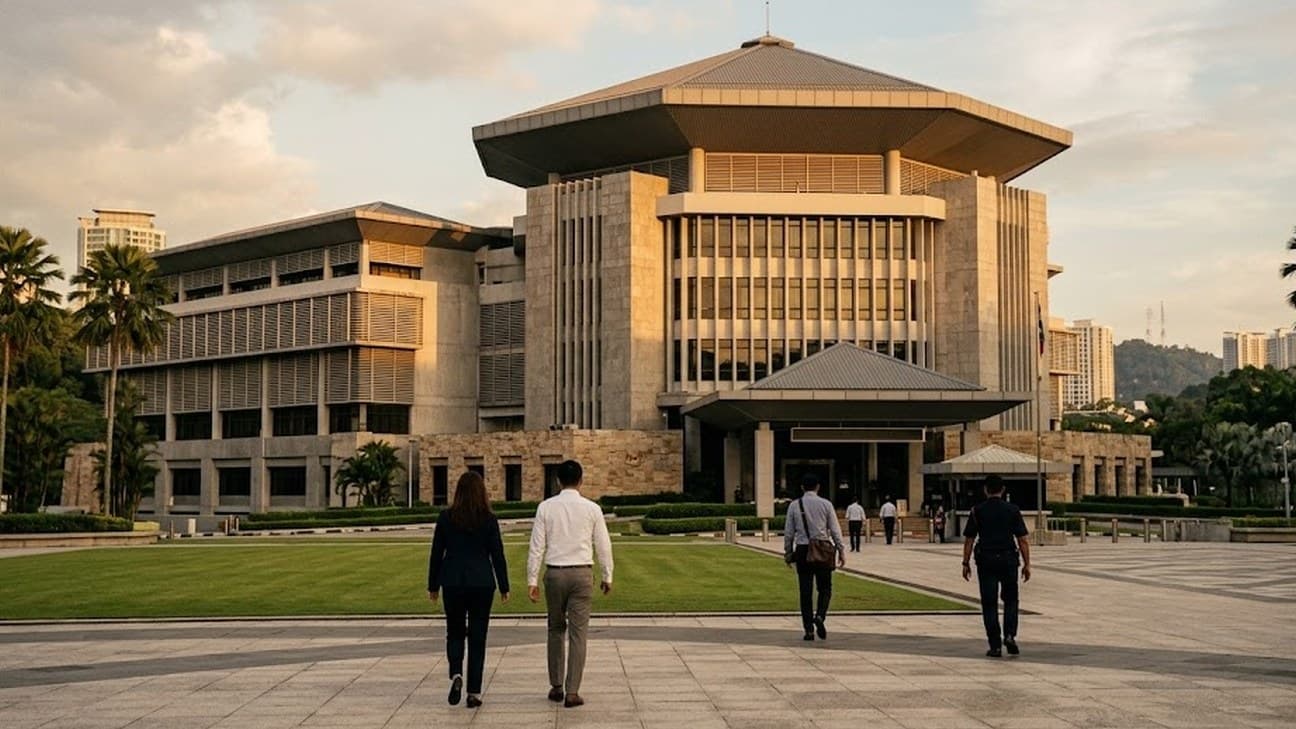
Office workers and a security guard walk across a stone forecourt toward a modern government building with a sweeping roofline in Kuala Lumpur, lit by low golden-hour sun with palm trees and a lawn in the foreground.
Daily Brief · FinTech · Crypto · AI4 min

SEA Daily Brief: Malaysia's Budget 2027 Proposes Tokenised Retail Sukuk, Singapore Licenses Large Data Centres, and the NSRC Plans an AI Scam-Check App

Prime Minister Anwar Ibrahim proposed a blockchain-based retail savings sukuk in Budget 2027, tabled on 9 October, with no launch date, minimum investment or return disclosed. Singapore's Parliament passed the Digital Infrastructure Bill on 7 October, creating licensing regimes for data centres of 10MW or more and large cloud providers. Malaysia's National Scam Response Centre also plans an AI application to check suspicious numbers, accounts and links, with no funding or launch date stated.

Stay Informed

Get the next report in your inbox.