Thailand Orders 49 Data Centres to Pause Construction and Freezes 117 More Pending Approvals
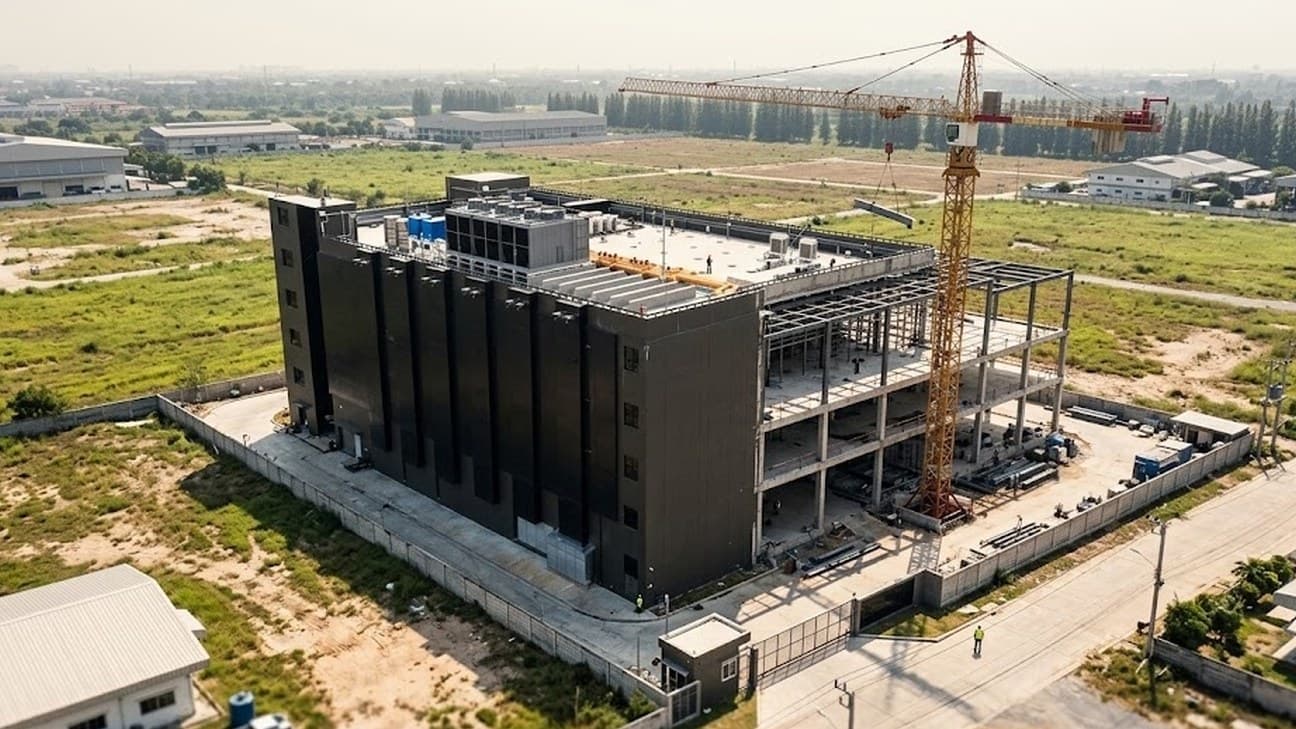
Thailand's government, via a committee chaired by Finance Minister Ekniti Nitithanprapas, announced on September 4 that it had asked 49 data centres currently under construction to voluntarily pause work and frozen approvals for another 117 pending projects — against 35 facilities already operational and roughly 166 more somewhere in the pipeline. Officials were explicit that this is not a legal suspension: the government said it lacks the statutory power to force a halt and is instead asking operators to cooperate while regulators draft comprehensive national rules — covering economic returns, environmental limits and site safety — within one month.
The national announcement followed a narrower, earlier move in the capital. Bangkok Governor Chadchart Sittipunt froze new large-data-centre approvals in the city on September 2 and ordered inspections of pending projects covering diesel storage, electricity demand, water consumption, noise and public safety. City officials had found at least one facility on Rama IX Road capable of storing 400,000–500,000 litres of diesel underground while holding permission for only 200,000 litres — a gap enabled by the absence of a legal definition for data centres, which has let developers register them as warehouses and sidestep environmental impact assessments and factory licensing entirely.
Thailand's Free AI-Access Program Draws 1.3 Million Sign-Ups as AiPASS Goes Live
Thailand's Ministry of Digital Economy and Society launched the AiPASS platform under its TH-AI Passport program on August 31, giving Thai nationals aged 15 and up free access to more than 30 AI models from over 14 providers — including overseas commercial tools such as ChatGPT and Claude — for up to a year. Registration opened August 19 and had already drawn over 1.3 million advance sign-ups in under two weeks, against a cap of 5 million slots. Rather than building domestic AI tools, Thailand opted to buy access to existing commercial models and redistribute it to citizens for free, and the government pays providers only for actual "Innovator-tier" usage — a reported 24.70 baht, or roughly $0.75, per active user per month — rather than a flat fee per registration.
The platform links access to a "Learn • Earn • Plern" points system: users complete courses to unlock more advanced models and can reach an "Innovator" tier with a certificate. Registration requires a Google, Microsoft or Apple account plus Thailand's Thang Rath or ThaID government identity app, and the program is slated to run free of charge through August 31, 2027.
FinCEN Ties $12.7 Billion in Suspicious Activity to Crypto Scam Compounds in Cambodia, Laos and Myanmar
The US Treasury's Financial Crimes Enforcement Network said on September 3 that roughly 1,300 financial institutions filed 33,904 suspicious activity reports flagging approximately $12.7 billion tied to crypto investment scams — commonly known as "pig butchering" — run out of industrial-scale compounds in Cambodia, Laos and Myanmar, covering September 2023 through December 2025. Crypto money-services businesses filed 55% of the reports, flagging $5.5 billion; banks filed 41%, flagging $6.4 billion; securities firms accounted for the remaining $784.5 million. Monthly filing volume grew an average of 10.9%, and the flagged dollar amount rose 18%, across the period.
FinCEN said scam proceeds are typically converted to USDT and moved through decentralized-finance protocols or offshore exchanges, and that hundreds of thousands of people have been trafficked into the compounds under false employment offers to staff the operations. Its Rapid Response Program has recovered just over $1 billion for 5,790 US victims since 2015; the agency is now pushing financial institutions toward more voluntary information-sharing under the Patriot Act's Section 314(b) provision and coordinating with foreign financial-intelligence units.
Eyes on the Day Ahead
Malaysia's Securities Commission and Bursa Malaysia hold the first InvestSmart x Bursa Marketplace Fair on September 5-6 at Pavilion Bukit Jalil, Kuala Lumpur, pairing retail-investor programming with free financial-planning consultations. Separately, Thailand's data-centre committee has until early October to publish the national rules that will determine whether today's paused projects resume, and Thailand's SEC keeps its retail crypto-derivatives consultation open through September 30 — both worth checking back on.
Layer 7 Ventures is a research-driven firm focused on AI and cryptocurrency in Southeast Asia. Views expressed are those of the firm and do not constitute investment advice.