All reports
Daily Brief · AI · FinTech

Digital Realty enters Malaysia with a 32MW Cyberjaya campus pitched at AI inference, GIC leads Supabase's $500m round at a $10.5b valuation, and Singapore captures four-fifths of Southeast Asia's $1.1b climate-tech funding

US data-centre operator Digital Realty launched its Malaysian operations on June 8 with a three-site, 32MW campus in Cyberjaya, explicitly positioning for AI inference and enterprise interconnection rather than the hyperscaler gigawatt race. Singapore's GIC led a $500 million Series F into open-source database platform Supabase at a $10.5 billion valuation, extending the city-state's sovereign AI-infrastructure thesis up the stack into developer tooling. And Tracxn data showed Singapore captured $872 million — roughly 79% — of the $1.1 billion in climate-tech funding raised across Southeast Asia, underscoring how regional capital concentrates in one hub even when deployment is pan-regional.

June 8, 20264 min readMalaysia · Singapore · Indonesia · AI · Data Centres · Venture Capital · Climate Tech
Aerial editorial photograph of a newly built AI data-centre campus outside Cyberjaya, Malaysia, shot in hard midday sunlight: low-rise server-hall buildings with pale roofing and rows of rooftop cooling units, a fenced electrical substation beside the main buildings, a perimeter road lined with palm trees, and cleared red-earth ground bordering dense tropical vegetation; a single tiny, distant figure walks the perimeter fence line
Digital Realty's three-site Cyberjaya campus, launched June 8 and targeting around 32MW, is built for AI inference and enterprise interconnection rather than the hyperscaler gigawatt race reshaping Johor.

Digital Realty Launches Its Malaysian Operations With a Three-Site, 32MW Cyberjaya Campus Built for AI Inference

US-listed data-centre operator Digital Realty formally launched its Malaysian operations in Cyberjaya on June 8, with Minister of Digital Gobind Singh Deo in attendance. The campus comprises three sites within roughly 500 metres of one another, targeting around 32MW of total capacity by mid-2028. KUL10, an existing 1.5MW carrier hotel with more than 40 network providers, anchors the cluster and is slated to nearly double in capacity by Q4 2027; KUL11, a purpose-built 15MW facility about 500 metres away, is the AI-facing asset designed for AI and high-performance-computing workloads; and an adjacent 1.6-acre parcel is earmarked for a new 14MW data centre targeted for completion in mid-2028.

Rather than chase the gigawatt-scale builds reshaping Johor and the broader region, Digital Realty is pitching connectivity and inference. "2026 is the year of inference," said Serene Nah, its Asia-Pacific managing director, arguing that training demand has plateaued and that customers now need to put models to work — workloads that do not require the extreme power densities of training clusters. The campus targets enterprises running private AI environments, such as financial institutions processing proprietary data across multiple clouds without routing it through hyperscaler infrastructure. The company said its ServiceFabric interconnection platform, which links more than 700 data centres globally, is scheduled for Malaysian deployment in the second half of 2026 pending licensing approvals, and that it is evaluating Johor sites to extend a connected corridor toward its Singapore operations.

Singapore's GIC Leads a $500 Million Series F Into Supabase at a $10.5 Billion Valuation

Singapore sovereign wealth fund GIC led a $500 million Series F round into Supabase, the open-source Postgres development platform, at a $10.5 billion post-money valuation announced June 5. The round takes Supabase's total capital raised past $1 billion. Existing backers Accel, Y Combinator, Craft, Felicis, Peak XV and Coatue participated, Stripe made its second investment in the company, and Salesforce Ventures joined as a new investor.

Supabase provides backend infrastructure — databases, authentication and storage — that developers use to build applications, increasingly AI applications, on top of open-source Postgres. The company said it serves more than 250,000 customers, that its user base has doubled in the roughly seven months since its Series E, and that the number of databases on the platform grew 600% year-on-year. Alongside the raise it launched Multigres, an open-source layer for scaling Postgres horizontally.

Singapore Captured Roughly 79% of Southeast Asia's $1.1 Billion in Climate-Tech Funding, Tracxn Data Shows

Southeast Asia has attracted approximately $1.1 billion in climate-tech funding across 268 investment rounds, according to Tracxn data reported June 5, with Singapore capturing $872 million — about 79% of the regional total. Indonesia followed with $162 million, ahead of Vietnam at $53 million, Thailand at $20 million and Cambodia at $16 million. By sector, solid-waste management led with $105 million, followed by smart grid at $97 million, energy efficiency at $77 million, air-pollution management at $71 million and renewable energy at $64 million.

The capital skews early: seed and early-stage rounds account for almost all of it, and the single largest deal in the dataset was Amperesand's $80 million Series A in smart grid, with Blue Planet ($46 million) and Green Li-ion ($41 million) anchoring the waste-management segment. The ecosystem has recorded 30 exits to date — 20 acquisitions and 10 public listings.

Eyes on the Day Ahead

The near-term thread connecting today's stories is Malaysia's data-centre power framework: with operators now segmenting into hyperscale-capacity (Johor) and inference-and-interconnection (Cyberjaya) tiers, the RP4 electricity tariff and power-allocation rules are the variable that decides how much of the announced pipeline actually energises. On the capital side, watch whether Singapore's sovereign funds keep extending up the AI stack into software after the Supabase lead — the next data point is deal flow at SuperAI and Singapore AI Week, which open in the days ahead. Nothing market-moving is firmly calendared overnight.

Layer 7 Ventures is a research-driven firm focused on AI and cryptocurrency in Southeast Asia. Views expressed are those of the firm and do not constitute investment advice.

More Research

A shopkeeper in a plaid shirt and a helmeted delivery rider face each other across the counter of a Kuala Lumpur shophouse in harsh midday sun, with a card payment terminal and stacked cartons on the counter and motorbikes parked at the kerb.
Daily Brief · FinTech · Geopolitics4 min

SEA Daily Brief: Malaysia Lifts SME Financing to RM57 Billion and Tops Up BNM's Relief Facility, Thailand Plans an SME Credit Portal, and Vietnam Wins Its First Investment-Grade Rating

Malaysia's Budget 2027 raises SME loan facilities and financing guarantees to RM57 billion from RM50 billion, while Bank Negara Malaysia adds RM5 billion to its SME Stabilisation Relief Facility after RM3.8 billion of the first tranche was approved. The Bank of Thailand outlined an SME credit portal, an alternative data exchange and a five-year guarantee scheme aimed at about 100 billion baht of new SME lending a year, after a four-year decline. Japan's R&I upgraded Vietnam to BBB-, the first investment-grade rating from an international agency, while Moody's, S&P Global and Fitch still rate it sub-investment grade.

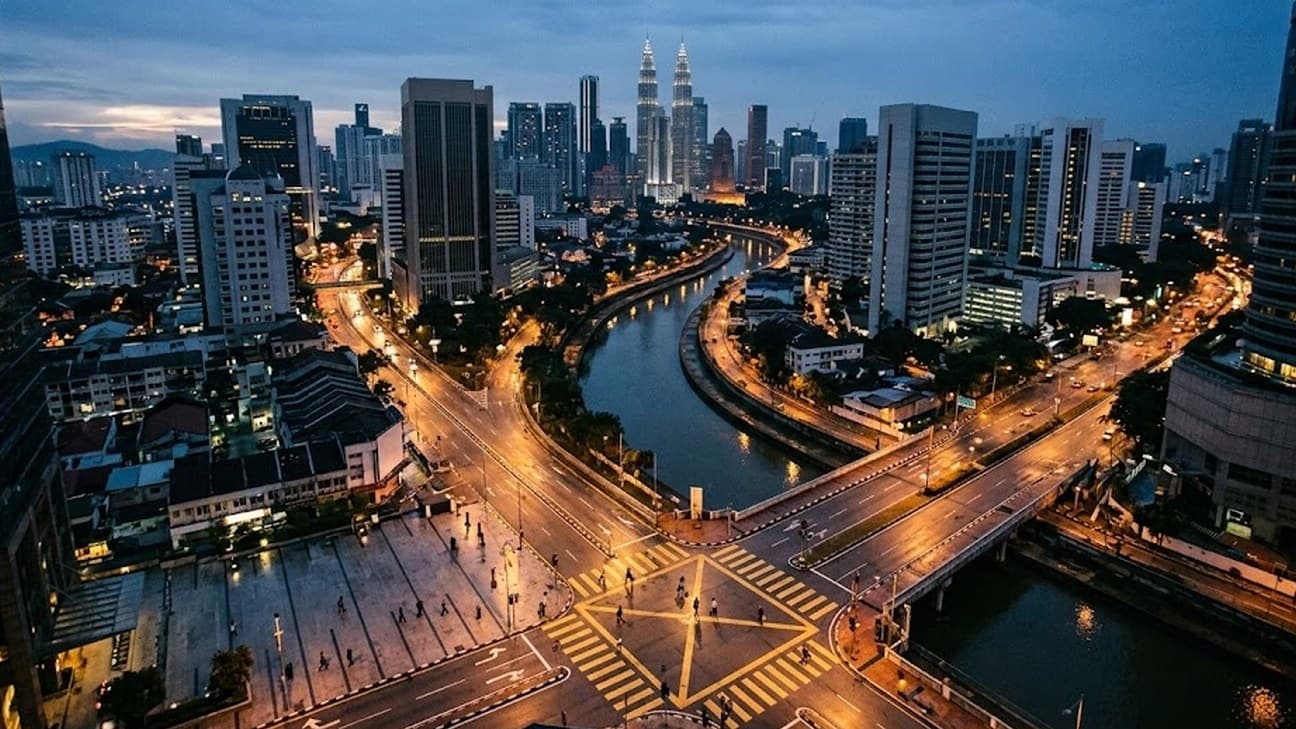
High-angle view of a Kuala Lumpur financial district at pre-dawn blue hour, with office towers, a river bend and a few tiny pedestrians crossing a floodlit plaza and a marked crosswalk.
Daily Brief · FinTech · AI4 min

SEA Daily Brief: Malaysia's Budget 2027 Backs Startups and Crowdfunding, the SC Reports 2025 Restitution Figures, and UOB Explores a Dedicated AWS Cloud for ASEAN

Malaysia's Budget 2027, tabled on 9 October, earmarks RM450 million for startups through Jelawang Capital and Dana Perintis and RM270 million to draw private capital into equity crowdfunding and P2P platforms, with no distribution mechanism disclosed. The Securities Commission told Parliament it returned RM1.98 million to 239 investors in 2025 and has set aside RM8.6 million for 933 more. UOB signed an MoU with AWS to explore a dedicated Singapore cloud environment for its five ASEAN markets, with no financial terms or timeline given.

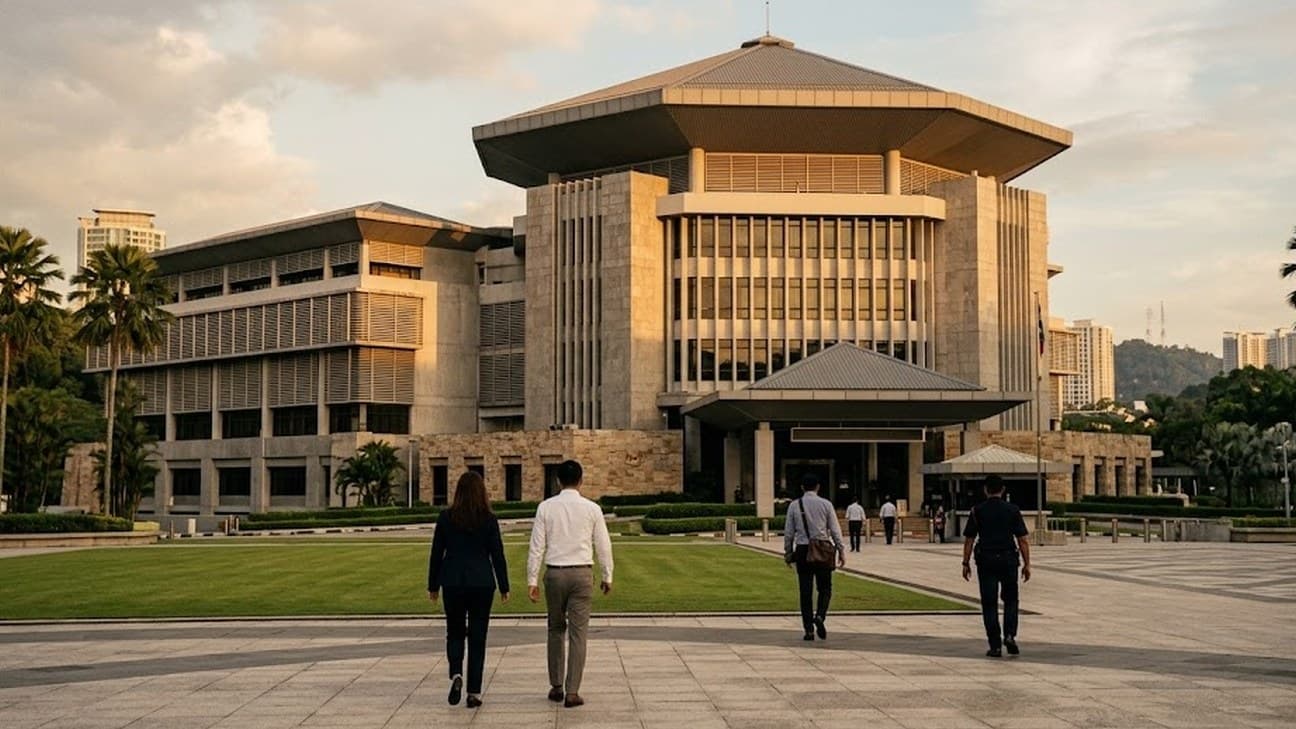
Office workers and a security guard walk across a stone forecourt toward a modern government building with a sweeping roofline in Kuala Lumpur, lit by low golden-hour sun with palm trees and a lawn in the foreground.
Daily Brief · FinTech · Crypto · AI4 min

SEA Daily Brief: Malaysia's Budget 2027 Proposes Tokenised Retail Sukuk, Singapore Licenses Large Data Centres, and the NSRC Plans an AI Scam-Check App

Prime Minister Anwar Ibrahim proposed a blockchain-based retail savings sukuk in Budget 2027, tabled on 9 October, with no launch date, minimum investment or return disclosed. Singapore's Parliament passed the Digital Infrastructure Bill on 7 October, creating licensing regimes for data centres of 10MW or more and large cloud providers. Malaysia's National Scam Response Centre also plans an AI application to check suspicious numbers, accounts and links, with no funding or launch date stated.

Stay Informed

Get the next report in your inbox.