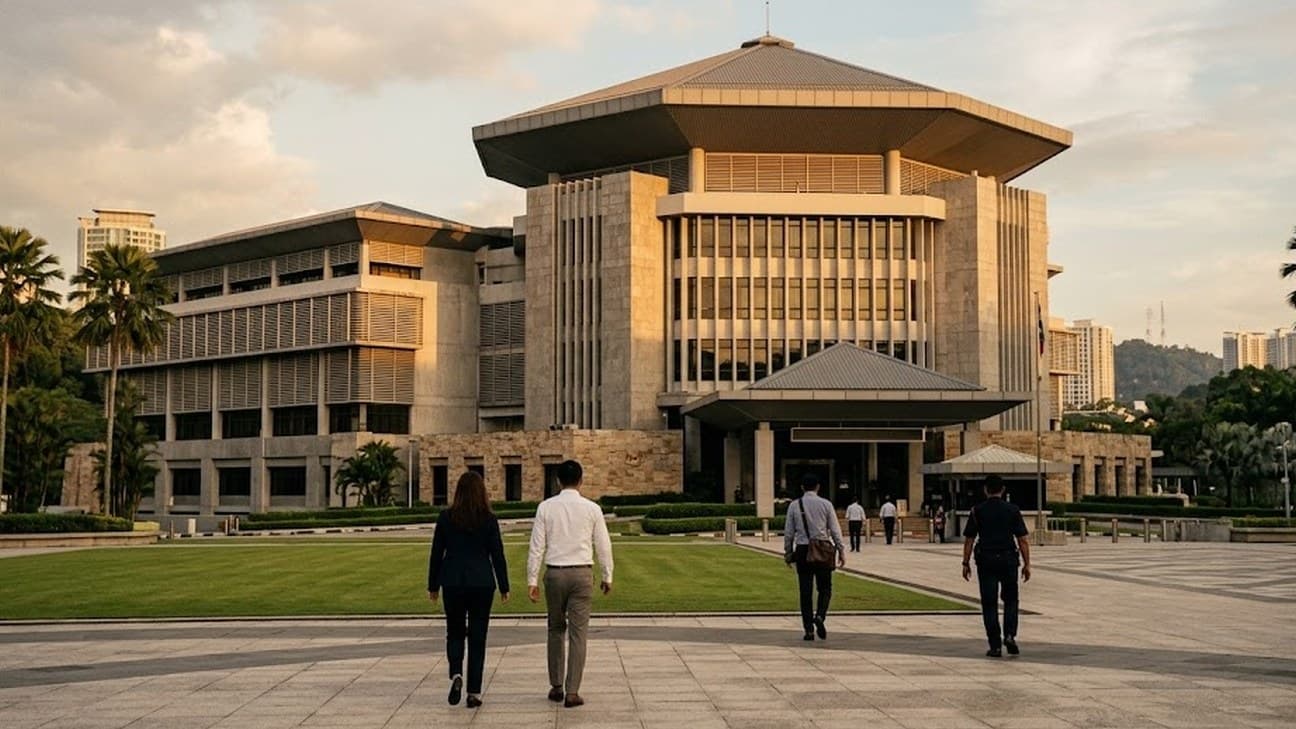
Bank Negara Malaysia Sets Three Priorities for Its 2027-2030 Financial Sector Blueprint — and Launches a New Social-Finance Employment Programme
Bank Negara Malaysia used its keynote slot at the Sasana Symposium 2026 — held July 28-29 under the theme "Reforms for Resilience: Navigating Uncertainties" — to preview the direction of its next five-year plan. Governor Dato' Sri Abdul Rasheed Ghaffour outlined three priorities for the Financial Sector Blueprint 2027-2030: finance for a more resilient society, finance for a more prosperous society, and a future-proof Malaysian financial system. The full blueprint has not yet been published; this was a framing address, not the document itself.
The governor tied the framing directly to Malaysia's current pressures — cost-of-living, wage stagnation, and an uncertain global environment — rather than positioning it as a routine five-year refresh. "Resilience is not about preserving things exactly as they are," he said. "It is about continually renewing our ability to adapt and seize new opportunities as circumstances evolve." Alongside the framing, BNM launched iTEKAD Employment, a new arm of its existing social-finance programme that connects vulnerable communities to skills training, financial education, job placement and financial products, delivered through a coalition of Islamic banks including Bank Islam, Bank Muamalat, CIMB Islamic, Maybank Islamic, Public Islamic Bank, RHB Islamic Bank and SME Bank.
MAS Posts a S$20 Billion Net Profit for FY2025/26, Led by Investment Gains That Outran a Stronger Singapore Dollar
The Monetary Authority of Singapore reported a net profit of S$20.0 billion for the financial year ended March 31, 2026, roughly in line with the prior year and above its 10-year historical average of S$18.3 billion. The result was driven by S$39.8 billion in gains from the management of MAS's foreign reserves, spread across bonds and equities in both developed and emerging markets. Those gains were partly offset by S$16.4 billion in negative currency translation effects, as a stronger Singapore dollar reduced the reported value of foreign-currency assets, and by S$2.4 billion in money-market operations costs and expenses.
Managing Director Chia Der Jiun framed the results as broad-based rather than concentrated in any single asset class: "All asset classes across bonds and equities, developed and emerging markets, posted good returns." He also noted the currency effect cuts both ways for the domestic economy — "the stronger Singapore dollar has helped to dampen the effects of imported inflation" — even as it weighs on the reserve-management line. Of the total, S$1.0 billion goes to the Government's Consolidated Fund as required, with a further S$2.5 billion returned to government on top of that statutory contribution.
A Fresh Alibaba Cloud Survey Finds 91% of Philippine Enterprises Bullish on AI — With Innovation, Not Cost-Cutting, as the Top Driver
Alibaba Cloud, working with NielsenIQ, surveyed 1,000 IT decision-makers across eight Asian markets — the Philippines, Hong Kong, Indonesia, Japan, Malaysia, Singapore, South Korea and Thailand — and found 91% of Philippine respondents hold a positive attitude toward AI adoption, marginally above the eight-market average of 90%. Of those, 57% describe themselves as "very positive," actively exploring or implementing AI rather than merely evaluating it. Cloud readiness underpins the finding: 74% of Philippine respondents have already migrated all or most of their IT infrastructure to the cloud, a precondition most enterprises cite for running AI workloads at scale.
The more distinctive result is what is driving adoption. Rather than the cost-reduction motive that typically leads global AI-adoption surveys, 68% of Philippine respondents cited "driving innovation and creating new business opportunities" as their top objective — ahead of efficiency and cost savings (54%), enhanced customer experience (51%), competitive advantage (50%) and revenue growth (39%). Data privacy and security concerns remain the largest brake, cited by 51% of respondents, followed by high implementation costs at 41%. "The pace of AI adoption in the Philippines is driven by two factors," said Grant Gong, Alibaba Cloud Philippines' head of solutions architect: "large enterprises are pursuing AI initiatives as part of their top-level strategic digital transformation, while small- and medium-sized enterprises are adopting software to meet their operational needs for cost reduction and efficiency improvement."
Eyes on the Day Ahead
Malaysia Blockchain Week 2026 runs through July 30 at the World Trade Centre Kuala Lumpur, with 150-plus speakers including Binance's Steven McWhirter and TRON's Justin Sun — watch for any concrete licensing, custody or exchange announcements to emerge from the event's second day, as day one produced only programming, not news. In Singapore, watch for follow-on commentary from MAS's FY2025/26 annual report on stablecoin draft legislation timing, which Chia Der Jiun's remarks referenced but did not date precisely.
Layer 7 Ventures is a research-driven firm focused on AI and cryptocurrency in Southeast Asia. Views expressed are those of the firm and do not constitute investment advice.