All reports
Daily Brief · AI · FinTech

OECD Flags Malaysia's Jobs-Light Data-Centre Boom, Singapore Banks Form an AI-Cyber Taskforce, and Manila Launches New Payment Rails

The OECD's latest Economic Survey credits Malaysia's data-centre boom with tens of billions of dollars in investment while warning the sector creates disproportionately few jobs and is straining power and water supply. Singapore's MAS and the Association of Banks in Singapore stood up a joint taskforce, ACT, to counter AI-driven cyberattacks across the banking sector. And the Philippines' central bank rolled out new payment rails, including a tenfold increase to InstaPay's business transfer limit.

July 29, 20264 min readMalaysia · Singapore · Philippines · AI Infrastructure · Cybersecurity · Payments
A wide golden-hour photograph of a data-centre campus construction site in Johor, Malaysia. Two tower cranes of different heights flank a partially completed multi-storey steel-framed server-hall building, its bare structural skeleton lit by warm low-angle sunlight. A concrete mixer truck is parked near the site entrance beside stacked rebar, and an unmarked concrete water tower with adjacent cooling-tower units stands to one side of the frame. Near the perimeter fencing, three construction workers in orange hi-vis vests and white hard hats are visible from behind and in side profile, faces not shown — two walking together and one standing near the site gate.
A data-centre campus takes shape in Johor — the construction jobs the OECD credits are visible on site, even as it warns the operational payroll behind the buildout stays thin.

OECD Warns Malaysia's Data-Centre Boom Is Creating Growth but Few Jobs, Straining Power and Water

The OECD's latest Economic Survey of Malaysia, published July 28, credits the country's data-centre buildout — concentrated in Johor — with drawing in substantial foreign investment: approximately US$44 billion in data-centre-related projects between 2021 and 2024, part of US$65 billion in total digital investment over the same period, with approved investment in digital services reaching US$35 billion in 2025 alone.

The survey's caution sits alongside those figures. Construction activity has benefited substantially, but the OECD states the industry "creates only a limited number of jobs" relative to the scale of capital deployed once facilities are operational, and it ties the boom directly to strain on the electricity grid and water supply in areas of concentrated buildout. The recommended fix is accelerated investment in renewable energy and grid infrastructure — complicated by Malaysia's continued reliance on fossil fuels for baseload power, which the OECD flags as a risk to the country's net-zero target.

MAS and Singapore's Banks Form a Joint Taskforce to Counter AI-Driven Cyberattacks

The Monetary Authority of Singapore and the Association of Banks in Singapore announced on July 28 the formation of the AI-Driven Cyber and Technology Risk Taskforce, or ACT, bringing together MAS, ABS, DBS, OCBC, UOB, Singapore Exchange, Network for Electronic Transfers, and Banking Computer Services. Members have been convening since May 2026, ahead of Tuesday's public launch.

ACT's mandate covers three areas: sharing AI-cybersecurity use cases across institutions and outside specialists, running proof-of-concept trials of AI-enabled defensive tools, and developing guidance on detecting and responding to AI-enabled threats. MAS's Vincent Loy framed the concern specifically around frontier AI's capacity to "rapidly identify, exploit vulnerabilities and automate attacks at scale" — a pace conventional, human-paced security operations aren't built for. No deliverable timeline was announced.

The Philippines Launches Direct Debit and a Tenfold Higher InstaPay Business Limit

The Bangko Sentral ng Pilipinas and Philippine Payments Management Inc. launched three new payment rails on July 29, timed to BSP's 33rd anniversary. Direct Debit PH lets billers collect recurring payments — utilities, loan installments, insurance premiums — directly from a customer's authorized account on a set schedule. InstaPay Cash-In lets one user request funds that the payer then approves and sends from their own bank or e-wallet. And InstaPay for Business raises the transfer cap tenfold, from ₱50,000 to ₱500,000 per transaction.

Five institutions — Philippine National Bank, Wise Pilipinas, DCPay Philippines, GoTyme Bank, and Rizal Commercial Banking Corp — are live at launch, with roughly a dozen more having signaled intent to join. BSP Governor Eli Remolona tied the rollout to Circular No. 1238, which pushed banks and e-wallets to align transfer fees with actual processing costs, saying better connectivity and lower transaction costs encourage broader use of digital payment systems.

Eyes on the Day Ahead

Malaysia Blockchain Week runs its second and final day today in Kuala Lumpur, and Securities Commission Malaysia's public consultation on strengthening corporate governance — covering technology governance, shareholder rights, and company oversight — closes for feedback on July 31.

Layer 7 Ventures is a research-driven firm focused on AI and cryptocurrency in Southeast Asia. Views expressed are those of the firm and do not constitute investment advice.

More Research

Photorealistic photograph of a digital-asset compliance and transaction-monitoring floor in a Bangkok office at pre-dawn blue hour, an anonymous analyst reviewing multi-monitor data screens in the foreground while a second anonymous figure stands silhouetted at the window overlooking the skyline.
Weekly Signal · Crypto · FinTech7 min

SEA Signal: Thailand Locks In a Crypto Travel Rule, BitGo Plants Its APAC Flag in Singapore, and the Philippines Wires QR Ph to the World

Thailand's SEC finalized a Travel Rule that forces digital-asset operators to identify counterparties on every transfer, including self-custodial wallets, from February 2027. BitGo opened a Singapore office after tripling its APAC client base, a vote of confidence in the city-state's licensing regime from a major institutional custodian. And the Philippines connected its QR Ph network to Alipay+, giving 2.5 million local merchants a route into cross-border commerce without touching their existing infrastructure.

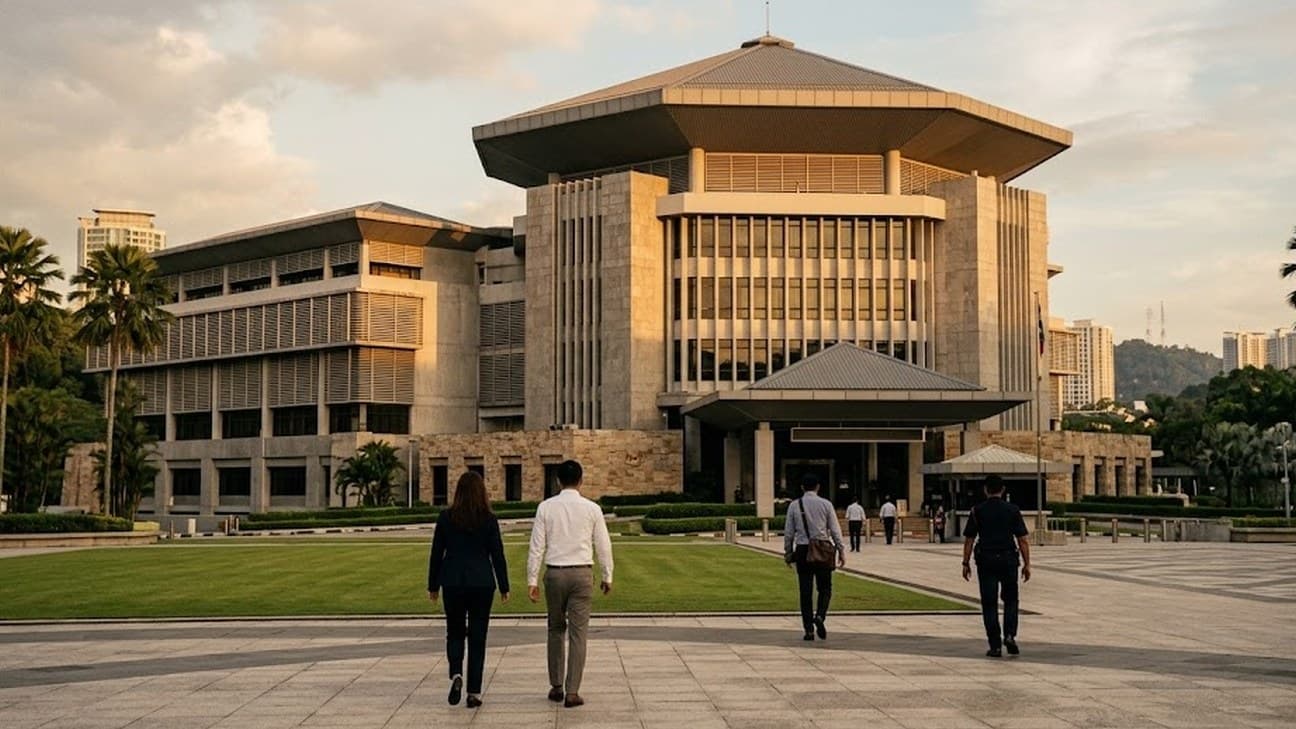
Photorealistic exterior photograph of a central bank headquarters building in Kuala Lumpur at golden hour, an anonymous security guard standing at the entrance and two office workers crossing the forecourt, with the city skyline visible in the background.
Daily Brief · FinTech · AI4 min

SEA Daily Brief: BNM's Sanctions-Screening Fines, Qualcomm's Vietnam AI Bet, and CIMB's Biometric Mandate

Bank Negara Malaysia fined Petronas' Setel and two Standard Chartered units a combined RM901,500 over sanctions-screening lapses. Qualcomm's CEO told Vietnam's top leader he wants the country to become the chipmaker's third-largest AI R&D hub globally. And CIMB will require biometric or passcode approval for all online banking transactions from September 19, ending password-only authorization.

A regulator addresses a conference audience from a lectern, a large digital screen behind them, seen from the back of the room.
Daily Brief · Crypto · AI4 min

SEA Daily Brief: Indonesia's OJK Maps a Crypto Roadmap, Singapore's Scam Data, and Alibaba's Malaysia AI Push

Indonesia's OJK laid out a 2026-2031 roadmap covering stablecoin regulation, real-world asset tokenization, and a single investor ID for crypto. Singapore's H1 2026 scam losses fell 17.9% to S$410.6 million, with crypto-linked losses down 43% but still 16% of the total. And Alibaba Cloud joined Malaysia's AI Untuk Rakyat programme, offering two free AI tools to 100,000 young Malaysians.

Stay Informed

Get the next report in your inbox.