MAS and Bank of Thailand Sign a Cybersecurity Cooperation Pact
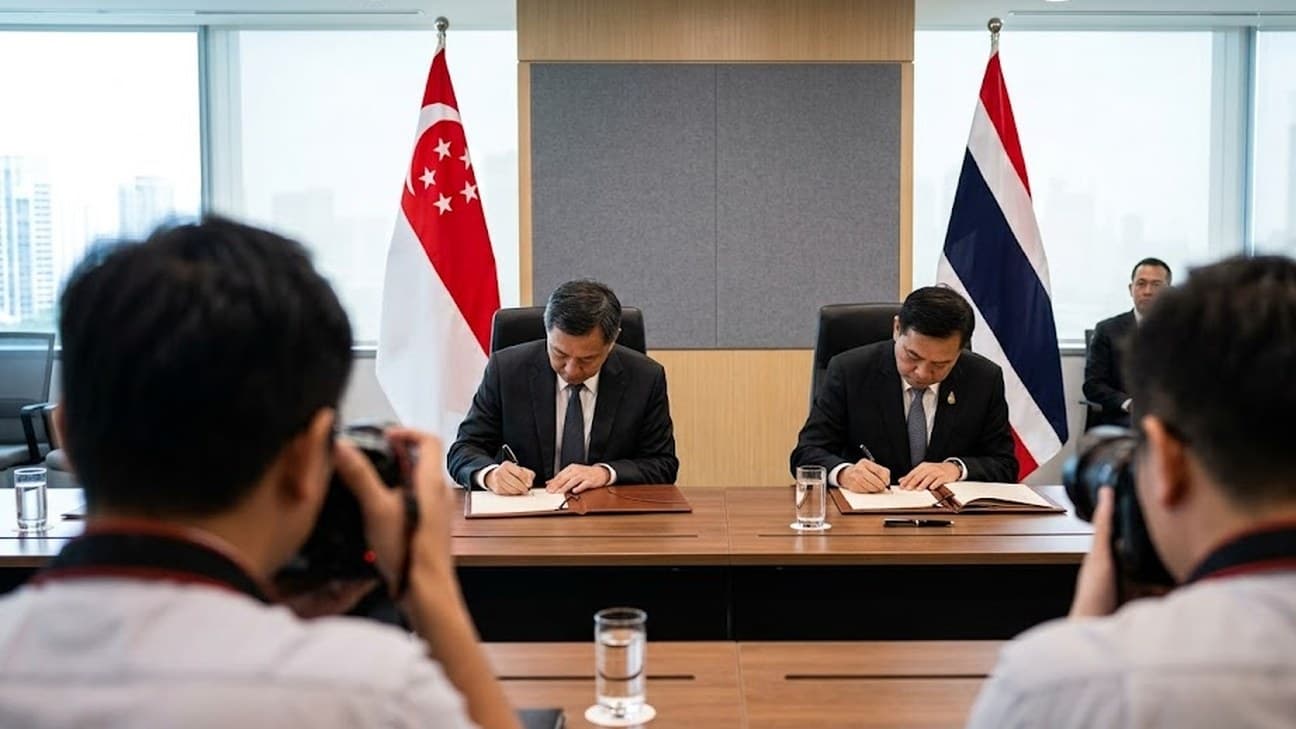
The Monetary Authority of Singapore and the Bank of Thailand signed a memorandum of understanding to formalize cybersecurity cooperation between the two financial sectors, signed by MAS Managing Director Chia Der Jiun and BOT Governor Vitai Ratanakorn during the 31st EMEAP Central Banks Governors' Meeting held in Singapore from July 22-24. The framework covers three areas: intelligence sharing on regulatory updates, incident notifications, and threat data; joint staff training and research; and coordinated cross-border cybersecurity and crisis-management exercises.
"Cyber risks and digital fraud are key transnational threats confronting our region," Chia said, while BOT's Ratanakorn described the partnership as a way to "deepen mutual capabilities and achieve seamless cross-border intelligence exchange to counter emerging threats."
HSBC Finds Crypto Holding Steady in Malaysian and Singaporean Affluent Portfolios
HSBC's 2026 Affluent Investor Snapshot, surveying 9,993 investors across ten markets with a minimum of $100,000 (affluent) or $2 million (high net worth) in investable assets, found cryptocurrency allocation holding at 6% of Malaysian and 5% of Singaporean portfolios — both unchanged from 2025, against a global mean of 6%, down from 7% a year earlier. Malaysian investors plan the largest increases in gold (20 percentage points), fixed deposits (19 points), and alternatives generally (17 points); Singaporean investors show a similar pattern, prioritizing fixed deposits (18 points), alternatives (15 points), and gold (14 points).
The two markets diverge on stated financial goals: Singapore respondents cite retirement preparation as the top priority (51%), while Malaysian respondents emphasize building wealth against inflation (43%). Malaysian investors also report stronger intent to reduce cash holdings — 16% versus a 12% global average.
Philippines' Central Bank Warns Banks to Prepare for AI-Powered Cyberattacks
The Bangko Sentral ng Pilipinas issued Memorandum M-2026-034, dated July 6 but reported July 25, warning that frontier AI systems could soon enable attackers to identify software vulnerabilities, generate exploitation methods, and execute multi-stage attacks with minimal human intervention. While access to the most capable systems remains restricted today, the BSP said comparable capabilities could eventually target financial institutions, third-party service providers, and critical infrastructure directly.
The memorandum directs financial firms to maintain current inventories of internet-exposed assets and software dependencies, implement zero-trust and micro-segmentation controls, accelerate patching, and adopt hardware- or certificate-based multi-factor authentication — explicitly discontinuing password-only and SMS-based authentication given AI-assisted social engineering risks. BSP Deputy Governor Lyn Javier said the goal is to "help protect consumers, safeguard financial services, and support confidence in an increasingly digital economy."
Eyes on the Day Ahead
The ASEAN Tech Summit Manila opens tomorrow, July 28, running through July 29 and convening regional policymakers and fintech leaders on digital-economy and AI-governance topics — expect regulatory announcements to follow, with Malaysia Blockchain Week opening in Kuala Lumpur immediately after on July 29-30.
Layer 7 Ventures is a research-driven firm focused on AI and cryptocurrency in Southeast Asia. Views expressed are those of the firm and do not constitute investment advice.