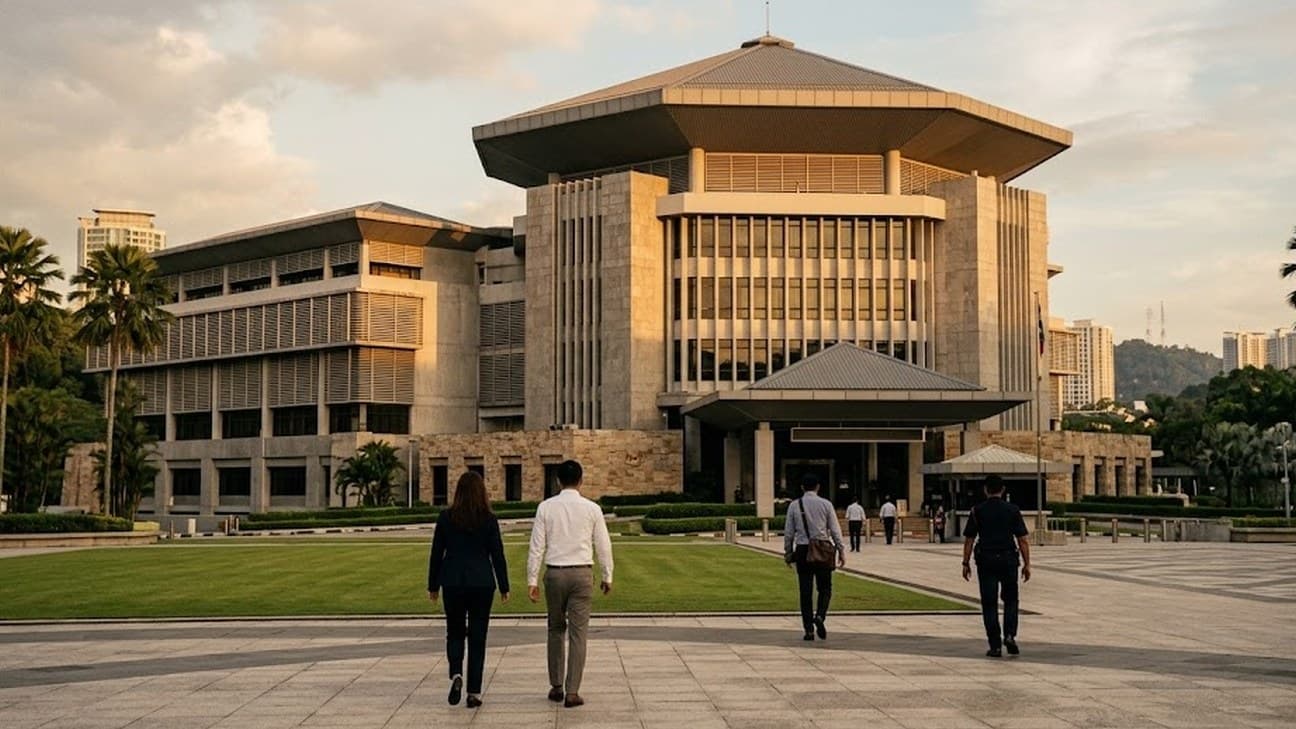
Malaysia opens public consultation on its first cross-sector AI Governance Bill
Malaysia's National AI Office released a Public Consultation Paper on July 10 setting out the proposed AI Governance Bill — the country's first horizontal legal framework dedicated specifically to AI, intended to sit alongside existing sector laws rather than replace them. Written feedback is due by July 31. The draft adopts a three-tier risk classification: Tier 1 uses are prohibited outright, Tier 2 high-risk uses carry structured obligations, and Tier 3 lower-risk uses carry baseline responsibilities. Developers and deployers would be required to demonstrate "due regard" to five principles — human dignity, transparency and explainability, accountability, safety and security, and data governance.
The Bill would also mandate incident reporting for AI harms, including near-misses, and establish a regulatory sandbox so Malaysian developers and startups can test AI applications with reduced compliance burden while the framework beds in. Digital Minister Gobind Singh Deo has clarified the Bill governs AI systems across their lifecycle rather than AI-generated content itself, which stays subject to existing laws. Scope covers AI systems placed on the market or used in Malaysia, plus systems deployed by Malaysian-established organisations regardless of hosting location; personal use and national security applications are exempted.
Thailand's BOI approves a US$688m AI-run Nestlé coffee hub in Samut Prakan
Thailand's Board of Investment approved a US$688 million (23 billion baht) investment by Nestlé (Thai) Co. Ltd. on July 8 to build a smart factory and distribution centre at the Araya Industrial Estate in Samut Prakan province. The greenfield facility will use AI and robotic automation to produce 170,000 metric tons annually of NESCAFÉ soluble coffee, coffee mixes, and ready-to-drink beverages, with operations targeted for the fourth quarter of 2028.
BOI Secretary General Narit Therdsteerasukdi said the project positions Thailand as Nestlé's Southeast Asian production and logistics hub. The company will source roughly US$130 million a year in local agricultural inputs — coffee, sugar, and fresh milk — and the project is expected to create more than 520 jobs for Thai engineers and technical specialists.
Singapore's Nium acquires crypto wallet firm Cypher to bridge fiat and on-chain rails
Cross-border payments infrastructure provider Nium announced on July 8 that it has acquired Cypher, a San Francisco-based non-custodial crypto wallet and card-issuing startup backed by Y Combinator and Coinbase Ventures. Financial terms were not disclosed. Cypher's technology connects blockchain-based assets with traditional financial systems; its four-year-old engineering team, led by founder Kuberan Marimuthu, has joined Nium, with Marimuthu becoming Nium's vice president of digital assets.
Nium said the deal extends the compliance and security standards of its existing payments infrastructure to on-chain transactions, responding to what it described as rising demand from digital wallets, exchanges, and fintechs integrating digital-asset services. CEO Prajit Nanu framed the rationale around latency and idle capital in nostro accounts under the current cross-border rails.
Eyes on the Day Ahead
Malaysia's AI Governance Bill consultation stays open through July 31 — watch for submissions from industry associations and AI developers that could shift the final risk-tier thresholds; separately, Malaysia Blockchain Week runs July 29–30 in Kuala Lumpur and is likely to surface further industry commentary on the proposed Bill.
Layer 7 Ventures is a research-driven firm focused on AI and cryptocurrency in Southeast Asia. Views expressed are those of the firm and do not constitute investment advice.