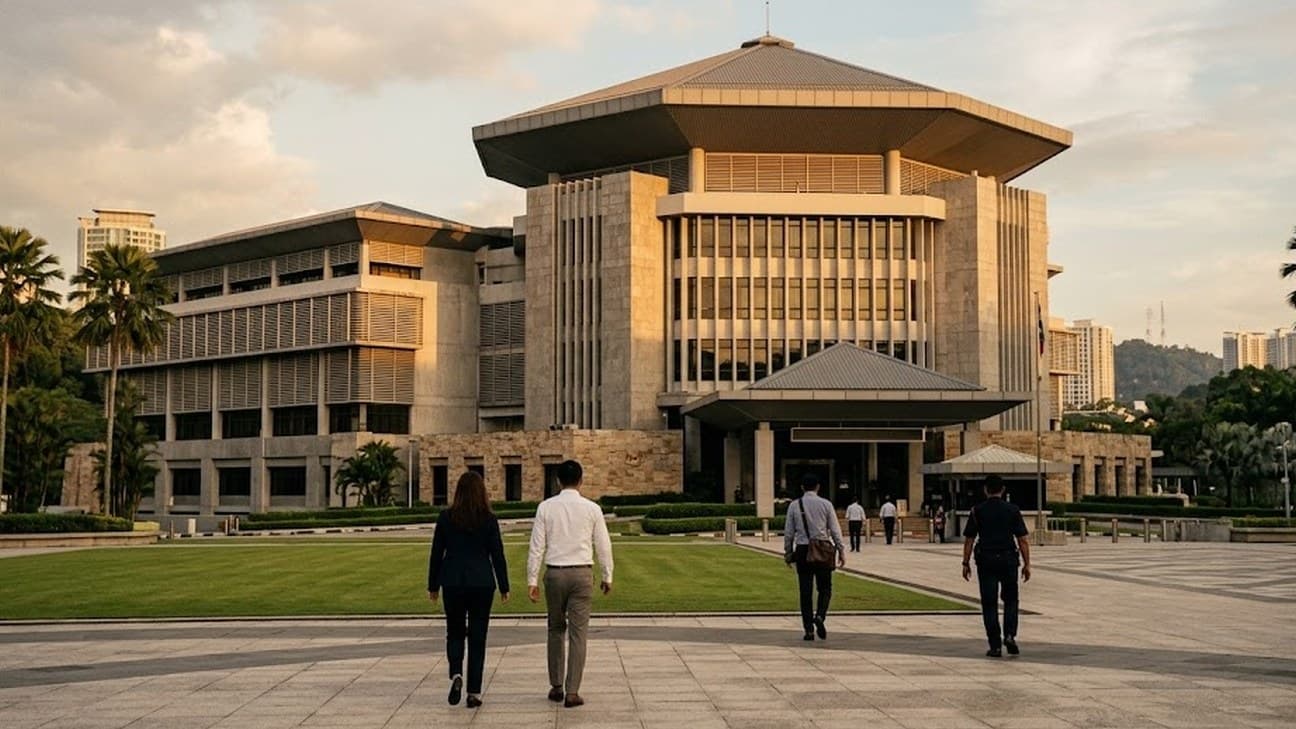
XTransfer opens a Kuala Lumpur hub as it converts conditional Bank Negara payment licences
XTransfer, which bills itself as the world's leading business-to-business cross-border trade payments platform, inaugurated a new Malaysia office in Kuala Lumpur on 3 July, positioning the country as a strategic hub for its Southeast Asia operations. The opening drew directors from three of Malaysia's largest banks — Maybank, CIMB and OCBC — a signal that the incumbents are treating the entrant as a partner in the correspondent and settlement chain rather than purely a competitor. XTransfer's core product serves small and mid-size exporters and importers, handling cross-border collections, payments, foreign exchange and compliance screening for firms that global banks often find too small to bank efficiently.
The regulatory groundwork predates the ribbon-cutting. In February 2026 XTransfer received conditional approval from Bank Negara Malaysia for key payment licences; once it satisfies the pre-issuance conditions, it can begin offering domestic digital payment services to Malaysian businesses engaged in international trade. Until then, the Kuala Lumpur office is a commercial and operations base, not yet a licensed local payments operator — the distinction that determines what it can actually do onshore.
Grab completes its US$425m acquisition of US investing platform Stash Financial
Grab Holdings completed its acquisition of Stash Financial, a US digital investing and banking app, with the deal closing on 1 July. Under agreements first signed in February, Grab is acquiring 100% of Stash, with the payment for an initial 50.1% stake made at closing at an enterprise value of US$425 million; the balance is payable at fair market value over the next three years in cash and/or stock. Stash runs a subscription app offering investing, banking and financial-education tools — including an AI-driven money coach — and carries more than US$5 billion in assets under management across over one million subscribers. Grab expects the business to generate more than US$60 million in adjusted EBITDA by 2028 and will keep Stash operating as a standalone US brand.
The immediate footprint is American, but the strategic intent is regional. Grab has said it may introduce Stash's investing capabilities into Southeast Asia over the longer term, layering wealth and investing onto a financial-services stack that today spans payments, lending, insurance and digital banking. Buying a profitable, subscription-based platform with a working robo-investing product is a faster route into retail wealth than building one licence-by-licence across ASEAN.
MAS and industry partners publish SAFR, a runtime safety framework for AI agents in finance
The Monetary Authority of Singapore, together with a group of financial institutions and fintechs, published an industry white paper on 3 July proposing SAFR — Safeguards for Agentic Finance at Runtime — a framework for letting AI agents carry out financial tasks while staying within predefined mandates, policies and risk limits. Rather than governing the AI model itself, SAFR sits between an agent and the systems it acts on, checking each proposed action against the institution's controls before it executes: it authorises actions, triggers human review where needed, and records every decision. The framework is built from four parts — an agent identity layer, a controls repository, a disposition engine that decides whether an action proceeds, is rejected, or needs a human, and an audit log — and was developed under MAS's BuildFin.ai initiative.
Participants have already applied SAFR across live use cases including agent-assisted payments, treasury operations, wealth-management and advisory workflows, and client engagement. The named contributors read as a map of who is building agentic finance: Mastercard, Visa, Circle, Ant International, OCBC, Bank of Singapore and Manulife. That payments networks and a stablecoin issuer sit alongside banks and insurers signals where autonomous agents are expected to act first — moving money.
Eyes on the Day Ahead
Over the next few days, watch whether Bank Negara Malaysia signals a timeline for moving XTransfer's conditional payment licences to full issuance — the step that would let it settle onshore in ringgit and validate the Kuala Lumpur hub. On the deal front, track any Grab commentary on when Stash's investing product could reach Southeast Asian users, the read-through investors will price. And in AI governance, watch for reaction to MAS's SAFR white paper from the named participants and other regulators — the first sign of whether a runtime standard for agentic finance gains traction beyond Singapore.
Layer 7 Ventures is a research-driven firm focused on AI and cryptocurrency in Southeast Asia. Views expressed are those of the firm and do not constitute investment advice.