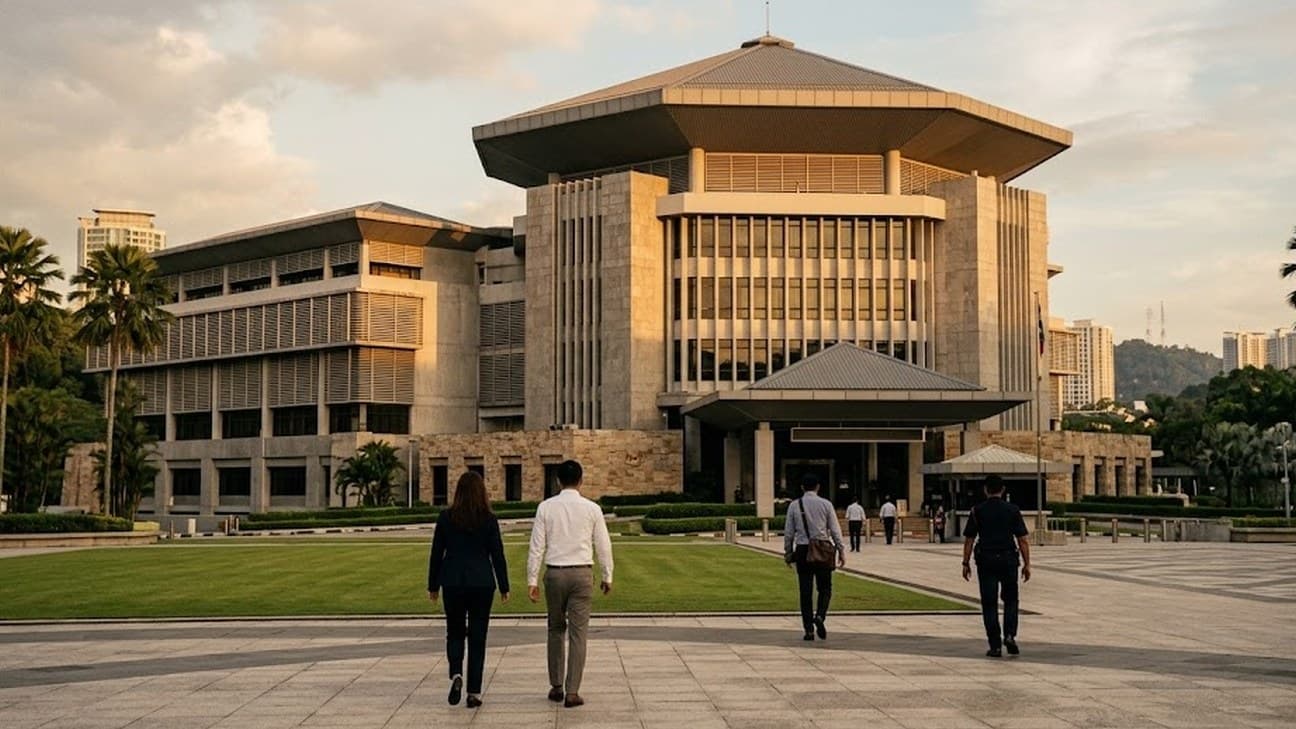
MAS Commits S$220 Million to FSTI 4.0, Its Largest FinTech Push Since 2015
The Monetary Authority of Singapore announced a S$220 million commitment over the next three years under the fourth edition of its Financial Sector Technology and Innovation Scheme (FSTI 4.0) — a 46.7% increase over FSTI 3.0's S$150 million allocation. The scheme spans six tracks: an Institutional Projects track reimbursing up to 50% of costs (capped at S$1 million over 24 months) for financial institutions and fintechs building with AI, distributed ledger technology and quantum computing; an AI Pathfinder track subsidizing adoption of market-ready AI products (capped at S$200,000 for Singapore-based providers, S$100,000 for offshore ones); a Shared Infrastructure track offering up to 70% support; a Centre of Excellence track for firms anchoring specialised R&D functions in Singapore; Scale-up Grants of up to S$500,000 for Global FinTech Hackcelerator finalists; and a manpower track co-funding at least 1,000 internship placements over three years.
The reallocation marks a shift from FSTI 3.0's environmental, social and governance emphasis toward AI, quantum computing and digital assets. Since the scheme launched in 2015, MAS has now committed a cumulative S$845 million across four phases, supporting more than 350 projects and over 30 centres of excellence; Hackcelerator finalists have collectively raised S$3.8 billion. Singapore's fintech sector counts more than 1,800 firms employing close to 10,000 people, with sector investment reaching S$2.9 billion in 2025.
IFC Takes a $20 Million Stake in Axiata's Boost at a $340 Million Valuation
The International Finance Corporation, the World Bank Group's private-sector arm, signed an agreement on July 31 to subscribe for 11.7 million preference shares in Boost Holdings, Axiata Group's fintech arm, for $20 million — valuing the company at $340 million post-money. IFC first flagged its intent to lead Boost's equity fundraising in December 2025. Axiata Group CEO Nik Rizal Kamil said the additional capital gives Boost "greater room to pursue its expansion plans," declining to name other prospective investors; the company said it remains in talks with other parties to extend its funding runway.
Boost holds payments and financing operations across Malaysia and Indonesia and owns 60% of Boost Bank, a digital banking joint venture with RHB Bank (40%) that launched to the public in June 2024 — one of Malaysia's five licensed digital banks. Pre-deal, Axiata held 77.76% of Boost, with Great Eastern Digital at 19.90% and Mitsui at 2.34%; updated post-transaction stakes were not disclosed.
Malaysia's Free AI-Access Program for Young Malaysians Goes Live on Merdeka Day
Malaysia's AI Untuk Rakyat (AI for the People) initiative — announced by Prime Minister Anwar Ibrahim on July 28 — activated its centrepiece benefit on August 31, Malaysia's Merdeka Day: Malaysians aged 18 to 30 who complete AI-training modules (covering AI Safety, Cyber SAFE, Agentic AI and Generative AI) on the government's Rakyat Digital platform become eligible for three complimentary months of ILMUchat Pro, a subscription normally priced at RM50 a month. Activation runs through MyDigital ID verification on the Rakyat Digital dashboard. The program, run jointly by the Ministry of Digital, MyDIGITAL Corporation and YTL AI Labs, targets 100,000 young Malaysians and sits under the government's National AI Action Plan for 2026–2030.
ILMUchat is billed by YTL AI Labs as a Malaysian-built large language model supporting Bahasa Malaysia, English, Chinese and Manglish, with use cases spanning drafting documents, exam and job-application prep, and looking up information on PTPTN loan repayments and SME grants. "We want to ensure that no one is left behind as Malaysia accelerates its adoption of AI technologies," Anwar said, framing AI literacy campaigns as a national priority.
Eyes on the Day Ahead
Vietnam's Decree 284/2026 penalty regime for unlicensed crypto activity takes effect tomorrow, September 1 — though the six-month grace period for domestic traders on offshore platforms won't start until the Ministry of Finance issues its first exchange license, which has yet to happen. Thailand's SEC keeps its public consultation on draft spot Bitcoin and Ether ETF rules open through September 20.
Layer 7 Ventures is a research-driven firm focused on AI and cryptocurrency in Southeast Asia. Views expressed are those of the firm and do not constitute investment advice.