Bursa Malaysia and FTSE Russell Expand the FBM KLCI to 50 Stocks in the Index's Biggest Overhaul Since 2009
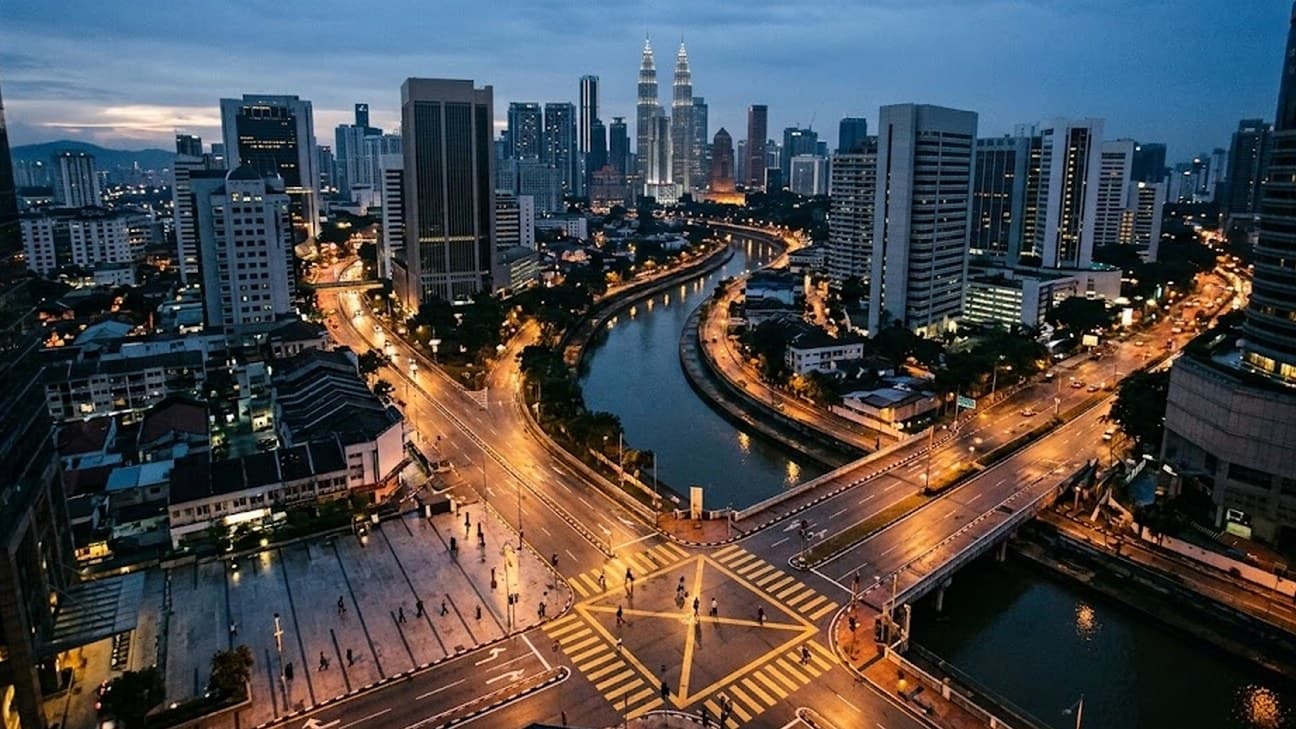
Bursa Malaysia and FTSE Russell will expand the FBM Bursa Malaysia KLCI from 30 to 50 constituents in the benchmark index's first major overhaul since 2009, following a public consultation held from March 31 to April 24, 2026. The change rolls out in two phases: on December 21, 2026, 20 new constituents join at 50% index weight, while the FBM70 (the next tier of mid-cap stocks) shrinks from 70 to 50 stocks and is renamed FBMMCAP; on June 21, 2027, the new constituents reach full 100% weight.
The expansion lifts the index's representation of Bursa Malaysia's Main Market from roughly 60% to approximately 70% of total market capitalisation. For the first time, the KLCI will include technology, energy and real estate investment trust (REIT) names, diluting the index's traditional concentration in financial services. Bursa Malaysia chief executive Datuk Fad'l Mohamed said the expanded index would "provide a broader reflection of Malaysia's economic landscape while preserving the relevance investors expect from our flagship benchmark."
Singapore, Hong Kong and Japan Are All Regulated on Stablecoins Now — But Their Strategies Are Diverging
A comparative look at Asia's three most advanced stablecoin jurisdictions shows regulatory convergence but strategic divergence. Singapore finalised its framework in August 2023 with full implementation expected in 2026, permitting Singapore-dollar or G10-currency-pegged stablecoins with full reserve backing and five-business-day redemptions; StraitsX alone has processed more than $18 billion in cumulative trading volume through its XSGD and XUSD tokens, and MAS's Project BLOOM already connects Thailand for real-time cross-border settlement, with corridors to Indonesia, Japan, Taiwan and Hong Kong planned.
Hong Kong's Stablecoins Act took effect August 1, 2025, and its first licenses went to HSBC and Anchorpoint Financial (a consortium including Standard Chartered, Animoca Brands and HKT) on April 10, 2026 — with roughly 36 applications still under review as of February. Notably, both initial licensees are prioritising local-currency stablecoins over dollar-pegged ones, a strategic choice that plays to Hong Kong's currency-peg advantage rather than competing head-on with Circle and Tether. Japan, by contrast, takes the most restrictive approach: its revised Payment Services Act limits issuance to licensed banks, trust companies and fund transfer providers, with JPYC (Japan's first regulated yen stablecoin) launching October 27, 2025 and the country's three largest banks developing a joint yen stablecoin through Progmat, targeting a March 2026 launch.
Malaysia Leads a Forecast $35 Billion Southeast Asia Data-Centre Investment Wave Through 2031
A new market report from Arizton Advisory & Intelligence, published August 25, forecasts Southeast Asia data-centre investment more than doubling from $15.72 billion in 2025 to $35.08 billion by 2031, a 14.32% compound annual growth rate. The region currently has 306 operational facilities across nine countries, with a further 173 in the development pipeline — nearly four times current operational capacity once built out. Growth is driven by expanding cloud computing, AI, big data, edge computing and IoT demand across the region.
Malaysia leads the pipeline with more than 6 gigawatts of planned IT load capacity, ahead of Thailand's roughly 3.5 gigawatts. Singapore, still capacity-constrained relative to its market size, has 45 operational facilities with six more planned. Indonesia remains one of the region's largest operational markets, with Microsoft's first Indonesian facility having gone live in May 2025.
Eyes on the Day Ahead
Nothing new is scheduled in the next 24-48 hours; Techsauce Global Summit 2026 continues in Bangkok through August 28, worth watching for further AI-infrastructure and digital-asset announcements from regional regulators and vendors attending.
Layer 7 Ventures is a research-driven firm focused on AI and cryptocurrency in Southeast Asia. Views expressed are those of the firm and do not constitute investment advice.