All reports
Daily Brief · AI · FinTech

Vietnam Lands a $508 Million Data Centre From a Singapore Consortium, While Singapore Keeps Nearly All of the Region's AI Capital

Ho Chi Minh City granted a 50-year lease to a Singapore-backed consortium for a $508 million, 52MW hyperscale data centre, even as fresh Tracxn data shows Vietnam's own AI startups raised just $19 million this year against Singapore's $9.3 billion. Voice-AI infrastructure firm Deepgram added a data point to the same pattern, picking Singapore over its faster-growing Southeast Asian markets for its new APAC headquarters.

August 21, 20264 min readVietnam · Singapore · AI Infrastructure · Venture Capital · Data Centres
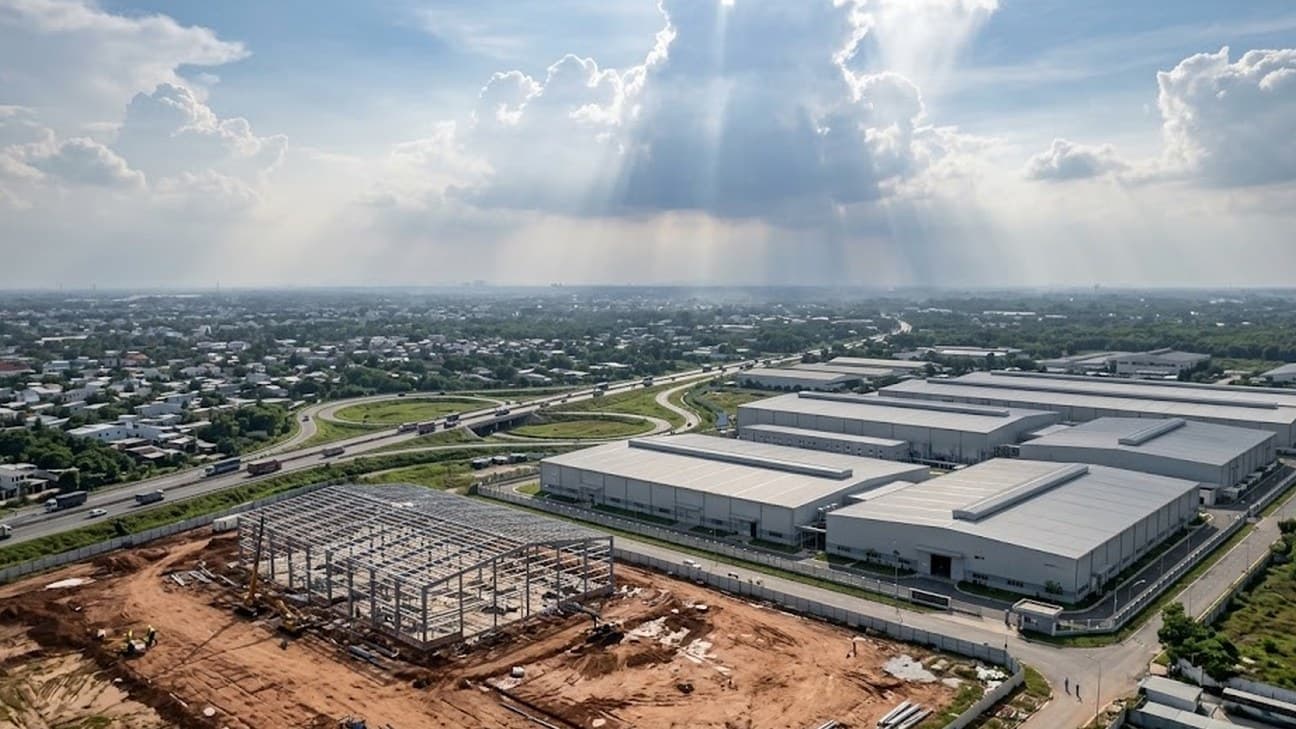
Aerial photorealistic photograph of a hyperscale data centre and industrial park under construction on the outskirts of Ho Chi Minh City, Vietnam, with a steel building frame, warehouses, a highway interchange and dramatic sunbeams breaking through clouds.
An industrial park on the outskirts of Ho Chi Minh City, the kind of site where Evolution DC's Singapore-backed consortium is building its $508 million, 52MW data centre.

Singapore-Backed Consortium Wins a 50-Year Lease for a $508 Million Hyperscale Data Centre in Ho Chi Minh City

Ho Chi Minh City authorities granted Evolution DC VN HCMC a 50-year lease, running from March 30, 2026 to March 30, 2076, on nearly 5 hectares of land in the Saigon Hi-Tech Park's Tang Nhon Phu Ward, clearing the way for a $508 million hyperscale data centre. The project is backed by a consortium of three Singapore-based investors — Evolution Data Centers, which is itself backed by Warburg Pincus and Abu Dhabi's Zero Two, alongside Hathor and Frontier. The facility is designed for 52 megawatts of IT load, targeting Uptime Tier III+ certification with a stated path toward Tier IV, and the developers have committed to more than 30% renewable energy use and net-zero emissions by 2045.

The lease adds to a run of large data-centre commitments in Ho Chi Minh City this year, part of a broader pattern in which Vietnam is absorbing sizeable hyperscale capital commitments even as its own AI startup ecosystem remains thin — a gap made explicit by fresh regional funding data the same week (see below).

Singapore Captured $9.3 Billion of Southeast Asia's AI Funding Through July — the Other Four Markets Combined Raised Under $40 Million

Singapore-based Native AI companies raised $9.3 billion across 227 funding rounds as of July 2026, according to data from market intelligence platform Tracxn cited by Eco-Business. Vietnam raised $19 million, Malaysia $8 million, Indonesia $6 million and Thailand $4 million — a combined total under $40 million, or roughly 0.4% of Singapore's figure. About 67% of the ecosystem's cumulative equity funding has been raised since the start of 2025, and 2026 alone has already brought in $4.1 billion in seven months, more than double the $2 billion raised across all of 2025.

The 2026 surge is heavily concentrated: AI infrastructure and data centres account for 65% of cumulative funding, and a single transaction — Kling AI's $2.8 billion Series D — made up 68% of the year's total through July. Tracxn's analysis attributes Singapore's dominance to structural factors rather than innovation levels alone, pointing to more than 500 venture capital firms and 4,500 tech startups based in the city-state, alongside government backing through the National AI Strategy 2.0 and the 2026 National AI Impact Programme.

Voice-AI Infrastructure Firm Deepgram Picks Singapore for Its APAC Headquarters, Backed by State Investor EDBI

Deepgram, a US-based real-time voice-AI infrastructure company, announced it will establish its Asia-Pacific headquarters in Singapore, with a strategic investment from EDBI — an investment arm under SG Growth Capital, which sits alongside Singapore's Economic Development Board and Enterprise Singapore — structured as an extension to Deepgram's $130 million Series C. Sriram Ved was named Vice President and General Manager for Asia Pacific to lead the buildout. The company said APAC API request volume grew 96% year-on-year, with operations already spanning more than 20 markets including Indonesia, Thailand and Vietnam.

The Singapore hub is intended to house regional leadership and commercial operations, expand customer and language-support teams — including coverage for Singapore's four official languages — and build out low-latency inference infrastructure across the region, with cloud, VPC, self-hosted and on-premises deployment options.

Eyes on the Day Ahead

Nothing concrete is scheduled in the next 24-48 hours; looking further out, Techsauce Global Summit 2026 — Southeast Asia's largest tech conference — runs August 26-28 in Bangkok, and is worth watching for AI-infrastructure and digital-asset announcements from regional regulators and vendors attending alongside its Korea Pavilion delegation.

Layer 7 Ventures is a research-driven firm focused on AI and cryptocurrency in Southeast Asia. Views expressed are those of the firm and do not constitute investment advice.

More Research

A shopkeeper in a plaid shirt and a helmeted delivery rider face each other across the counter of a Kuala Lumpur shophouse in harsh midday sun, with a card payment terminal and stacked cartons on the counter and motorbikes parked at the kerb.
Daily Brief · FinTech · Geopolitics4 min

SEA Daily Brief: Malaysia Lifts SME Financing to RM57 Billion and Tops Up BNM's Relief Facility, Thailand Plans an SME Credit Portal, and Vietnam Wins Its First Investment-Grade Rating

Malaysia's Budget 2027 raises SME loan facilities and financing guarantees to RM57 billion from RM50 billion, while Bank Negara Malaysia adds RM5 billion to its SME Stabilisation Relief Facility after RM3.8 billion of the first tranche was approved. The Bank of Thailand outlined an SME credit portal, an alternative data exchange and a five-year guarantee scheme aimed at about 100 billion baht of new SME lending a year, after a four-year decline. Japan's R&I upgraded Vietnam to BBB-, the first investment-grade rating from an international agency, while Moody's, S&P Global and Fitch still rate it sub-investment grade.

High-angle view of a Kuala Lumpur financial district at pre-dawn blue hour, with office towers, a river bend and a few tiny pedestrians crossing a floodlit plaza and a marked crosswalk.
Daily Brief · FinTech · AI4 min

SEA Daily Brief: Malaysia's Budget 2027 Backs Startups and Crowdfunding, the SC Reports 2025 Restitution Figures, and UOB Explores a Dedicated AWS Cloud for ASEAN

Malaysia's Budget 2027, tabled on 9 October, earmarks RM450 million for startups through Jelawang Capital and Dana Perintis and RM270 million to draw private capital into equity crowdfunding and P2P platforms, with no distribution mechanism disclosed. The Securities Commission told Parliament it returned RM1.98 million to 239 investors in 2025 and has set aside RM8.6 million for 933 more. UOB signed an MoU with AWS to explore a dedicated Singapore cloud environment for its five ASEAN markets, with no financial terms or timeline given.

Office workers and a security guard walk across a stone forecourt toward a modern government building with a sweeping roofline in Kuala Lumpur, lit by low golden-hour sun with palm trees and a lawn in the foreground.
Daily Brief · FinTech · Crypto · AI4 min

SEA Daily Brief: Malaysia's Budget 2027 Proposes Tokenised Retail Sukuk, Singapore Licenses Large Data Centres, and the NSRC Plans an AI Scam-Check App

Prime Minister Anwar Ibrahim proposed a blockchain-based retail savings sukuk in Budget 2027, tabled on 9 October, with no launch date, minimum investment or return disclosed. Singapore's Parliament passed the Digital Infrastructure Bill on 7 October, creating licensing regimes for data centres of 10MW or more and large cloud providers. Malaysia's National Scam Response Centre also plans an AI application to check suspicious numbers, accounts and links, with no funding or launch date stated.

Stay Informed

Get the next report in your inbox.