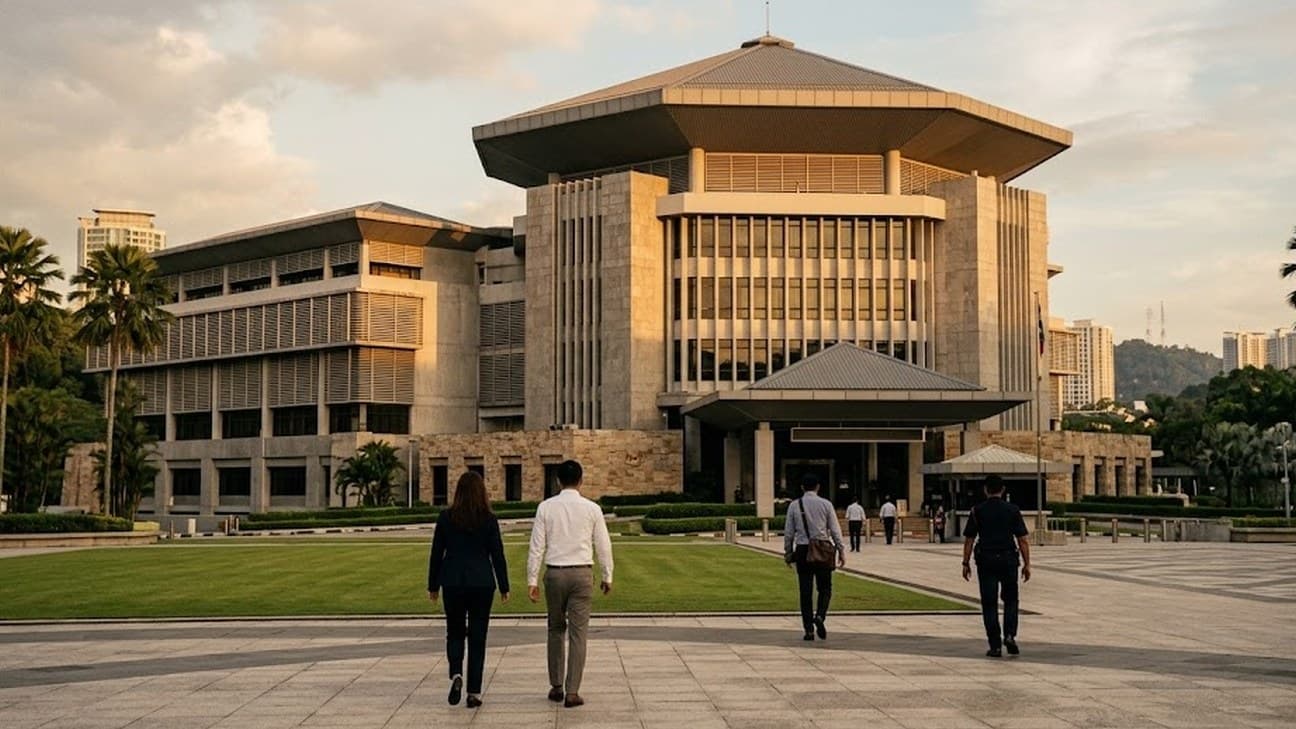
Tencent Cloud Opens Its First Malaysia Cloud Region in Johor, With an AI-Talent Program Attached
Tencent Cloud switched on two of three planned availability zones in Johor this week, marking its first cloud region in Malaysia and connecting the market to a global network of 66 availability zones across 23 regions, the company said August 18. Alongside the infrastructure launch, Tencent Cloud is partnering with Universiti Teknologi Malaysia to train more than 1,000 students and educators through a hackathon, a train-the-trainer program and certification courses, while also announcing new collaborations with Malaysian fintech Boost and Genting Plantations Group on AI agent integration, adding to existing customers Ryt Bank and YTL Communications. No investment figure was disclosed.
The announcement lands in a Johor corridor that is no longer a single-vendor story. Microsoft, Google and Amazon Web Services have each committed multibillion-ringgit investments to the state, and Tencent's move follows Huawei's early-August rollout of AI-ready power and cooling hardware and an August 4 memorandum between SoftBank's telecom unit, Singapore's SC ZEUS and Malaysia's Robust HPC Group to build AI data-centre infrastructure across the region.
Bank Indonesia Launches a Domestic Credit Card to Cut Reliance on Visa and Mastercard
Bank Indonesia launched Kartu Kredit Indonesia on August 17, a domestic deferred-payment scheme routed over the country's QRIS rails, with eight banks issuing from day one: BCA, Bank Mandiri, BNI, BRI, CIMB Niaga, PermataBank, Bank Mega and Bank Syariah Indonesia. The initial phase issues KKI as a digital card usable only for QRIS Scan and QRIS Tap transactions, capped at 10 million rupiah (roughly $560) per transaction; the central bank has laid out a second phase extending KKI into e-commerce checkout flows and a third phase adding physical chip-and-PIN cards.
Bank Indonesia has framed the scheme explicitly as a challenge to Visa and Mastercard's dominance of Indonesian card payments, building on the same domestic-rail strategy behind QRIS itself. One industry estimate cited alongside the launch put the potential shift at roughly 10% of existing credit card transaction volume moving to the domestic scheme, though international cards would retain an advantage for cross-border spending that KKI cannot yet serve.
BSP Data Shows Filipinos Went Digital-First on Payments in 2025, With QR Ph Overtaking Cards
Bangko Sentral ng Pilipinas data released August 18 shows electronic payments reached 64.69% of overall retail transaction volume in 2025, up from 57.45% in 2024 and above the government's 60-70% target range. QR Ph alone processed 2.47 billion payments worth ₱1.16 trillion over the year, surpassing debit and credit card usage for the first time, with person-to-merchant transactions accounting for 74.31% of digital transaction volume. Merchant acceptance of digital payments grew 36.3% over the same period.
The value figures tell a different story than the volume figures: digital payments' share of total transaction value actually fell to 53.32%, down from 58.98% in 2024, even as volume climbed. The BSP attributed the underlying shift partly to Circular No. 123, which pushed financial institutions toward inter-bank transfer fees comparable to internal transfer costs, combined with QR Ph's interoperability standards removing the need for consumers to track which bank or e-wallet a merchant supports.
Eyes on the Day Ahead
Watch for Bank Indonesia follow-up guidance on KKI's phase-two e-commerce integration timeline, and for Visa or Mastercard public responses to the domestic scheme now that eight of Indonesia's largest banks are issuing. In Malaysia, Tencent Cloud's third Johor availability zone is expected to come online in the coming weeks, worth tracking alongside any capacity or power-allocation disclosures from the state government.
Layer 7 Ventures is a research-driven firm focused on AI and cryptocurrency in Southeast Asia. Views expressed are those of the firm and do not constitute investment advice.