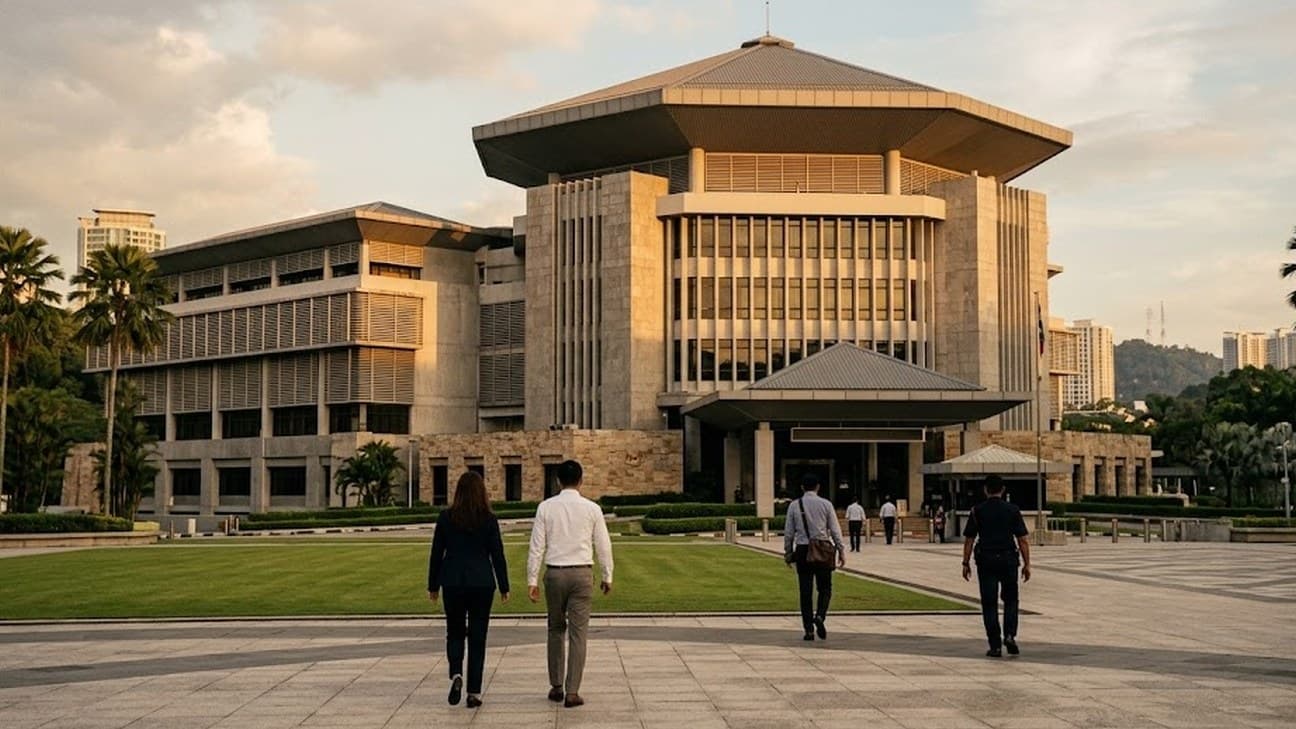
BNM and Labuan's Regulator Fine UBB Investment Bank RM10 Million for Missing 53 Suspicious Transaction Reports
Bank Negara Malaysia and the Labuan Financial Services Authority disclosed a joint enforcement action on August 14 against UBB Investment Bank Limited totalling RM10 million in compounds: RM9 million under the Anti-Money Laundering Act for failing to promptly submit suspicious transaction reports on 53 transactions conducted between 2023 and 2024, and RM1 million under the Labuan Financial Services and Securities Act for failing to properly identify and verify a customer's identity during onboarding in 2023. The breaches surfaced through a joint on-site examination the two regulators conducted in August 2024.
The disclosure timeline is its own data point. The compound was imposed on March 13, 2026; UBB Investment Bank initially missed the payment deadline, which triggered prosecution proceedings before the bank secured reinstatement through the Attorney General's Chambers and paid the full RM10 million on June 11. The public announcement came more than two months after that, on August 14 — regulators framed it as a reminder that reporting institutions face enforcement and prosecution risk for anti-money-laundering lapses.
Sumsub and Orochi Network Build Compliance Rails Ahead of Vietnam's New Crypto Licensing Regime
Identity-verification firm Sumsub and Vietnamese infrastructure startup Orochi Network announced a strategic partnership on August 14 aimed at helping Web3 and digital-asset businesses across Southeast Asia become compliance-ready as Vietnam formalizes its crypto licensing framework. Sumsub contributes identity and business verification, fraud prevention and a Travel Rule directory covering more than 2,100 virtual asset service providers across 220-plus jurisdictions; Orochi contributes zkDatabase, a privacy-preserving verification system built on zero-knowledge proofs. The two firms said their initial focus is go-to-market support for projects seeking Vietnamese licenses, alongside regional education on regulatory readiness.
The timing tracks Vietnam's shift from a gray-zone crypto market to a formal pilot licensing regime, which sets minimum capital of VND 10 trillion (roughly $380 million), requires at least 65% of that capital from institutional shareholders, and caps foreign ownership at 49%. Five domestic applicants — bank affiliates including Techcombank, VPBank and LPBank, alongside brokerage VIX Securities and the Sun Group conglomerate — have already been shortlisted for the pilot track.
BSP Leans on Voluntary AI Guidance for Bank Governance, a Softer Line Than Singapore's Binding Rules
Bangko Sentral ng Pilipinas officials used an August 10 update to reiterate the central bank's approach to AI risk in banking, built around its STARS framework — sustainability, transparency, accountability, responsibility and security — which Deputy Governor Lyn Javier signed into effect in June as voluntary, non-binding guidance rather than enforceable rules. Governor Eli Remolona Jr. framed the underlying philosophy at the central bank's July 27 AI Summit in Manila: "AI can identify patterns, generate ideas, and help us make sense of complexity. But deciding where we want to go or what outcomes we value most by using AI, that remains our responsibility." Javier separately committed the BSP to ensuring consumer safeguards keep pace as AI use in customer service, fraud detection and operational workflows expands.
The approach reads differently against Singapore's, where the Monetary Authority of Singapore confirmed earlier this month that its AI risk guidelines bind agentic AI systems, not just assistive tools that keep a human in the loop — a formal supervisory line the BSP has not drawn. The BSP's framework leaves individual bank boards to set their own risk appetite and controls within the five STARS pillars, rather than meeting a common regulatory floor.
Eyes on the Day Ahead
The State Bank of Vietnam opens its 2026 Banking Sector Digital Transformation event tomorrow in Hanoi, themed "Smart banking in the data and AI era" and running through August 19 — worth watching for whether SBV officials add any detail on how the digital-transformation push intersects with the crypto-licensing track above, given that all five shortlisted digital-asset exchange applicants are themselves bank-linked or major conglomerates.
Layer 7 Ventures is a research-driven firm focused on AI and cryptocurrency in Southeast Asia. Views expressed are those of the firm and do not constitute investment advice.