Malaysian Bank Executives Say They're Done Rewarding AI 'Innovation Theatre'
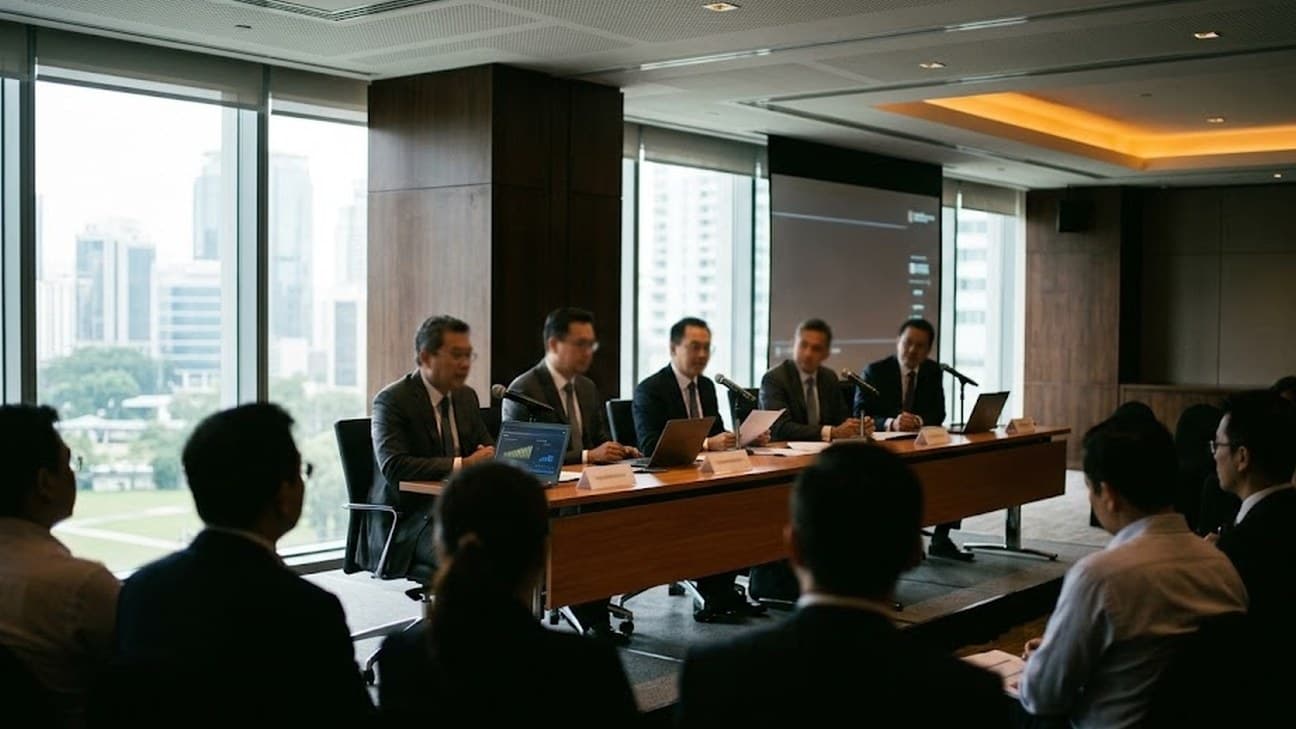
At a Kuala Lumpur roundtable hosted by OneConnect, the technology arm of China's Ping An, senior technology leaders from Maybank, CIMB, RHB, Hong Leong Bank, GX Bank, Boost Bank and KAF Digital Bank described a pointed shift away from funding AI pilots on vendor promises alone. Maybank's head of AI transformation and adoption, Alexander McFaull, put it directly: "There's been a shift from zeal and enthusiasm to almost a constructive scepticism, and I think that's very healthy." Banks are now demanding clear return-on-investment metrics before committing budget, rather than accepting the six-month-payback pitches that defined the earlier hype cycle.
OneConnect's Matthew Chen pointed to Ping An Bank's own numbers as the new benchmark being held up to Malaysian lenders: the Chinese bank says AI generated roughly 30% of its code last year and is targeting 50% in 2026, with AI now powering 99.6% of its systems. "In banks you can't allow any sense of hallucination," Chen said — meaning the effort goes into training-data discipline, not flashy demos. CIMB's Chris Chew described treating AI initiatives as a portfolio, where individual failures are tolerable "as long as one or two are home runs" and the overall book delivers. Malaysia's open banking pilot is expected to produce its first live use cases by the first quarter of 2027, while wealth managers' client ratios — already stretched to roughly 1:200 — are one of the pressure points pushing banks toward AI-assisted advisory tools.
Indonesia Runs AI Through Its Flagship Welfare Programmes While the Rules Meant to Govern It Are Still Unsigned
Indonesia's largest annual technology gathering, INTI 2026, opened Aug. 11 at the Jakarta International Expo with keynotes from Minister of Communication and Digital Affairs Meutya Hafid and Minister of Industry Agus Gumiwang Kartasasmita, and for the first time was formally hosted by the Indonesian Chamber of Commerce and Industry (KADIN). The question hanging over the summit was not abstract: the government is already embedding AI into live public programmes — including the flagship free-nutritious-meals initiative, health services and education monitoring — under the National AI Roadmap 2026–2029. That roadmap, led by Hafid's ministry with Meta, IBM and Microsoft participating in its drafting, targets 20 million AI-literate citizens by 2029 and projects a 12% GDP boost, roughly $366 billion, from successful implementation.
The presidential regulation, or Perpres, that would legally govern that AI deployment has not been signed. Hafid told Indonesia's House of Representatives in January that the regulation was a presidential priority, but as of the most recent public reporting in June it remained in legal review. BRIN head Laksana Tri Handoko, also speaking at the summit, called for deeper collaboration between researchers, universities and business on AI — the kind of structure the roadmap requires but the still-unsigned regulation has not yet formally established.
eFishery's Singapore Liquidators Make Their First Payout to Investors — 18 Months After the Fraud Broke
More than 18 months after DealStreetAsia first reported the accounting fraud at Indonesian aquaculture startup eFishery, liquidators winding down eFishery's Singapore holding company have distributed roughly $21.6 million to investors — the first confirmed return of capital since the company's collapse. Liquidators are also reviewing a plan to use eFishery's intellectual property as the foundation for a new business rather than winding the estate down entirely.
The payout is a fraction of what investors put in. An FTI Consulting investigation found eFishery had run two sets of books for years — an "external" set with faked financials dating back to 2018 — and had claimed roughly 400,000 of its signature eFeeder devices were deployed when only about 6,300 actually were. FTI's most optimistic liquidation scenario put realistic recovery near 10 cents on the dollar, or about $42.7 million from Indonesian assets, with ordinary shareholders likely to recover nothing once liabilities and severance costs are covered. Separately, former CEO and co-founder Gibran Huzaifah had his embezzlement and money-laundering sentence reduced from nine years to six on appeal in July, with prosecutors now pursuing the case further at Indonesia's Supreme Court.
Eyes on the Day Ahead
Conviction 2026, Ho Chi Minh City's officially recognised Digital Asset and AI Economy Forum, opens Aug. 14 with a first day dedicated to crypto regulation, infrastructure and tokenization before a second day on enterprise and sovereign AI — worth watching for any fresh signal on Vietnam's pilot crypto-exchange licensing track, which has capped its first round at five approved platforms.
Layer 7 Ventures is a research-driven firm focused on AI and cryptocurrency in Southeast Asia. Views expressed are those of the firm and do not constitute investment advice.