Bank Negara Malaysia and the PBoC Renew and Expand Their Bilateral Currency Swap to RM130 Billion
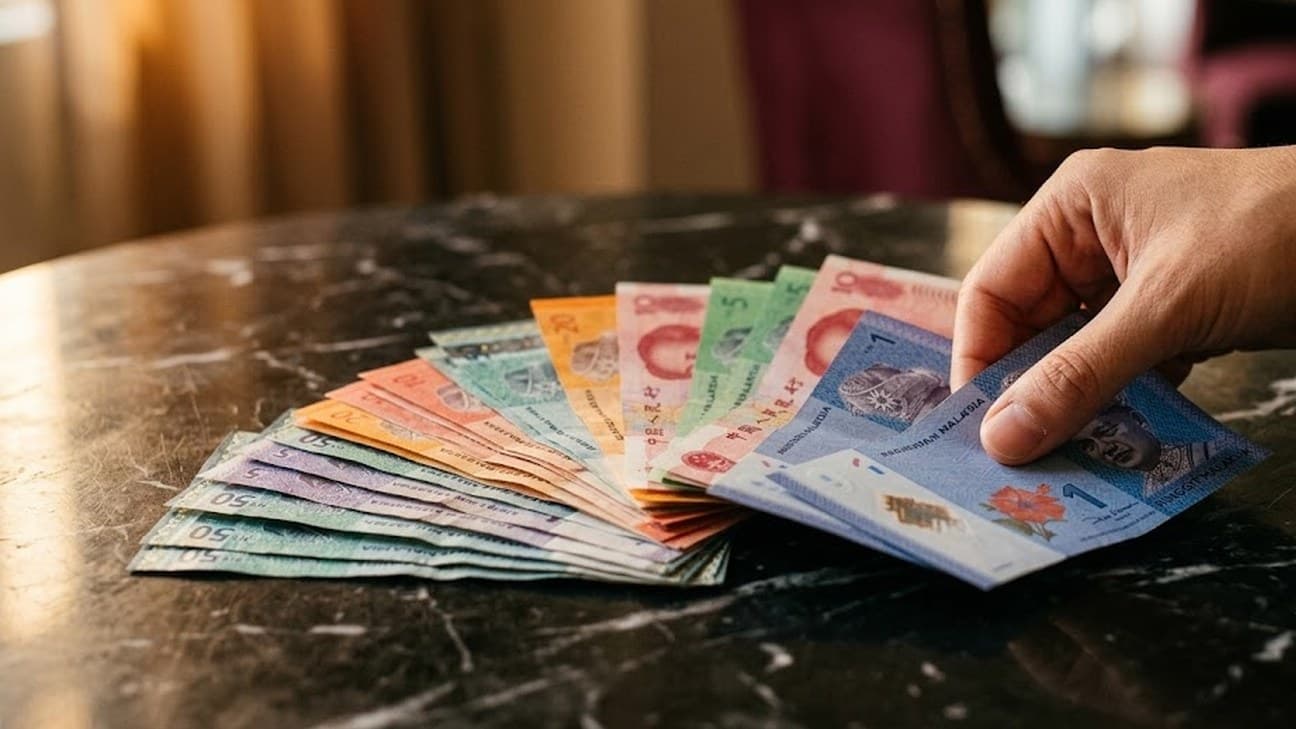
Bank Negara Malaysia and the People's Bank of China renewed their bilateral local-currency swap arrangement for a further five years and expanded it to RM130 billion, equivalent to RMB220 billion, up from RM110 billion and RMB180 billion. This is the fifth renewal since the arrangement was first established in 2009 at RM40 billion and RMB80 billion, following renewals in 2012, 2015, 2018 and 2021. Bank Negara Malaysia said the expansion reaffirms the long-standing cooperation between the two central banks and supports the settlement of bilateral trade and regional financial resilience.
China has been Malaysia's top trading partner for over a decade, and Malaysia is China's second-largest trading partner within ASEAN.
Indosat Launches Zankore, a 1 Gigawatt AI Factory Platform Backed by Qatar's Ooredoo, Nokia and NVIDIA
Indosat Ooredoo Hutchison launched Zankore, an AI factory platform targeting 1 gigawatt of total capacity, with 200 megawatts of AI capacity due in the first half of 2027. Qatar's Ooredoo Group is the lead investor, Nokia supplies networking and NVIDIA supplies accelerated computing running on GB300 NVL72 processors; NVIDIA's DSX MaxLPS is cited as enabling up to 40% more compute within the same power budget. Indosat chief executive Vikram Sinha said "Enterprises moving from AI experimentation to mission-critical deployment need more than computing power." Ooredoo Group chief executive Aziz Aluthman Fakhroo said "The greatest opportunities will come from investing early, at scale, and with the right partners." Indonesia's Minister of Communication and Digital Affairs, Meutya Hafid, confirmed government backing.
The Philippine Central Bank Would Give Crypto Firms and Digital Banks Three Months to Integrate the National ID
The Bangko Sentral ng Pilipinas circulated a draft rule requiring licensed virtual asset service providers, electronic money issuers, digital banks and universal and commercial banks to integrate with the Philippine Statistics Authority's National ID Authentication Services within three months. A second phase would give six months to non-retail commercial banks, thrift banks, rural and cooperative banks, and payment system operators. Two authentication tiers are specified: Tier 1 is an automated backend token match returning a yes or no result, and Tier 2 is electronic know-your-customer verification with secure demographic data exchange.
The BSP said the system "enables BSIs to leverage the National ID for more accurate, secure, and efficient customer identification." Roughly 80% of the Philippines' 90 million population is registered under PhilSys. Non-compliance may trigger BSP supervisory enforcement actions.
Eyes on the Day Ahead
The most consequential near-term item is the consultation window on the Bangko Sentral ng Pilipinas draft circular: the three-month integration deadline is the provision the industry will contest, and whether it survives into the final rule determines how much of the Philippine virtual-asset sector can realistically comply. On the Malaysia-China corridor, the practical question over the next three to five days is whether the enlarged swap line is accompanied by any operational announcement — a designated settlement bank, an expanded e-CNY corridor, or new participants in the cross-border transfer framework — since the swap alone changes nothing a corporate treasurer can act on. And on Indonesian AI infrastructure, watch for power-procurement detail on Zankore; with CoreWeave also committing capacity in the same market this week, grid allocation rather than capital is the binding constraint to track.
Layer 7 Ventures is a research-driven firm focused on AI and cryptocurrency in Southeast Asia. Views expressed are those of the firm and do not constitute investment advice.