Bithumb–SSI Digital MOU Brings the First Major Foreign Exchange into Vietnam's Licensing Pilot
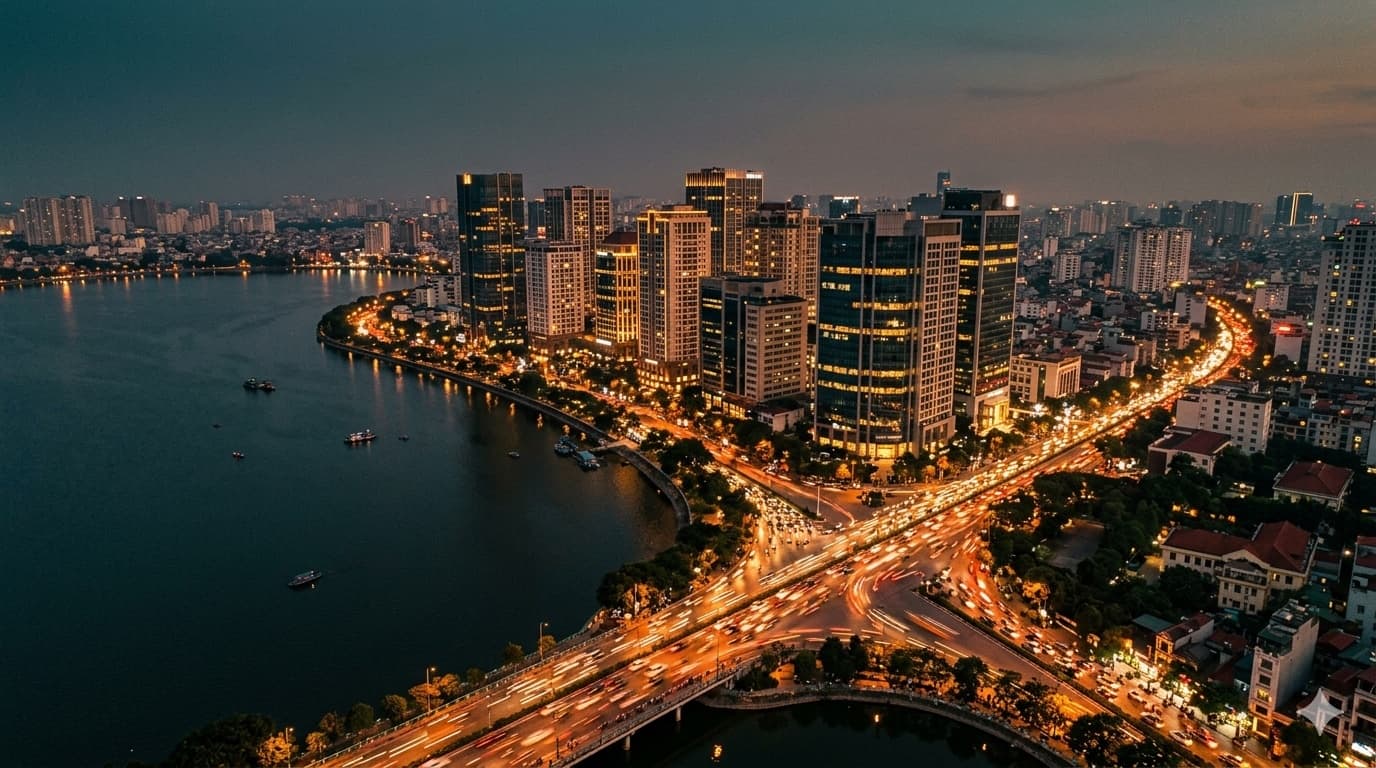
On May 7, Bithumb publicly disclosed a memorandum of understanding with SSI Digital (SSID), the digital-asset arm of SSI Securities — Vietnam's largest brokerage — to cooperate on building and operating a virtual asset exchange in Vietnam. The MOU was executed earlier, on March 2, at SSI's Hanoi office, and signed by Bithumb CEO Lee Jae-won and SSID CEO Nguyen Khac Hai. The May 7 announcement marks the first time the agreement has been formalised in public.
The cooperation areas listed cover the full operational stack: technology architecture and exchange development, wallet and custody systems, security and risk management, regulatory support, business and product development, and institutional operations. The companies also flagged the possibility of a strategic equity investment by Bithumb in an SSID-designated entity, subject to future regulatory approval. Any such investment would have to clear Vietnam's foreign-ownership ceilings on financial firms, which generally cap overseas stakes at 49 percent.
Vietnam's licensing context is the substance behind the MOU. The five-year pilot regulated crypto market was established under Decision No. 96/QĐ-BTC issued by the Ministry of Finance in January 2026, requiring applicants to hold a minimum paid-up charter capital of VND 10 trillion (approximately US$400 million) and meet domestic-corporate, ownership and infrastructure tests. Five entities — including affiliates of three private banks (Techcombank, VPBank, LPBank), VIX Securities, and the Sun Group conglomerate — cleared the initial qualification round in March. The Ministry has not announced any granted licences since.
Sources
- TechNode Global — Korea's virtual asset exchange Bithumb, Vietnam's SSI Digital to jointly build crypto exchange
- Bankless Times — Bithumb partners with Vietnam's top brokerage to launch local exchange
- Vietnam Investment Review — South Korea's Bithumb ties up with SSID to develop virtual asset exchange in Vietnam
Asia's Bank-Anchored Stablecoin Model Hardens — HKMA Confirms 36-to-2 First Round, MAS Consultation Closes May 18
Hong Kong Monetary Authority Chief Executive Eddie Yue confirmed on May 5 that the regulator received approximately 36 stablecoin issuer applications under the Stablecoins Ordinance and granted only two licences in the first round. The two licensees, granted on April 10, are Anchorpoint Financial Limited and The Hongkong and Shanghai Banking Corporation Limited (HSBC). Yue framed the cadence as deliberate: the HKMA will observe how the first cohort behaves at production scale before approving more, and even at full programme scope intends to keep the licensee count small.
A May 6 analysis published by Insignia Business Review read the HKMA decision as the clearest expression to date of a regional pattern: across Singapore, Hong Kong, Tokyo, Bangkok and increasingly Seoul, regulators have converged on placing stablecoin issuance inside the licensed banking perimeter rather than treating it as a fintech category. The analysis points to MAS' Digital Token Service Provider regime — with full-reserve and on-demand redemption requirements — as the global reference, with draft stablecoin legislation expected this year. The consultation comment period for MAS' Consultation Paper P009-2026 on the prudential treatment of cryptoassets on permissionless blockchains closes at 11:59 pm Singapore time on May 18.
The Southeast Asia application-layer reading sits underneath the regulatory surface. The Insignia piece cites StraitsX cumulative on-chain volume at over US$28 billion as of May 2026, up from approximately US$18 billion at year-end 2025 — a roughly 56 percent rise over five months. Bank of Thailand's Programmable Payment Sandbox is running with three participating banks. Money 20/20 Asia in Bangkok (April 21–23) saw 17 percent of exhibitors lead with stablecoin cross-border products, a level the analysis flags as materially above prior global events.
Sources
- Insignia Business Review — Asia's bank-anchored stablecoin convergence: What it implies for the application layer
- HKMA — Granting of stablecoin issuer licences (April 10, 2026)
- HKMA — Register of Licensees under the Stablecoins Ordinance
- Crypto Times — Hong Kong Isn't Rushing Stablecoins — Here's Why (May 5, 2026)
DPS Resources and Alibaba-Linked Xinfengwei Disclose RM4.36 Billion AGI Data Centre MOU in Melaka
Bursa Malaysia-listed DPS Resources Berhad (Bursa: 7198) disclosed on April 29, via its wholly-owned subsidiary DPS Energy Sdn. Bhd., a memorandum of understanding with Hangzhou Xinfengwei Network Technology Co., Ltd. — an affiliate of Alibaba Group Holding Limited and an associate of Dingding (China) Information Technology Co. The MOU contemplates the development of an Artificial General Intelligence (AGI) data centre on a 100-acre site within DPS' 250-acre landbank in Lendu and Kelemak, Melaka. Broader regional and English-language coverage of the disclosure ran through the week of May 4.
The first phase contemplated under the MOU is approximately 150 to 180 MW of capacity, with an estimated development cost of US$7.5 million per MW. At 150 MW, that yields an indicative project value of approximately US$1.1 billion (RM4.36 billion), subject to definitive agreements. Under the disclosed structure, DPSE retains ownership of the land and infrastructure assets while Xinfengwei is expected to introduce global computing demand and customers and undertake market development, technical operations and day-to-day business management. The MOU itself is non-binding; progression to definitive agreements is anticipated.
The Melaka deal extends a pattern visible across recent disclosures. Sarawak hosted the US$126 million Mobile-health Network Solutions / Dato' Stanley Ling 60 MW AI campus disclosed on April 28; Johor remains the dominant hyperscale cluster with TM Nxera's Iskandar Puteri campus targeting commercial operations in the second half of 2026 and AirTrunk's two JHB facilities advancing toward more than 280 MW of combined IT load. Prime Minister Anwar Ibrahim's February 2026 confirmation that all new data-centre applications unrelated to AI have been suspended now defines the eligibility filter at the federal level.
Sources
- w.media — Malaysia-based DPS inks MOU with Alibaba affiliate for potential US$1 billion AI data center in Melaka
- The Edge Malaysia — DPS Resources explores tie-up with Alibaba Group-linked firm for US$1.1b AI data centre in Melaka
- The Star — DPS bags data centre job with Alibaba affiliate
- New Straits Times — DPS, Xingfengwei to explore AGI data centre projects worth over RM4bil
Eyes on the Week Ahead
Three regulatory deadlines bracket the next two weeks. Thailand's SEC public consultation on spot crypto ETF rules — covering eligibility (Bitcoin and Ethereum first), the 80 percent NAV passive-exposure threshold, and custody requirements — closes on May 11. MAS' Consultation Paper P009-2026 on the prudential treatment of cryptoassets on permissionless blockchains closes May 18. Thailand's separate SEC consultation on letting licensed digital-asset firms apply for derivatives licences within existing entities closes May 20.
The CBDC Conference 2026 takes place in Malaysia on May 12–14, and Southeast Asia Blockchain Week 2026 runs in Bangkok on May 18–24, with the main conference May 20–21. Vietnam's Ministry of Finance has not confirmed any granted licences since five entities cleared initial qualification under the pilot in March; the next licensing announcement is the most consequential event for the regional exchange landscape.
Layer 7 Ventures is a research-driven firm focused on AI and cryptocurrency in Southeast Asia. Views expressed are those of the firm and do not constitute investment advice.