Malaysia Cast as a Data-Centre Safe Haven on the Same Day a US$126 Million Sarawak AI Campus Is Disclosed
Two announcements on April 28 reframed Malaysia's position in Southeast Asia's AI infrastructure build-out. RHB Investment Bank published an analyst note arguing that Malaysia is emerging as a regional data-centre safe haven as geopolitical risks redirect global capital, with the bank flagging a likely "rebalancing of DC portfolios from the Middle East to South-East Asia" and citing cost competitiveness, political stability, and tightening domestic policy as the country's structural advantages. The same note quantifies the build-out in Johor at over 4 GW of capacity, with a 260% compound annual growth rate between 2019 and 2024, and points to colocation revenue reaching US$1.87 billion at a 21% CAGR. The broader Malaysia data-centre market is projected to expand from US$6.55 billion in 2026 to US$16.02 billion by 2031 — a 19.5% CAGR — citing Mordor Intelligence.
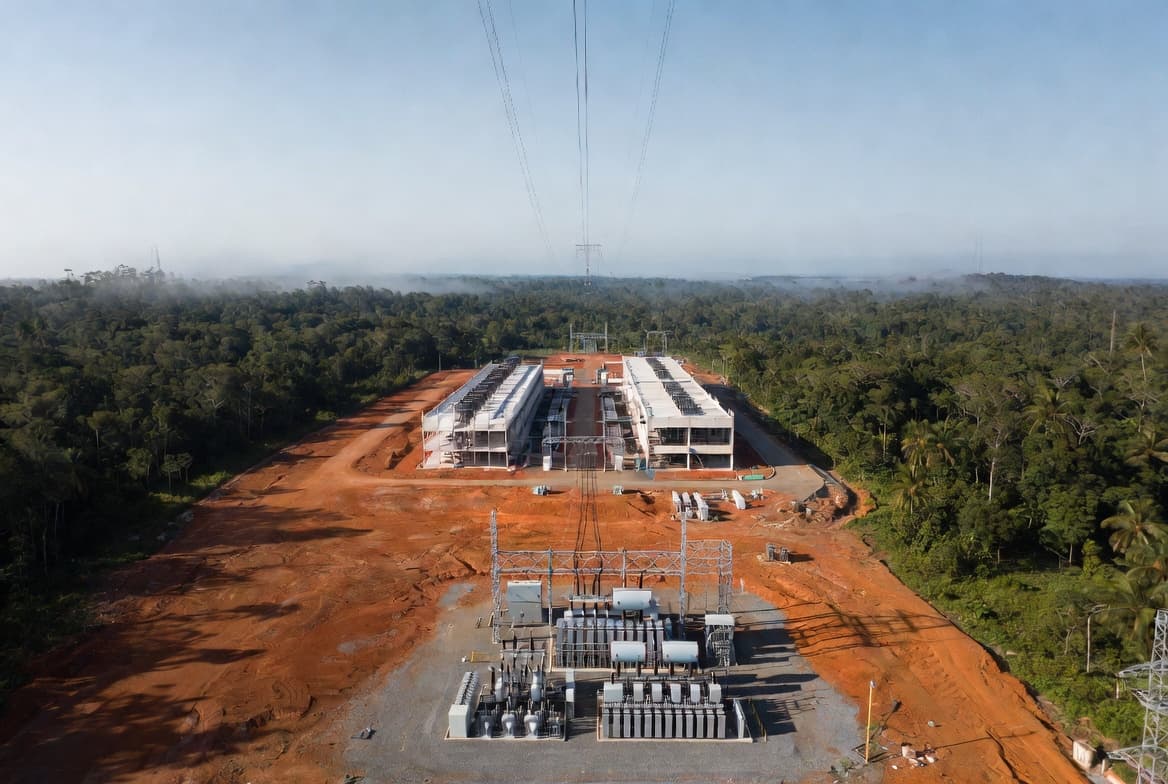
Hours later, Mobile-health Network Solutions (NASDAQ: MNDR), a Singapore-headquartered AI-powered digital health platform, announced a definitive Securities Purchase Agreement with Malaysian businessman Dato' Stanley Ling for an aggregate capital injection of MYR 500 million (approximately US$126 million) to build a phased 60 MW AI data-centre campus in Sarawak. The campus will be operated by PP GRID SDN. BHD. Phase 1 will deliver an initial 20–30 MW of capacity targeting commercial operations in 2027, with the full 60 MW envelope to follow as contracted demand materialises. Ling will hold a 65% economic stake while founders retain majority voting control via Class B shares.
The signal is geographic as much as financial. Most existing hyperscale capacity in Malaysia is concentrated in Johor, where proximity to Singapore's connectivity infrastructure has driven the 4 GW build-out. The Sarawak announcement is one of the more concrete commitments of new dollars to a state outside the Johor–Selangor corridor and pairs with Prime Minister Anwar Ibrahim's February 2026 confirmation that all new data-centre applications unrelated to AI have been suspended — only AI-linked projects now clear approval.
Sources
- TechNode Global — Malaysia emerges as data center safe haven as geopolitical risks reshape global investment flows: RHB
- Newsfile / Mobile-health Network Solutions — Strategic US$126 Million Investment to Build Phased 60 MW AI Data Center Campus
- Stocktitan — Mobile-health Network lands $126M for 60 MW AI campus
MAS' Workable Crypto Capital Framework for Banks Draws First Detailed Industry Analysis
Singapore's Monetary Authority published Consultation Paper P009-2026 — "Prudential Treatment of Cryptoassets on Permissionless Blockchains" — proposing a principle-based alternative to the Basel Committee's blanket restrictions on banks holding cryptoassets issued on public chains. The first wave of detailed industry analysis surfaced this week, with the consultation comment period running through 11:59 pm Singapore time on May 18, 2026, and the framework targeted to take effect no earlier than January 1, 2027.
The substantive shift is the reclassification mechanic. Under the Basel default, all permissionless-blockchain cryptoassets attract a 1,250% risk weight under Group 2 — economically equivalent to a full capital charge against the gross exposure, which in practice prohibits institutional holding. The MAS paper introduces a route by which qualifying assets — including tokenised traditional instruments and certain stablecoins — can secure favourable Group 1 treatment provided banks can demonstrate that the underlying risks are adequately mitigated. Concentration limits cap permissionless cryptoasset exposures at 2% of Tier 1 capital, while liabilities arising from a bank's own Group 1 issuance are capped at 5% of Tier 1.
The framework departs not only from Basel's global standard but also from MAS' own prior position. The 2025 round of consultation took a more conservative line; the April 2026 paper explicitly revisits that stance and is one of the first proposals from a major Asian regulator to articulate a principled basis for treating tokenised assets on public chains as bankable. Approval still requires banks to satisfy MAS that operational, redemption, and counterparty risks have been controlled, but the door is now framed as open rather than shut.
KuCoin and Lightnet Disclose Non-Binding Exploration of Southeast Asia Digital Asset and Payment Rails
On April 28 and 29, KuCoin and Southeast Asia-based fintech firm Lightnet announced they are exploring a collaboration to develop digital asset and cross-border payment infrastructure across Southeast Asia. The two parties framed the announcement as an exploration rather than a binding partnership and committed to working "within appropriate regulatory frameworks." KuCoin reports more than 40 million users across 200+ countries and access to 1,500+ digital assets; Lightnet operates a licensed global settlement network with operational presence in over 150 countries.
The executive framing draws the contours. KuCoin CEO BC Wong said "Southeast Asia represents one of the most dynamic regions for digital financial innovation" and described the goal as combining "strengths in digital asset trading and cross-border payments to explore more efficient and sustainable financial solutions." Lightnet Group CEO Tridbodi Arunanondchai noted "strong synergies between Lightnet's cross-border payment infrastructure and KuCoin's global ecosystem." KuCoin separately highlighted its compliance footprint — SOC 2 Type II, ISO/IEC 27001:2022 and 27701:2019 certifications, AUSTRAC registration in Australia, and a MiCA license in Europe.
No specific products, jurisdictions, or settlement assets have been disclosed. The announcement is best read as a market-development MoU between an offshore exchange brand and a regulated regional payments operator, with the substance to be defined inside individual jurisdictions over the coming quarters.
Eyes on the Week Ahead
Three regulatory consultations are running in parallel and shape the rest of the quarter for the region. MAS' Consultation Paper P009-2026 on the prudential treatment of cryptoassets on permissionless blockchains closes May 18. Thailand's SEC consultation on crypto ETFs closes May 11, and the SEC's separate consultation on letting licensed digital-asset firms add derivatives licences within existing entities closes May 20.
Southeast Asia Blockchain Week 2026 takes place May 18–24 in Bangkok, with the main conference on May 20–21. Vietnam's Ministry of Finance has not confirmed any approved exchange applicants under its five-year pilot programme since five entities cleared the initial qualification round in March; the licensing outcome remains outstanding heading into May.
Layer 7 Ventures is a research-driven firm focused on AI and cryptocurrency in Southeast Asia. Views expressed are those of the firm and do not constitute investment advice.