The Thesis
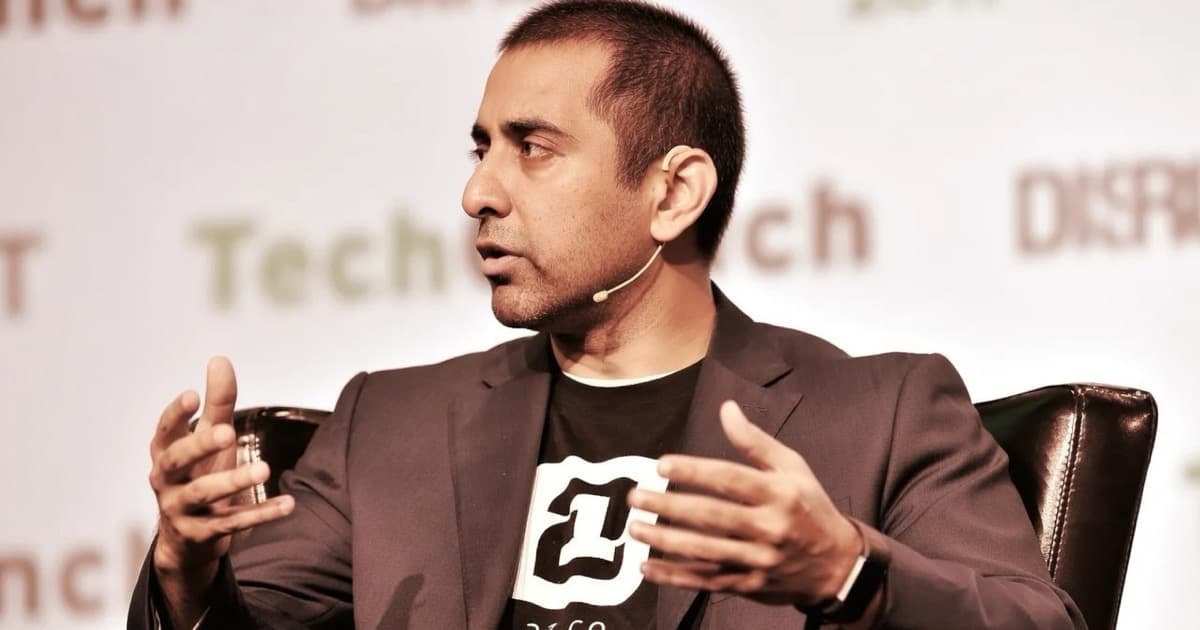
In 2022, Balaji Srinivasan — Stanford-trained engineer, former CTO of Coinbase, former general partner at Andreessen Horowitz, and one of the more relentlessly original thinkers in the technology industry — published "The Network State: How to Start a New Country." The book argued that the combination of cryptocurrency, digital coordination tools, and the right physical territory could allow a self-organizing community to do something that had not been done in modern history: build a new sovereign entity from scratch.
The core mechanism is straightforward. A community forms around shared values online, using cryptocurrency for internal economic coordination and collective wealth accumulation. It then acquires physical territory — not necessarily contiguous, ideally in multiple favorable jurisdictions — and begins operating with genuine autonomy. Eventually, as it accumulates enough economic weight and diplomatic relationships, it seeks formal recognition from existing nation-states. The model draws on the success of special economic zones, the governance experiments of Dubai and Singapore, and the demonstrated capacity of crypto-native communities to coordinate complex collective action at scale.
Critics have been pointed. Philosopher Slavoj Zizek called it "elitist." Journalist Gil Duran suggested it shows "an appetite for autocracy." The counterargument — from supporters including Marc Andreessen and Vitalik Buterin — is that the current nation-state system is itself the product of historical accident, violence, and inherited dysfunction, and that voluntary communities with superior governance structures deserve the opportunity to compete.
The Move: Forest City by Bitcoin
In August 2024, Srinivasan announced via Substack that he had acquired an island near Singapore using Bitcoin. The island was Forest City — the same partially built artificial island in Johor that had spent years as Southeast Asia's most prominent real estate failure. In September 2024, he launched The Network School: a three-month residential program for startup founders, technologists, fitness enthusiasts, and what he calls "the dark talent of the world."
The inaugural popup cohort ran from September 23 to December 23, 2024, with Balaji marketing the programme around a 128-person community. It overlapped with his Network State Conference in Singapore that October. At launch, rent was advertised at $1,000 per month with roommates or $2,000 solo, with food priced separately; by 2025, the live offering was marketed from $1,500 per month including accommodation, meals, gym access, and coworking.
By February 2025, Srinivasan said the Network School would reopen on March 1 with double the capacity to 256 members. He has also announced plans for a permanent campus — prefab construction, open-sourced design, capable of housing thousands of technologists. The school is explicitly framed not as an educational institution but as a prototype for a new kind of community: one that is intentionally designed, economically coherent, and governed by explicit rules rather than inherited convention.
Why Forest City, Why Now
The choice of Forest City is not accidental, and understanding why Srinivasan chose it illuminates the broader thesis. His framework requires a location that is: physically real but administratively flexible; close to a global financial hub but not subject to its costs; governed by a friendly SEZ framework; and available at distressed pricing.
Forest City meets every criterion. It is two kilometers from Singapore — close enough to access Singapore's financial system, legal infrastructure, and international connectivity, but separate enough to operate under its own rules. It operates under a Special Financial Zone with zero-tax incentives for family offices and a 5% corporate rate for eligible businesses. Country Garden's financial collapse has suppressed property values to levels that make acquisition economically rational. And the Malaysian government, eager to fill empty towers with any creditworthy occupant, has shown itself willing to engage with unconventional partners.
Johor's own executive councilor, Lee Ting Han, has engaged with Srinivasan's network state concept directly. At the Network State Conference in October 2025, the speaker slate included representatives tied to Singapore, El Salvador, Dubai, and Abu Dhabi alongside Ben Horowitz of Andreessen Horowitz and Brian Armstrong of Coinbase. The event took place during Singapore's broader TOKEN2049 week; TOKEN2049 itself advertised more than 25,000 attendees in 2025.
In this reading, Forest City is not merely an embarrassing failure being rehabilitated — it is a purpose-built substrate for exactly the kind of experiment Srinivasan has been describing for years. The question is not whether the physical preconditions are met. They are. The question is whether a self-selecting community of technologists and crypto-natives can generate the density, the economic activity, and the social coherence that transforms a location from a place on a map into an actual community.
The Stakes: What Success and Failure Look Like
If the Network School succeeds on its own terms — growing to a permanent campus of thousands, developing genuine internal economic activity denominated in cryptocurrency, demonstrating superior health, education, and governance outcomes relative to surrounding jurisdictions — it becomes the most significant proof of concept for the network state thesis in history. It also becomes a model that will be replicated. The world has no shortage of distressed developments adjacent to global cities, and the playbook Srinivasan is executing in Forest City is, in principle, transferable to sites in Eastern Europe, Latin America, Africa, and Southeast Asia.
If it fails, the most likely failure mode is not ideological but social. Communities require density and variety to function — a critical mass of people with complementary skills, interests, and life stages who generate the serendipitous interactions that make cities valuable. A community of 256 technically sophisticated founders, selected for shared values and living under identical economic conditions, may or may not achieve that density. The $1,500/month all-inclusive model also creates a financial homogeneity that is the opposite of what organic cities produce.
The middle scenario — and perhaps the most likely — is that the Network School becomes something genuinely valuable but distinctly smaller than its most ambitious framing: a premium co-living and co-working experience for crypto-native founders and technologists, generating real network effects and professional relationships, but falling short of the diplomatic recognition and sovereign ambitions of the full network state thesis. This would still be a remarkable outcome for a ghost city on reclaimed sand two kilometers from Singapore.
The Larger Significance
Whatever one thinks of the network state concept's ideological underpinnings, Srinivasan's move into Forest City is a significant data point about how the cryptocurrency-native generation of wealth is choosing to allocate capital and attention. This is not a speculative token project or a metaverse land grab. It is a multi-year commitment of real capital to physical territory, with the explicit intention of building a community that can eventually negotiate with nation-states as a peer.
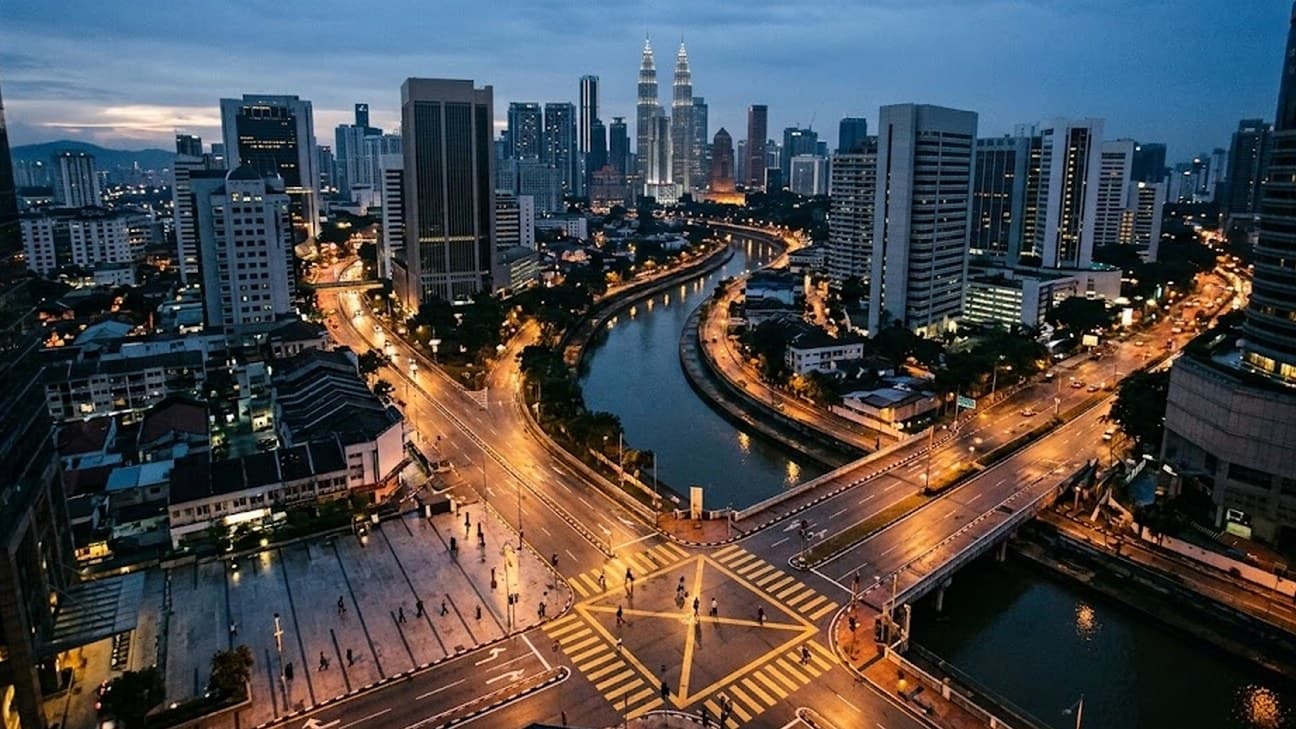
The combination of forces converging on Johor in 2026 is genuinely unprecedented: a special economic zone with zero-tax family office incentives; a bilateral megaproject with Singapore generating $91 billion in FDI; a data center supercycle anchored by NVIDIA, Microsoft, and ByteDance; and a Silicon Valley entrepreneur running an experiment in governance at the intersection of all three. Each of these stories is interesting in isolation. Together, they describe something that does not yet have a name — a new kind of economic geography that is neither city nor nation-state nor corporation, but something that borrows from all three.
Whether it works is genuinely uncertain. But the fact that it is being attempted, with this level of seriousness and capital, in this location, at this moment — that is already significant. Southeast Asia has always been a region where the rules were still being written. In 2026, the writers are arriving.
Layer 7 Ventures is a research-driven firm focused on AI and cryptocurrency in Southeast Asia. Views expressed are those of the firm and do not constitute investment advice.