All reports
Daily Brief · Crypto · AI · FinTech

SEA Daily Brief: Vietnam moves to let SMEs pledge digital assets for bank loans, Google Cloud opens a Southeast Asia–Silicon Valley AI startup corridor, and Singapore anchors Asia's stablecoin surge

Vietnam's Ministry of Finance has drafted an amendment that would let small and medium enterprises pledge digital assets, virtual assets and intellectual property as bank loan collateral, with public consultation closing on May 29. Google Cloud opened an equity-free Southeast Asia–to–Silicon Valley AI accelerator, taking 25 startups from six ASEAN markets with up to US$350,000 in credits each. And a CoinDesk Indices analysis puts Asia's 2025 stablecoin transaction volume at US$12.5 trillion, up 67 percent, with Singapore the region's standout adoption and regulatory hub.

June 1, 20264 min readVietnam · Singapore · Digital Assets · Stablecoins · AI · Venture Capital · Google Cloud · SMEs
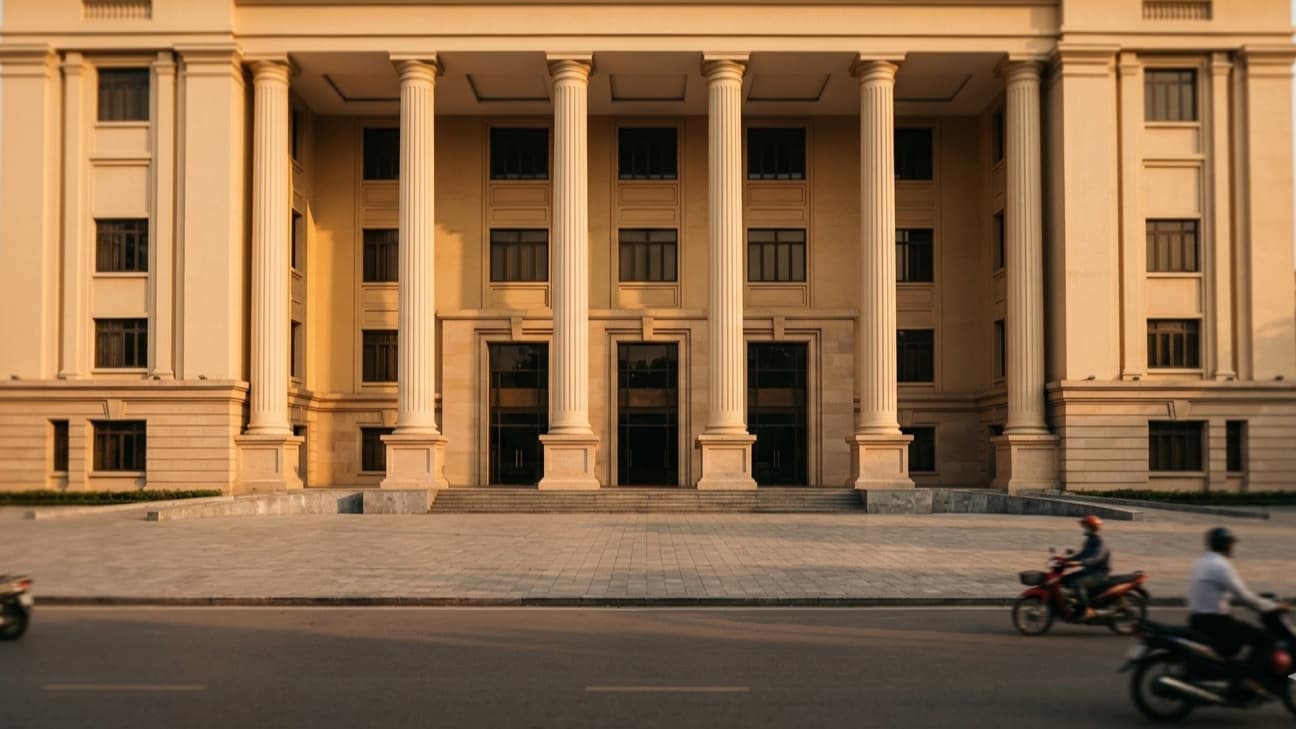
Editorial golden-hour photograph of the imposing neoclassical facade of a national finance ministry building in Hanoi, Vietnam, with tall pale-stone columns above a wide empty granite forecourt, as a few motorbikes pass in motion-blur along the boulevard in the foreground.
Vietnam's Ministry of Finance has drafted an amendment that would let small and medium enterprises pledge digital and virtual assets as bank loan collateral.

Vietnam's Finance Ministry Drafts Law Letting SMEs Pledge Digital and Virtual Assets as Bank Loan Collateral

Vietnam's Ministry of Finance has published a draft amendment to the Law on Support for Small and Medium Enterprises that would allow SMEs to pledge digital assets, virtual assets and intellectual property as collateral when securing bank loans. The public consultation window ran from May 25 to May 29 and has now closed; the ministry plans to submit the draft to the National Assembly in October 2026, with a planned effective date of July 1, 2027 if it is approved. The draft also redefines an SME as a business with annual revenue not exceeding VND400 billion (about US$15.2 million) and no more than 300 employees.

The motivation is a structural credit gap. SMEs make up more than 98 percent of Vietnam's enterprises but receive only around 20 percent of total bank credit, an imbalance the ministry attributes to a lack of land or physical assets to pledge. Beyond widening the collateral list, the draft would require lenders to weigh credit rating, cash flow and business plans rather than focusing on assets alone. The proposal lands alongside Vietnam's separate plan to launch a regulated crypto-asset market by the third quarter of 2026 and aligns with Resolution 68-NQ/TW, which positions the private sector as central to the economy.

Google Cloud Opens a Southeast Asia–Silicon Valley AI Startup Corridor With 25 Firms and Up to US$350,000 in Credits Each

On May 25 Google Cloud launched the Google for Startups Accelerator: Southeast Asia, an equity-free, three-month program for an inaugural cohort of 25 seed-to-Series-B AI startups drawn from six markets — Indonesia, Malaysia, the Philippines, Singapore, Thailand and Vietnam — beginning in August 2026. The program is run with Enterprise Singapore, Indonesia's Ministry of Communication and Digital Affairs (Komdigi), the Vietnam National Innovation Center and Ho Chi Minh City's Startup and Innovation Hub. Each selected founder receives up to US$350,000 in cloud credits, early access to Google's Gemini 3.5 models, technical residencies in Silicon Valley and Singapore, hands-on bootcamps and engineering advisory.

Google says its accelerator programs have supported more than 200 early-stage Southeast Asian startups since 2018, helping them raise a combined US$6.6 billion and create 11,300 jobs. The new cohort concludes with a demo day and startup summit in Singapore.

Singapore Sits at the Center of Asia's US$12.5 Trillion Stablecoin Year as Local Crypto Ownership Climbs

Asia accounted for US$12.5 trillion in stablecoin transaction volume in 2025, a 67 percent jump from US$7.5 trillion the prior year and the highest of any region, according to a CoinDesk Indices analysis published on May 28. Within the region Singapore stands out on adoption: the analysis cites 61 percent of finance-forward Singaporeans holding crypto and Gen Z ownership doubling from 18 percent to 36 percent in a single year, with the city-state home to over 700 fintech firms and more than 300 Web3 companies.

The figures land as Singapore advances its tokenised-bill pilot and prepares stablecoin legislation, and as neighbours including Thailand, Vietnam, Indonesia and the Philippines build out their own digital-asset frameworks. The hub role is contested: Hong Kong issued its first two stablecoin licences in early 2026 to HSBC- and Standard Chartered-led groups, putting a direct competitor on the board.

Eyes on the Day Ahead

Over the next few days, watch Vietnam's Ministry of Finance digest feedback from the May 25–29 SME-collateral consultation as it readies an October submission, and track whether its separate Q3 2026 regulated-crypto-market framework — which must supply the legal definitions and custody rules the collateral plan depends on — stays on schedule. In Singapore, watch for further detail on MAS's tokenised-bill pilot and stablecoin legislation as Hong Kong's first licensed issuers begin operating. Selection for Google Cloud's Southeast Asia accelerator runs ahead of the August start.

Layer 7 Ventures is a research-driven firm focused on AI and cryptocurrency in Southeast Asia. Views expressed are those of the firm and do not constitute investment advice.
More Research

Editorial photograph of a high-density data centre corridor: rows of dark server racks with exposed copper liquid-cooling manifolds running overhead, cool blue LED status lights reflecting off the polished floor, no people in frame.
Daily Brief · AI · FinTech4 min

SEA Daily Brief: Singapore's GIC and Temasek co-anchor Anthropic's $65B raise, a Singapore developer lands $283M of green debt for a Johor AI data centre, and KBank teams with Ant International on Thailand's cross-border rails

GIC co-led and Temasek joined Anthropic's US$65 billion Series H at a US$965 billion post-money valuation, putting Singapore's sovereign funds at the centre of frontier-AI financing. Singapore-based developer DDSP closed US$283 million in green financing — arranged by CTBC Bank, MUFG and Standard Chartered — for a 45MW liquid-cooled AI data centre in Johor's Sedenak Tech Park. And in Thailand, KBank signed an MOU with Ant International to build 24/7 cross-border USD payment and liquidity rails on J.P. Morgan's Kinexys blockchain.

Editorial photograph looking down the central aisle of a modern hyperscale AI data centre, with rows of glass-fronted server racks lit by blue and teal status LEDs, exposed copper liquid-cooling pipes overhead, and a polished concrete floor receding to a hazy vanishing point under cool blue lighting.
Daily Brief · AI · FinTech4 min

SEA Daily Brief: Singapore captured 99 percent of the region's AI infrastructure funding, Microsoft's Indonesia Azure region turns one, AI takes a third of Singapore's shrinking venture pool

New Tracxn data shows Southeast Asia attracted US$1.2 billion in AI infrastructure funding from 2019 to 2026, with Singapore capturing roughly 99 percent of it, Malaysia just US$1.5 million, and Indonesia and Thailand nothing disclosed. Microsoft's Indonesia Central Azure region marked its first anniversary on May 29, underscoring that physical AI compute is localising even as capital concentrates elsewhere. Separately, DealStreetAsia data shows AI absorbed nearly a third of Singapore's 2025 venture funding even as the country's total venture pool fell 34 percent year-on-year.

Editorial photograph of an empty conference auditorium in a Singapore financial-district hotel at pre-dawn blue hour, with rows of unoccupied chairs facing an institutional lectern lit warmly, and floor-to-ceiling windows revealing the Marina Bay skyline beyond.
Daily Brief · FinTech · AI4 min

SEA Daily Brief: MAS chief warns AI growth could narrow, Bank Indonesia tightens FX threshold to defend rupiah, Singapore halves private-banking onboarding time

MAS Managing Director Chia Der Jiun used the UBS Asian Investment Conference Singapore Wealth Edition to flag concentration risk in the AI investment boom and commit MAS to accelerated financial-workforce upskilling. Bank Indonesia, fresh off a 50bp rate hike to 5.25 percent and a record-low rupiah near 17,706 per dollar, lowered the documentation threshold for foreign currency purchases from US$50,000 to US$25,000 effective June. At the same UBS forum, MAS announced an industry-wide compression of private-banking account opening to within one month, down from six weeks and longer for complex cases.

Stay Informed

Get the next report in your inbox.