AirAsia MOVE, Solana Foundation and Intebix Sign LOI to Pilot a Tenge-Backed Stablecoin Across 17 Million Travel Users
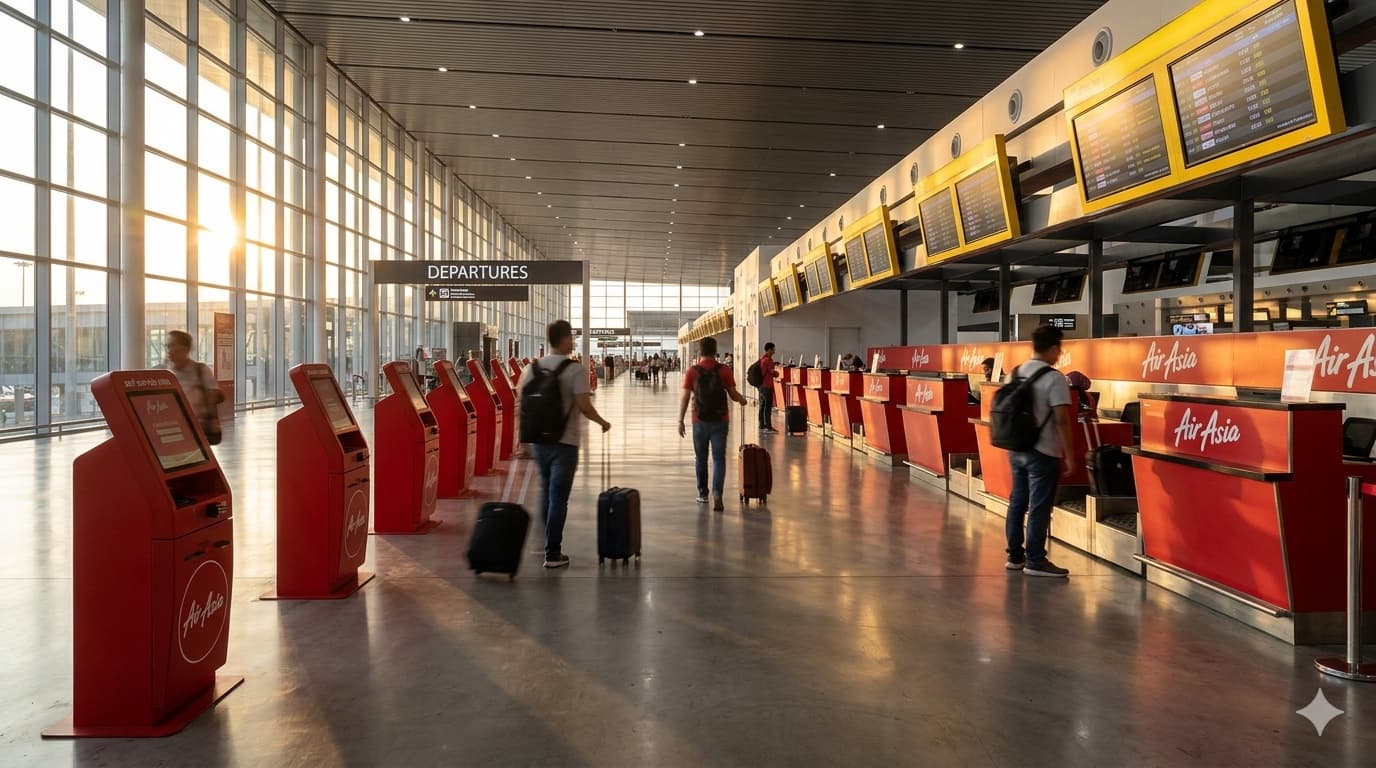
On May 22, AirAsia MOVE — the travel super-app subsidiary of Bursa Malaysia-listed Capital A — disclosed that it had signed a letter of intent with the Solana Foundation and Intebix, a licensed Kazakh digital asset infrastructure provider, to explore integrating Evo (KZTE), a tenge-denominated stablecoin issued on Solana, into the platform's payment stack in Kazakhstan. The first leg of the work covers flight and hotel bookings, with explicit hooks left open for ground transport and a Web3 loyalty layer.
The scale and specificity matter. AirAsia MOVE reports more than 17 million monthly active users and connects travellers to roughly 700 airlines and one million hotels worldwide. Lim Ben-Jie, Chief of People and Partnership Officer at AirAsia MOVE, framed the LOI as part of the company's ambition to enable digital-asset payments across its travel ecosystem. The Solana Foundation's contribution is technical — sub-400-millisecond settlement and sub-cent fees on the network's stablecoin rail — while Intebix carries the licensed digital-asset wrapper inside Kazakhstan's domestic regulatory perimeter. KZTE itself is positioned as a domestic-currency stablecoin, not a USD stablecoin, which keeps Kazakh consumers inside their home unit of account and avoids the FX-mismatch problem that has stalled most USD-stablecoin travel pilots.
Context is important. Capital A's parent Tony Fernandes signed a separate December 2025 letter of intent with Standard Chartered Bank Malaysia to explore a ringgit-backed stablecoin under Bank Negara Malaysia's Digital Asset Innovation Hub. The Solana-AirAsia MOVE-Intebix LOI is not a substitute for that ringgit pilot; it is the foreign-currency leg of the same strategy. AirAsia is trying to build a single stablecoin-routed travel checkout that resolves in the local unit of account of whichever market the booking lands in.
Prabowo Routes Indonesia's Coal, Palm Oil and Iron-Alloy Exports Through New Danantara-Owned Entity From September 1
On May 20, President Prabowo Subianto told parliament that his administration had issued a government regulation centralising the export of Indonesia's strategic commodities through a newly registered entity, PT Danantara Sumberdaya Indonesia (DSI). DSI is 99 percent owned by Danantara, the sovereign wealth fund launched in early 2025 to consolidate state-owned-enterprise assets, with Danantara Investment Management as the main shareholder. Luke Thomas Mahony, formerly of Vale Indonesia, has been named president director.
The implementation is staged. From June 1 to August 31, exporters continue to negotiate and contract with their buyers directly, but submit export documentation through DSI. From September 1 the full chain — contract, shipment and payment — runs through DSI on a B2B basis. The first commodities in scope are coal, crude palm oil and iron alloys, in each of which Indonesia is the world's largest exporter. Prabowo told lawmakers the policy is aimed at under-invoicing and transfer pricing; the government estimates Indonesia lost roughly US$908 billion in export proceeds between 1991 and 2024 to these practices. Upstream oil and gas have been explicitly carved out of the new governance regime.
Reaction has been pointed. Chinese firms — which dominate Indonesian nickel processing and import substantial volumes of all three in-scope commodities — have already protested through their chamber of commerce. Foreign Policy and Fortune both framed the move as creating, in effect, a single-counterparty bottleneck on commodity flows that historically priced as a competitive market. The 14-week runway between announcement and full centralisation is aggressive for a system handling tens of billions of dollars in annual trade.
SEABW 2026 Closes in Bangkok With Thai and Indonesian Regulators Sharing the Stage With Circle, Tether and the Solana Foundation
Southeast Asia Blockchain Week 2026 wrapped at ICONSIAM in Bangkok on May 25–26, with the formal closing communiqué released on May 27. The two-day main conference was co-hosted by Hashed and ShardLab in partnership with SCBX, and the framing of the close was deliberate: the press release led with the line that Southeast Asia's digital-asset market has moved from experimentation to institutional adoption. The roster on stage supported that framing.
On the regulator side, Butree Vangsirirungruang, Director of the Digital Asset Policy Department at Thailand's SEC, and Muhammad Neil El Himam, Deputy for Digital and Technology Creativity at Indonesia's Ministry of Creative Economy, both presented. From Thai industry, Kaweewut Temphuwapat (CIO SCBX, CEO SCB 10X), Atthakrit Chimplapibul (co-founder, Bitkub) and Apinand Dabpetch (MD of Ascend Bit, the blockchain subsidiary of True Money under CP Group) addressed the digital transformation of Thailand's financial infrastructure. On the global side, Circle, Tether, the Solana Foundation, Ripple, BitGo, Anchorage Digital, Xapo Bank and AWS were all represented. Local sponsorship came from SCBX, SCB 10X, InnovestX, Bitkub, Bitazza Thailand and Token X.
Programmatic content tracked five pre-announced themes: the Regulatory Frontier, Institutional Verticalization, RWA 2.0, the Agentic Economy and the Base Layer Imperative. The most concrete output was on the RWA track — four closed-door roundtables covered tokenisation and settlement, taking tokenised products to market, the institutional use of AI and Web3, and stablecoin settlement operations. The AI hackathon was won by BEBRIDGE for RWANDA, an AI rating system that scores RWA audit reports for trustworthiness and de-pegging risk; 92 teams competed. Hojin Kim, CEO of ShardLab, summarised the conference's central thesis as the simultaneous maturation of regulatory clarity and institutional momentum in ASEAN.
Eyes on the Week Ahead
In Indonesia, the operative date is June 1, when private exporters must begin routing coal, palm oil and iron-alloy export documentation through PT Danantara Sumberdaya Indonesia. The first week of compliance and any carve-out announcements (particularly for nickel) will tell investors whether the September 1 full cutover is a credible deadline or a negotiating opening. Chinese chamber-of-commerce statements should be tracked alongside any Treasury or USTR commentary; the policy has already been framed in US press as a tilt away from Chinese counterparties.
In Malaysia, the next observable signal in the AirAsia MOVE-Solana-Intebix LOI is whether technical scoping closes inside Q3 2026 — Capital A's group results in late August are the natural disclosure venue. Separately, Bank Negara Malaysia's Digital Asset Innovation Hub pilots involving Standard Chartered, Maybank and CIMB enter their reporting window in the second half. In Thailand, SEABW's follow-on signal is whether SEC publishes its consultation response on spot crypto ETFs and any associated market-making framework before parliament's mid-year recess. In Vietnam, no exchange has yet been licensed under the Q3 2026 pilot regime despite the March qualification round — any named grant before end-June would meaningfully reset the regional exchange landscape.
Layer 7 Ventures is a research-driven firm focused on AI and cryptocurrency in Southeast Asia. Views expressed are those of the firm and do not constitute investment advice.