Indonesia Moves Crypto From Its Commodity Regulator to OJK — the Real Terms Are Still Unwritten
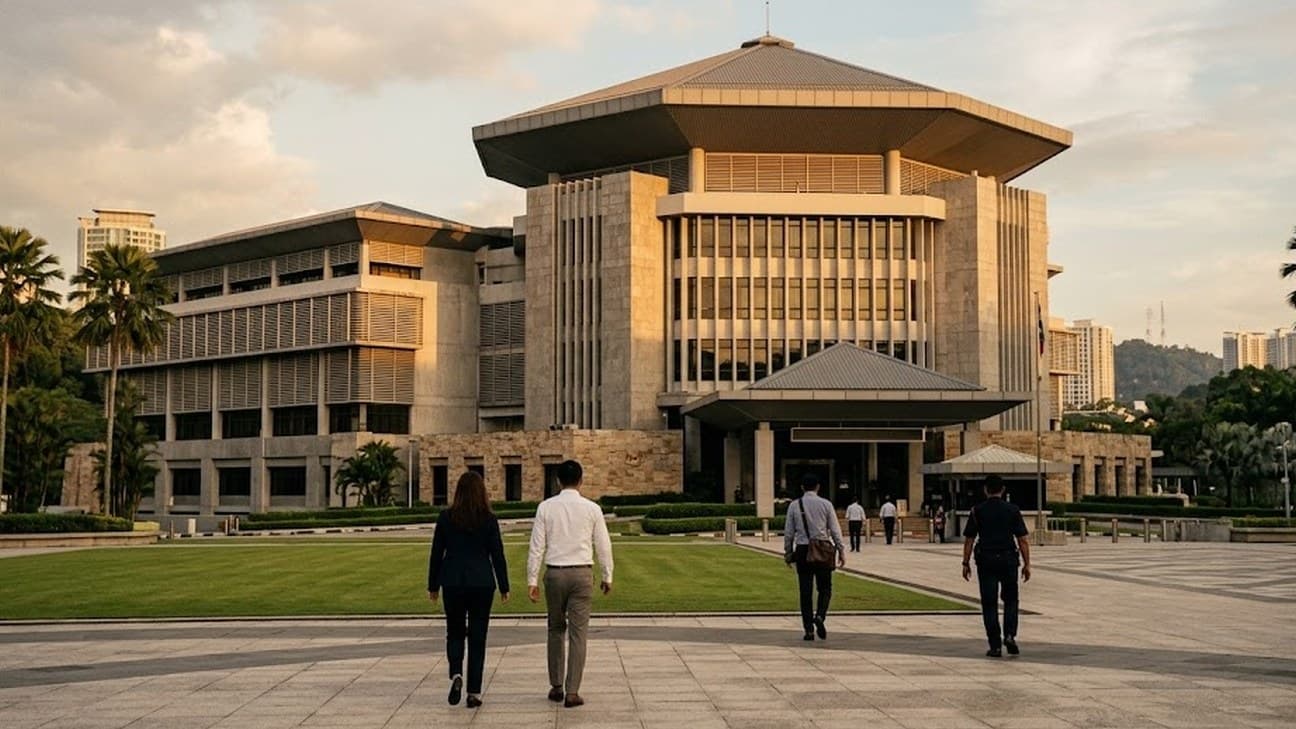
On June 4, Indonesia's House of Representatives (DPR) passed the revision to the Financial Sector Development and Strengthening Law — the P2SK Law — the legislative vehicle that completes the transfer of crypto-asset supervision from the commodity-futures regulator Bappebti to the Financial Services Authority (OJK). The change is structural rather than cosmetic: it reclassifies crypto in Indonesia from a traded commodity into a supervised financial instrument, and with that reclassification OJK gains the authority to apply bank-style prudential tools — capital adequacy, custody segregation, governance and conduct standards — to digital-asset platforms. The same revision also expands Bank Indonesia's remit and strengthens the deposit-insurance body, Lembaga Penjamin Simpanan (LPS).
The industry's public response was supportive of the principle and pointed about the detail. OJK's executive head for technology innovation, Adi Budiarso, framed the test as one of execution, saying that "strong, clear, and adaptive regulation will be key." Tokocrypto's chief executive, Calvin Kizana, welcomed the law as a foundation — "strengthening the legal umbrella at the legislative level can be an important foundation" — while operators across the market stressed that they cannot fully assess the regime until OJK issues the implementing regulations that define market structure, supervision mechanics and compliance thresholds. In other words, the law settles who regulates crypto in Indonesia; it does not yet settle how, and that is where the cost falls.
Context matters here because the law passed into a stressed macro backdrop, not a calm one. The rupiah weakened to Rp18,188 against the US dollar on June 8 — its lowest in more than 25 years — and the equity index sold off before recovering after Bank Indonesia raised its policy rate from 5.25% to 5.50% on June 9. Analysts at Universitas Gadjah Mada's economics faculty read the episode as evidence that immediate market confidence still rests on monetary policy rather than legislation; the P2SK revision, in their assessment, supplies "a strong long-term foundation" and an early-warning architecture for systemic risk rather than a near-term stabiliser. That framing is the tell: Jakarta is treating crypto oversight as part of a broader financial-stability consolidation, not a standalone innovation file.
The Philippine SEC Says It Can Already Regulate Tokenized Securities — and Names the Firms in Its Sandbox
Speaking at Philippine Blockchain Week 2026, Securities and Exchange Commission commissioner Rogelio Quevedo said the regulator is now confident that the country's existing securities laws and its current framework can accommodate tokenized assets — that "tokenization can introduce new forms of capital market activity" and could change how securities are issued and traded, without a bespoke new statute. It is a deliberate choice of regulatory path: fit tokenization inside the law that already exists rather than wait on fresh legislation. That is faster to stand up than Indonesia's parliamentary route, but narrower — it works only for instruments that already map onto the definition of a security.
The commission also put names to its experiment. Four firms are now in the SEC's Strategic Sandbox (StratBox): one testing tokenized real-estate offerings, two building products for access to US equities, and BlockShoals Technologies, which has been granted in-principle approval for crypto-related products. The sandbox lets the regulator waive or modify specific requirements during a supervised testing window while participants remain subject to existing law — a controlled on-ramp rather than a blanket permission.
The same coverage flagged a split screen in Manila's posture: while the SEC opens the door to tokenized securities, the central bank, Bangko Sentral ng Pilipinas, has been tightening listing requirements for virtual-asset service providers, demanding enhanced due diligence before a digital asset can be listed. Two regulators, two directions of travel — the securities regulator leaning into tokenized capital-markets instruments, the monetary authority hardening the consumer-facing crypto-trading perimeter.
AllianzGI Closes a First $744m for Asia Pacific Private Credit, Aimed at Southeast Asia's Middle Market
Allianz Global Investors said on June 24 that it had reached a first close of US$744 million for its Asia Pacific Secured Lending Fund III (AAPSLF III), the third vintage of a middle-market private-credit strategy that lets institutional investors lend alongside Allianz. The fund targets companies across Southeast Asia, South Asia, Oceania and selected Asia Pacific markets excluding China, concentrating on businesses with consistent earnings, defensible market positions and sound governance — and on sectors the firm names as healthcare, education, digital infrastructure and energy transition. AllianzGI runs roughly €97 billion (about US$110 billion) in global private-markets assets as of March 31, 2026.
The fund's own framing is the interesting part: it is explicitly pitched at funding gaps "created by bank retrenchment and regulatory constraints" in the region's middle market. "Asia Pacific continues to offer a compelling opportunity set for private credit investors, particularly in the middle market," said Sumit Bhandari, the firm's head of Asia private credit. That is a polite description of a real vacuum — mid-sized Southeast Asian companies that are too large for microfinance and too small or too unrated for syndicated bank loans have long been underserved, and the institutions that tried to serve them at the smaller end are now visibly straining.
The timing sharpens the point. Only days earlier, Layer 7's June 21 daily brief detailed how Indonesia's peer-to-peer lenders are buckling under mounting SME defaults — the consumer- and small-business-credit experiment of the last cycle running into its first serious loss wave. Institutional private credit closing three-quarters of a billion dollars in the same week is the other side of that coin: as the lightly capitalised P2P model retreats, deeper-pocketed lenders with the balance sheet to underwrite, secure and absorb a default cycle are stepping into the same middle-market gap on very different terms.
Eyes on the Week Ahead
The Indonesia story now moves from statute to rulebook: watch for OJK to begin issuing the implementing regulations under the revised P2SK Law, which will define exchange capital floors, custody and segregation requirements, and — most consequentially — how centralised the licensed market structure becomes. Any draft that pushes trading onto a narrow set of licensed venues would confirm the consolidation thesis; an open, multi-venue design would soften it. In the Philippines, the next signal is graduation: whether any of the four StratBox participants — particularly the tokenized-real-estate and US-equities-access pilots — moves from in-principle approval toward a live offering.
Across the region, the regulatory direction is consistent enough to track as one trend: crypto and digital-asset oversight is migrating to the prudential and securities regulators — OJK in Indonesia, the SC and Bank Negara in Malaysia, the SEC and BSP in the Philippines, and Thailand's SEC, which has guided toward spot Bitcoin and Ether products later this year. Bank Negara Malaysia's promised end-2026 clarity on ringgit stablecoins and tokenised deposits remains the next domestic milestone to watch in the tokenisation race. For credit, watch whether AllianzGI's first close is followed by competing private-credit vehicles targeting the same middle-market gap — a crowded raise would confirm that institutional capital now sees SEA mid-market lending as a structural opportunity rather than an opportunistic one.
Layer 7 Ventures is a research-driven firm focused on AI and cryptocurrency in Southeast Asia. Views expressed are those of the firm and do not constitute investment advice.