DBS Tokenises Physical Gold for Retail Savers — Tokenisation Crosses From Institutions to the Consumer Account
Singapore's largest bank, DBS, said on June 11 that it will offer tokenised physical gold to retail customers, a product it is calling DBS Physical Gold Tokens. Each token is backed by one gram of physical bullion — roughly S$200 at current prices — held by the bank in a dedicated Singapore vault. DBS will tokenise, issue, distribute and manage the tokens entirely in-house. Customers will be able to trade them around the clock with near-instant settlement, and redeem them for the underlying metal. The retail offering is slated to go live on the DBS digibank app in the second half of 2026, with a planned listing on the DBS Digital Exchange (DDEx) for accredited and institutional investors.
The significance is less the gold than the customer. DBS has sold physical gold to its wealth clients since 2013, and the bank says those clients' gold holdings have doubled over the past three years amid a bullion price that touched all-time highs above US$5,600 an ounce earlier in 2026. What changes now is access: "While our retail investors have been able to buy gold funds, access to physical gold has been largely available to only institutional and accredited investors," said James Tan, who heads DBS investment products. Tokenisation collapses the minimum ticket to a single gram and removes the custody and settlement frictions that kept retail savers in paper proxies rather than allocated metal.
DBS is not first to the idea — OCBC brought its own tokenised gold product, GOLDX, to market ahead of it — but DBS's scale and its decision to run the entire stack in-house, on bank-grade infrastructure, is what makes this a category signal rather than a pilot. For the past two years, Singapore's tokenisation story has been wholesale: Project Guardian, tokenised government bills settled on wholesale CBDC, the MAS-led BLOOM initiative for tokenised bank liabilities. A retail-facing, fully-reserved tokenised commodity on a mass-market banking app is a different proposition — it puts the technology in front of millions of ordinary depositors rather than a few dozen institutions.
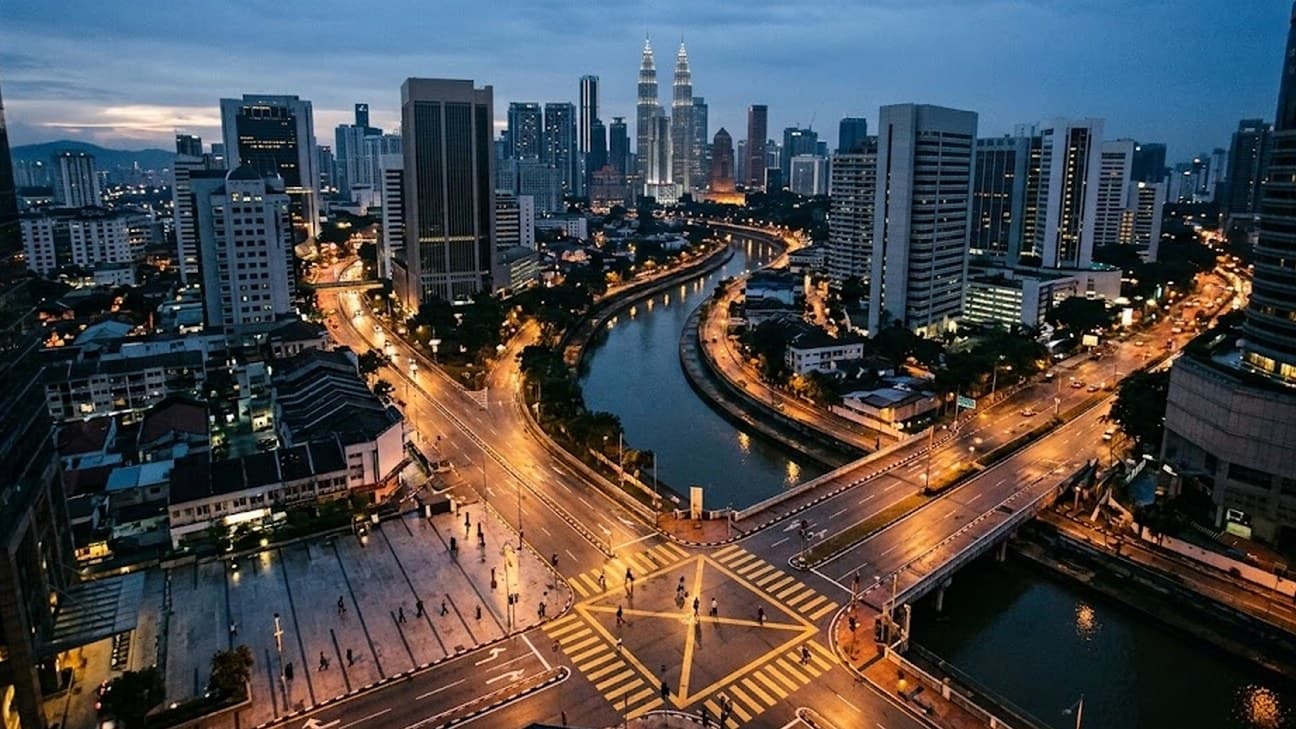
Malaysia's Pension and Military Capital Anchors a RM1.25 Billion Data-Centre Fund — the AI Build-Out Becomes a Domestic Allocation Story
Sime Darby Property, one of Malaysia's largest township developers, launched a closed-end vehicle on June 9 to invest up to RM1.25 billion (about US$310 million) in data centres and industrial assets — and it secured 100% of the capital commitments at first close. The anchor investors are a roll-call of Malaysian institutional capital: the Employees Provident Fund (EPF), the armed-forces pension fund Lembaga Tabung Angkatan Tentera (LTAT) and Great Eastern Life Assurance (Malaysia). Sime Darby Property itself acts as general partner and co-investor, committing RM500.1 million; LTAT is putting in RM200 million, Great Eastern RM199.9 million, and the EPF RM100 million in the main fund plus a further RM250 million in a sidecar vehicle that co-invests alongside it.
Structurally, the fund is Shariah-compliant, has a five-year life, and is built around build-to-suit-to-lease data centres plus industrial and logistics developments on Sime Darby Property's own land. Two seed assets — inside the developer's flagship Elmina Business Park and City of Elmina townships — already represent roughly 85% of the target fund size and are underpinned by long-term leases, with construction expected to complete in the second half of 2027. This is not a blind pool chasing greenfield power; it is a landbank monetisation play that converts existing township acreage into leased digital infrastructure with committed tenants.
The development matters because of who is paying for it. Layer 7's June 4 weekly argued that power — not capital — had become the binding constraint on Southeast Asia's AI build-out, and that Chinese firms were stepping in to fund Malaysia's grid. This week's data point is the mirror image on the equity side: the capital filling Malaysia's data-centre estate is increasingly domestic and institutional. When the national provident fund and the armed-forces pension scheme underwrite a developer's data-centre pipeline, the build-out stops being a story about foreign hyperscalers renting Johor land and becomes a question of how Malaysian retirement savings are allocated to the AI economy.
Singtel Reframes the Sovereign-AI Race as a Data-Throughput Problem, Not a GPU Count
RE:AI, the sovereign-AI cloud business of Singtel's Digital InfraCo unit, signed a memorandum of understanding with WEKA on June 11 to build sovereign AI infrastructure across Singapore and the broader ASEAN region. The technical core of the deal is the integration of WEKA's NeuralMesh high-performance storage system with RE:AI's sovereign cloud, alongside Singtel's Paragon orchestration platform, a GPU-as-a-Service offering and a "Sovereign AI Factory" delivered as a managed service through a Centre of Excellence for Applied AI. No financial terms were disclosed; at this stage it is a framework agreement, not a committed build.
The framing is the news. "Modern AI is no longer limited by compute power alone. The real bottleneck is how quickly data can reach GPUs," said Bill Chang, chief executive of Singtel Digital InfraCo. That sentence reframes a region-wide conversation that has, for the past year, been dominated by gigawatts and chip allocations. As ASEAN governments pursue sovereign compute — Vietnam with Viettel and NVIDIA, Indonesia with BDx and PLN, Malaysia across Johor — the assumption has been that the scarce input is GPUs and the power to run them. Singtel's pitch is that once the chips are secured, utilisation is gated by the storage and memory fabric that feeds them, and an idle GPU starved of data is a stranded asset.
The targeted use cases — national digital services, financial risk management, healthcare diagnostics, public safety, transport and port operations — are deliberately government and regulated-industry workloads, where data residency and sovereignty requirements rule out sending the workload to a US hyperscaler. That is the commercial logic behind a telco-operated "sovereign AI factory": the customer is the state and the regulated enterprise, and the moat is local control of the full data-to-GPU pipeline rather than the cheapest raw compute.
Eyes on the Week Ahead
Vietnam's regulated crypto-exchange pilot remains the regulatory thread to watch. The prime minister's directive targets a Q2 2026 launch, and five applicants — affiliates of Techcombank, VPBank, LPBank, VIX Securities and Sun Group — have cleared initial screening against a VND10 trillion (~US$400 million) charter-capital floor, dong-only settlement and a five-licence cap. No platform has gone live yet; with the quarter closing this month, watch for either a first licence award or a slip into Q3, which would tell investors how serious the technical-readiness bar really is. Layer 7's June 4 and June 7 dailies tracked the earlier signalling; the open question now is execution.
On tokenisation, Thailand's SEC has a tentative late-Q2 effective date for its revised rules on tokenised mutual funds — which would let units be created and redeemed outside the traditional T+1 cycle — following a public hearing that closed on February 11. If finalised on schedule, it would put Thailand alongside Singapore in offering a live regulated framework for tokenised funds, and is worth tracking against the DBS retail-gold launch as evidence of how fast tokenisation is moving from wholesale to broader access across the region.
Layer 7 Ventures is a research-driven firm focused on AI and cryptocurrency in Southeast Asia. Views expressed are those of the firm and do not constitute investment advice.