GCash Parent Mynt Files a Record ₱92.3 Billion IPO the Same Week a BSP Circular Forces Banks to Zero Out Transfer Fees
Mynt Inc., the parent company of e-wallet GCash, filed its registration statement with the Securities and Exchange Commission and a listing application for the Philippine Stock Exchange's main board on June 27, targeting a fourth-quarter 2026 debut. The offering could raise up to ₱92.3 billion — a structure of up to 8.03 billion firm shares (1.61 billion new shares plus 6.42 billion secondary shares) at a maximum indicative price of ₱10 per share — which would surpass Monde Nissin's ₱48.6 billion 2021 offering as the largest IPO in Philippine history.
The scale of the filing rests on GCash's underlying numbers: in 2025 the wallet served 39.1 million monthly active users and processed ₱17 trillion in gross transaction value, an average of 56.7 million daily transactions. Mynt itself booked ₱79.8 billion in revenue and ₱17.2 billion in profit for the year. PSE President Ramon Monzon has since revised the exchange's full-year capital-raising target upward to ₱204 billion from ₱170 billion, explicitly citing the Mynt listing as the largest single contributor to that 41% increase over 2025's total.
The filing landed in the same ten-day window as a separate central-bank move that squeezes the exact revenue line an e-wallet depends on. Bangko Sentral ng Pilipinas Circular 1238, which took effect July 4, restricts interbank InstaPay and PESONet transfer fees to reflect only the actual "switch cost" incurred, estimated at roughly ₱1.50 per transaction — down from fees that had run substantially higher. Philippine banks moved quickly to comply: BPI waived transfer fees entirely from July 1, Land Bank from July 7, BDO announced free transfers from July 9, PSBank from July 9, and PNB from July 10.
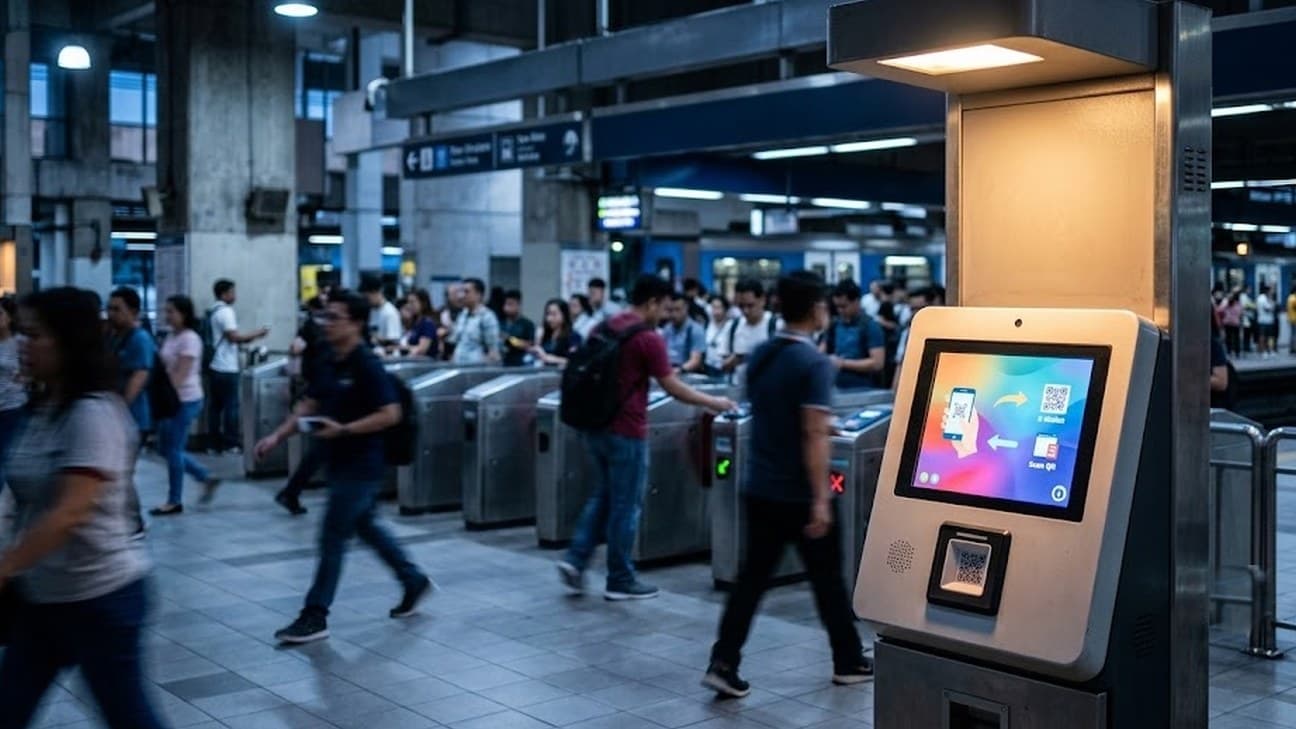
The two events are not directly linked by regulation — Circular 1238 targets bank-to-bank rails, not e-wallet transfer fees specifically — but they describe the same underlying pressure. Regulators are treating low-cost, high-volume digital transfers as public infrastructure rather than a bank or wallet revenue line, a posture consistent with Bank Negara Malaysia's parallel move this year to force one shared QR standard across every Malaysian wallet by 2028.
Malaysia's Zetrix Becomes the Philippines' National Blockchain, Exporting a Sovereign Digital-ID Stack
Zetrix Philippines Inc. and My Blockchain Infrastructure Sdn Bhd — a joint venture between Malaysia's Zetrix AI Berhad and the country's national R&D agency, MIMOS Berhad — signed a memorandum of understanding with the Philippines' Department of Information and Communications Technology (DICT) to make Zetrix the foundational protocol for a new Philippine national public blockchain. The agreement makes the Philippines the second country, after Malaysia itself, to adopt Zetrix as sovereign-grade blockchain infrastructure; Malaysia's own Blockchain Infrastructure, built on the same protocol, launched in April 2025.
The initial scope covers cross-border interoperability between the Malaysian and Philippine national digital ID systems, and the issuance, verification and authentication of Philippine government-issued credentials and trade-facilitation documents. Philippine government bodies named as involved include the Bureau of Internal Revenue, the National Bureau of Investigation, the Securities and Exchange Commission, the Philippine Ports Authority and the Bureau of Fisheries and Aquatic Resources — a spread that suggests the intended use cases run from tax administration through law enforcement to trade documentation, not a single narrow pilot.
DICT Secretary Henry R. Aguda framed the initiative in trust-portability terms: "The initiative is about making trust portable across systems and borders." Zetrix AI Group Managing Director TS Wong described it as "another important step forward in our vision of bringing countries in the region onto a common integrated ecosystem," language that positions Zetrix as aiming for further sovereign adoptions beyond these two countries.
This is a materially different kind of deal from the commercial blockchain partnerships that dominate most crypto-infrastructure coverage. A private-sector platform becoming embedded in another government's digital-ID and credentialing backbone carries switching costs and integration depth that a commercial API partnership does not — once tax records, port documentation or law-enforcement credentials are issued on a given chain, migrating away from it is materially harder than swapping a payments vendor.
The Johor-Singapore Special Economic Zone Blueprint Clears Cabinet — But the Launch Waits on an Election
Malaysia's Economy Ministry confirmed that the Johor-Singapore Special Economic Zone (JS-SEZ) investment blueprint and master plan have been completed and received Cabinet approval, with a joint launch by Prime Minister Anwar Ibrahim and Singapore Prime Minister Lawrence Wong deferred until after Johor's state election. Economy Minister Akmal Nasrullah Mohd Nasir said the zone had already drawn RM76.98 billion in approved investments during 2025, plus a further RM5.49 billion in the first quarter of 2026, with 57% of cumulative approved investment already at the implementation stage.
The stated targets are substantial: 20,000 skilled jobs within five years — which Akmal Nasrullah said could "easily" be reached within three — extending to an ambition of 100 projects within ten years, half of them in the first five. The Invest Malaysia Facilitation Centre Johor fielded 285 investment inquiries worth a potential RM74.12 billion between January and May 2026 alone. The blueprint's release itself has slipped twice — originally targeted for end-2025, then March 30, 2026 — before finally clearing Cabinet this week.
The next development phase is explicitly slated to focus on data-centre downstream industries and Malaysia's semiconductor ecosystem, tying the JS-SEZ directly into the same AI-infrastructure investment thesis this publication has tracked across Johor and, on the Indonesian side of the strait, Batam.
Singapore's Qashier Turns Profitable and Raises US$6.125 Million, a Quiet Counterpoint to the Week's Mega-Deals
Singapore-based merchant operating system Qashier raised US$6.125 million in a Series A+ round combining equity and debt, led by Cocoon Capital, IFP Securities and Blacksoil Global with angel participation, the company said on June 30. Qashier processes roughly US$1 billion in annualised payment volume across more than 20,000 merchants spanning Singapore, Malaysia, Thailand and the Philippines, and says it has been profitable every month since December 2025, with annualised recurring revenue up 61% over the past year.
Co-founder and chief executive Christopher Choo framed the product's premise plainly: "Merchants should not have to stitch together five vendors... we give them clarity, lower costs and confidence to scale." Cocoon Capital managing partner Michael Blakey said Qashier's founders have "an exceptionally clear vision for becoming the default operating infrastructure for commerce." The company is directing the new capital toward omnichannel payments, embedded financial services and AI-powered workflow automation, and is preparing a Series B round.
Eyes on the Week Ahead
In the Philippines, watch for Mynt's SEC registration statement to progress toward effectivity and for a firm PSE listing date to be set, and track whether the remaining major Philippine banks confirm full compliance with BSP Circular 1238's fee restrictions in the days following PNB's July 10 rollout. Any signal from BSP on whether the circular's logic will extend to e-wallet transfer pricing would be directly material to how the Mynt IPO should be priced.
In Malaysia, the Johor state election is the immediate catalyst determining when the JS-SEZ's joint launch finally proceeds, and the first live government use case under the Zetrix-Philippines MOU — whichever Philippine agency goes live first — is the next concrete milestone for that story. Both threads sit on the same broader pattern this signal has tracked through 2026: Malaysia building exportable digital and economic-zone infrastructure while timing its biggest announcements around domestic political calendars.
Layer 7 Ventures is a research-driven firm focused on AI and cryptocurrency in Southeast Asia. Views expressed are those of the firm and do not constitute investment advice.