All reports
Daily Brief · FinTech · AI · Crypto

SEA Daily Brief: Malaysia's CTOS IDGuard Flags RM1.08b in Credit Fraud, Indonesia's INA Tilts to Data Centres, Binance Routes Philippine Re-entry Through SEC StratBox

CTOS IDGuard, Malaysia's bank-shared fraud bureau, says it has flagged RM1.08 billion of potential credit application fraud across 18 million screenings since 2020 — RM276 million in the past twelve months — as the BSP-style June 2026 fraud-management deadline approaches across the region. Indonesia's sovereign wealth fund INA disclosed that roughly 30 percent of its US$4.2 billion deployed capital has gone into digital infrastructure, with chief investment officer Christopher Ganis singling out data centres as a core sector. In the Philippines, Binance has re-entered the market through a partnership with locally registered BlockShoals Technologies under the SEC's Strategic Sandbox.

May 26, 20264 min readMalaysia · Indonesia · Philippines · Fraud · Data Centres · Sovereign Wealth · Exchange Licensing
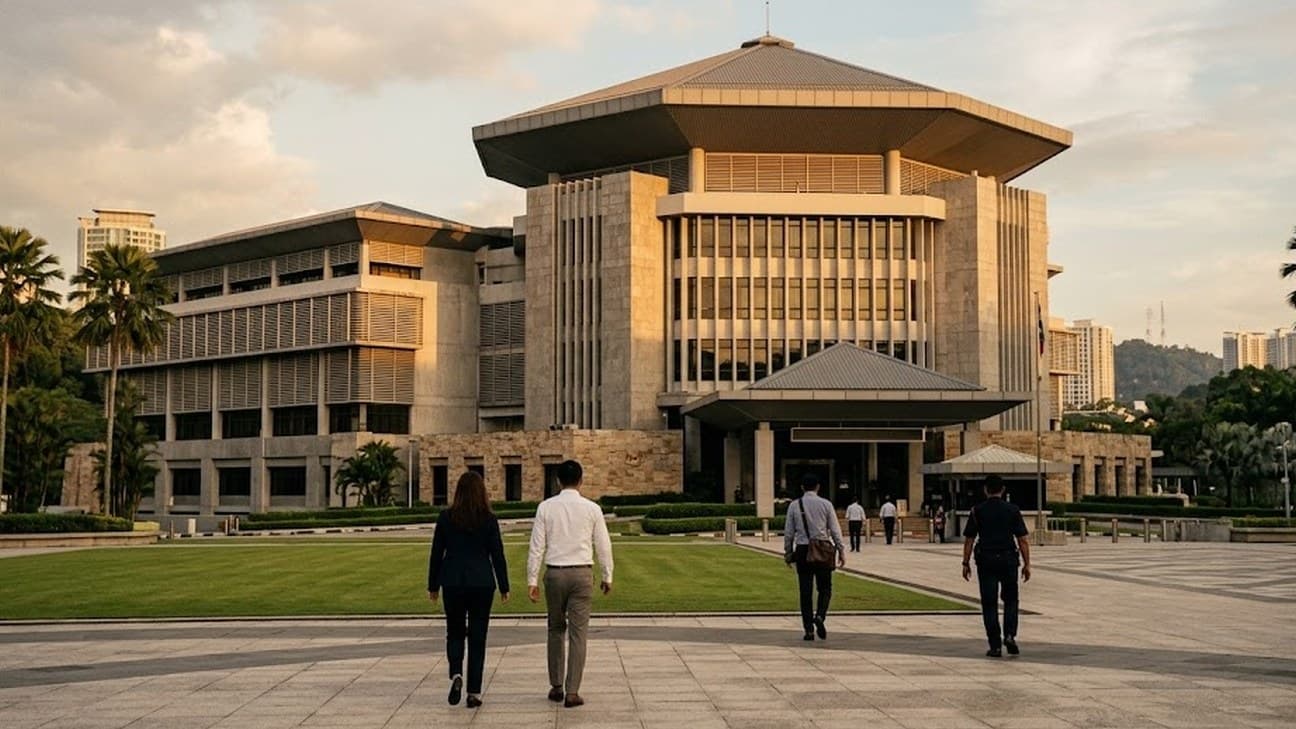
A modern Malaysian bank operations centre in Kuala Lumpur at dusk: a curved monitor on a clean desk displays an abstract credit-fraud detection dashboard with red alert badges and line graphs, while the illuminated Petronas Twin Towers and the Kuala Lumpur skyline glow through floor-to-ceiling windows behind the desk.
CTOS Digital says its bank-shared IDGuard bureau has now flagged RM1.08 billion of potential credit application fraud across 18 million screenings since 2020.

CTOS IDGuard Has Flagged RM1.08 Billion of Credit Application Fraud Across 18 Million Screenings

CTOS Digital Berhad disclosed on May 25 that its industry-shared fraud bureau, CTOS IDGuard, has now screened more than 18 million credit applications since its September 2020 launch and flagged an estimated RM1.08 billion in suspected and confirmed application fraud — amounts intercepted before disbursement. In the twelve months to April 30, 2026 alone, IDGuard processed 4.3 million applications and flagged RM276 million of potential fraud, with the strongest alert rates on mortgages (3.35 percent), personal loans (1.91 percent), auto loans (1.87 percent) and cards (0.96 percent).

Group CEO Ankur Sehgal framed the result as evidence that fraud is becoming both more sophisticated and more institutionally contested: "IDGuard flagging more than RM1 billion potential application fraud reflects both the rising sophistication of fraud and the industry's growing commitment to proactive risk prevention." CTOS also surfaced consumer survey data showing 28 percent of Malaysians now rank fraud protection as their primary banking consideration and 33 percent cite money-transfer scams as their main financial crime concern — both numbers materially higher than a year ago.

Indonesia's Sovereign Wealth Fund INA Tilts Roughly a Third of Its US$4.2 Billion Deployed Capital Toward Digital Infrastructure

Bloomberg reported on May 26 that the Indonesia Investment Authority (INA) and its co-investors have so far deployed roughly Rp74.5 trillion (US$4.2 billion) of capital, with around 30 percent of that flowing into digital infrastructure. Chief investment officer Christopher Ganis singled out data centres and supporting digital infrastructure — including subsea cables — as a priority sector for the sovereign wealth fund. The disclosure formalises a tilt that has been visible in INA's project list for over a year: the joint venture with Singapore-based DayOne to build a 72 megawatt data centre campus at Nongsa Digital Park in Batam, financed in part by a US$411 million rupiah-denominated loan arranged by DBS and UOB in 2025.

INA manages around Rp163.4 trillion (US$10 billion) in assets and now sits alongside the much larger Danantara, the US$20 billion seed-funded super-holding launched in early 2025, as the second institutional anchor for state-aligned digital investment. Ganis has previously told w.media that INA is most interested in artificial intelligence "with practical use cases such as in healthcare" rather than frontier-model investing.

Binance Re-enters the Philippines via the SEC's Strategic Sandbox With Local Partner BlockShoals

Binance announced on May 26 that it has partnered with locally registered BlockShoals Technologies Inc. to operate inside the Philippines Securities and Exchange Commission's Strategic Sandbox (StratBox), which the SEC formally opened for crypto-asset intermediaries earlier this year. Under the structure, BlockShoals — approved as a Philippine crypto asset intermediary — is the locally accountable entity, while Binance contributes technology and security infrastructure. Live testing is scheduled to begin in the second half of 2026 and must run for at least two years under SEC guidelines before a full operating decision is made.

The arrangement is the cleanest path back into the market after Philippine authorities directed internet service providers, at the request of the National Telecommunications Commission, to block access to unregistered offshore exchanges including Coinbase and Gemini in 2025. Binance's APAC head Seker described the StratBox framework as "an important step in enabling responsible innovation," while BlockShoals characterised the partnership as evidence that global platforms and local frameworks "can work together constructively."

Eyes on the Day Ahead

Watch Malaysia's central bank ahead of Bank Negara's MPC review next week and the ongoing tokenised-deposit pilots involving Maybank, CIMB and Standard Chartered (the Yinson live test in March remains the most concrete cross-border atomic-settlement proof point so far). In Indonesia, expect further follow-up on the INA and Danantara digital-infrastructure roadmap, including any new co-investor disclosures. In the Philippines, the SEC's next StratBox cohort and the BSP's June 30, 2026 deadline requiring banks to deploy automated fraud-management systems under the Anti-Financial Account Scamming Act are the two near-term catalysts worth tracking.

Layer 7 Ventures is a research-driven firm focused on AI and cryptocurrency in Southeast Asia. Views expressed are those of the firm and do not constitute investment advice.
More Research

Editorial photograph of a high-density data centre corridor: rows of dark server racks with exposed copper liquid-cooling manifolds running overhead, cool blue LED status lights reflecting off the polished floor, no people in frame.
Daily Brief · AI · FinTech4 min

SEA Daily Brief: Singapore's GIC and Temasek co-anchor Anthropic's $65B raise, a Singapore developer lands $283M of green debt for a Johor AI data centre, and KBank teams with Ant International on Thailand's cross-border rails

GIC co-led and Temasek joined Anthropic's US$65 billion Series H at a US$965 billion post-money valuation, putting Singapore's sovereign funds at the centre of frontier-AI financing. Singapore-based developer DDSP closed US$283 million in green financing — arranged by CTBC Bank, MUFG and Standard Chartered — for a 45MW liquid-cooled AI data centre in Johor's Sedenak Tech Park. And in Thailand, KBank signed an MOU with Ant International to build 24/7 cross-border USD payment and liquidity rails on J.P. Morgan's Kinexys blockchain.

Editorial golden-hour photograph of the imposing neoclassical facade of a national finance ministry building in Hanoi, Vietnam, with tall pale-stone columns above a wide empty granite forecourt, as a few motorbikes pass in motion-blur along the boulevard in the foreground.
Daily Brief · Crypto · AI · FinTech4 min

SEA Daily Brief: Vietnam moves to let SMEs pledge digital assets for bank loans, Google Cloud opens a Southeast Asia–Silicon Valley AI startup corridor, and Singapore anchors Asia's stablecoin surge

Vietnam's Ministry of Finance has drafted an amendment that would let small and medium enterprises pledge digital assets, virtual assets and intellectual property as bank loan collateral, with public consultation closing on May 29. Google Cloud opened an equity-free Southeast Asia–to–Silicon Valley AI accelerator, taking 25 startups from six ASEAN markets with up to US$350,000 in credits each. And a CoinDesk Indices analysis puts Asia's 2025 stablecoin transaction volume at US$12.5 trillion, up 67 percent, with Singapore the region's standout adoption and regulatory hub.

Editorial photograph looking down the central aisle of a modern hyperscale AI data centre, with rows of glass-fronted server racks lit by blue and teal status LEDs, exposed copper liquid-cooling pipes overhead, and a polished concrete floor receding to a hazy vanishing point under cool blue lighting.
Daily Brief · AI · FinTech4 min

SEA Daily Brief: Singapore captured 99 percent of the region's AI infrastructure funding, Microsoft's Indonesia Azure region turns one, AI takes a third of Singapore's shrinking venture pool

New Tracxn data shows Southeast Asia attracted US$1.2 billion in AI infrastructure funding from 2019 to 2026, with Singapore capturing roughly 99 percent of it, Malaysia just US$1.5 million, and Indonesia and Thailand nothing disclosed. Microsoft's Indonesia Central Azure region marked its first anniversary on May 29, underscoring that physical AI compute is localising even as capital concentrates elsewhere. Separately, DealStreetAsia data shows AI absorbed nearly a third of Singapore's 2025 venture funding even as the country's total venture pool fell 34 percent year-on-year.

Stay Informed

Get the next report in your inbox.