All reports
Daily Brief · FinTech · AI

MAS chief warns AI growth could narrow, Bank Indonesia tightens FX threshold to defend rupiah, Singapore halves private-banking onboarding time

MAS Managing Director Chia Der Jiun used the UBS Asian Investment Conference Singapore Wealth Edition to flag concentration risk in the AI investment boom and commit MAS to accelerated financial-workforce upskilling. Bank Indonesia, fresh off a 50bp rate hike to 5.25 percent and a record-low rupiah near 17,706 per dollar, lowered the documentation threshold for foreign currency purchases from US$50,000 to US$25,000 effective June. At the same UBS forum, MAS announced an industry-wide compression of private-banking account opening to within one month, down from six weeks and longer for complex cases.

May 29, 20264 min readSingapore · Indonesia · MAS · Bank Indonesia · AI · Private Banking · Wealth Management · Capital Controls · Rupiah
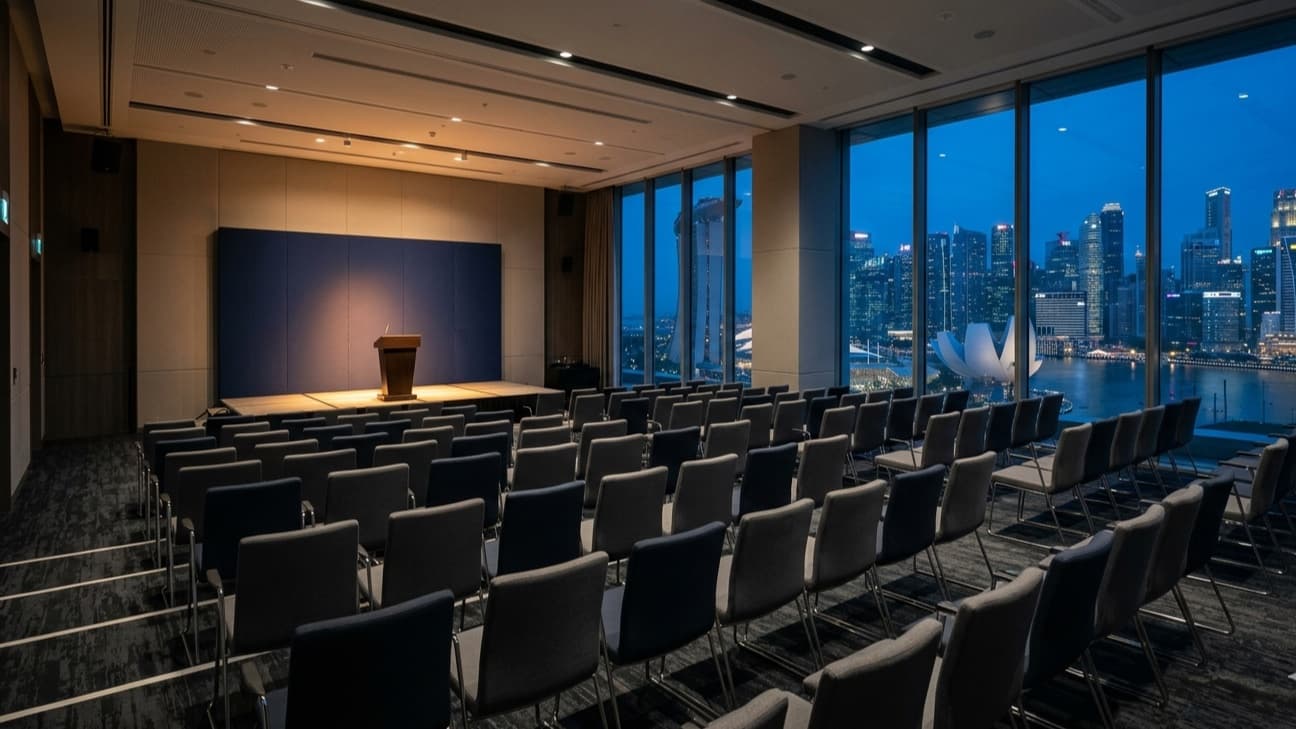
A full auditorium of seated attendees viewed from behind, facing an official speaking at a lectern, the Marina Bay skyline visible through windows at pre-dawn blue hour
MAS Managing Director Chia Der Jiun used the UBS Asian Investment Conference Singapore Wealth Edition stage to flag concentration risk in the AI investment boom and announce a sharp cut to private-banking onboarding time.

MAS Chief Chia Der Jiun Warns AI Investment Boom Could Become Too Narrow and Pledges Financial-Workforce Upskilling

Speaking at the UBS Asian Investment Conference Singapore Wealth Edition on May 25, Monetary Authority of Singapore Managing Director Chia Der Jiun set out an unusually direct critique of the current AI investment cycle. The boom, he said, is sustained by a race to scale and self-improving models supported by easy financing and large hyperscaler cashflows, with rising unit costs for compute and competition for scarce chips and energy as consequences. The race could decelerate if markets stop believing it can be won at reasonable cost relative to the winners' prize, or if disrupted by technology obsolescence or regulatory intervention.

His medium-term concern was more pointed: if global growth becomes narrowly driven by AI, with gains concentrated among a small group of companies and sectors, productivity gains may not be widely distributed and wages and employment may not capture fair gains. The framing — high growth, but not balanced growth — is striking from a central banker whose financial centre has positioned aggressively for AI-led financial-services investment. Chia paired the warning with a concrete commitment to accelerate the upskilling of Singapore's financial workforce through the Institute of Banking and Finance and industry partners.

Bank Indonesia Lowers FX-Purchase Documentation Threshold to US$25,000 in Second Tightening to Defend Record-Low Rupiah

Bank Indonesia announced on May 23 that it will halve the threshold for foreign currency purchases that do not require supporting documentation, from US$50,000 to US$25,000 per transaction, effective June 2026. The move is the second downward step in this threshold — the previous cut from US$100,000 to US$50,000 was credited by BI with reducing average daily undocumented FX transactions from around US$78 million to approximately US$62 million. The official rationale is to curb speculative pressure on the rupiah.

The tightening sits on top of the previous week's surprise 50bp rate hike to 5.25 percent, the central bank's first rate increase since April 2024, after the rupiah touched a record low of 17,706 per US dollar on May 20. Foreign exchange reserves slid US$10.27 billion between December 2025 and April 2026, and Capital Economics expects a further 50bp of tightening by year-end. The rupiah remains down roughly 5 percent year-to-date despite the policy mix.

MAS and Private Banking Industry Group Compress Account-Opening Time to Within One Month

At the same UBS AIC Singapore Wealth Edition, MAS announced that the median time to open a private banking account has been compressed to within one month, down from six weeks or longer for complex cases. The reduction is the output of a 2025 working group that identified industry practices exceeding regulatory requirements, with MAS issuing new guidance that lets financial institutions assess client source of wealth on a risk-proportionate rather than uniformly maximal basis.

Chia framed the change explicitly in competitive terms: more efficient account opening would improve the wealth management industry's competitiveness while maintaining high standards. The announcement landed alongside a broader Singapore wealth pitch built on four pillars — safety, stability, trust and dynamism — as Hong Kong reactivates its private-banking offer and Dubai continues to court Asian family offices.

Eyes on the Day Ahead

The UBS Asian Investment Conference main programme runs in Hong Kong on May 27–28, with the APAC Family Office Summit on May 26 — watch for further MAS, HKMA and family-office signals on the Singapore vs Hong Kong wealth competition. In Indonesia, BI's new US$25k FX threshold takes effect at the start of June, and traders are watching whether the rupiah re-tests 17,700 before then. In Malaysia, follow-up reactions to the Securities Commission's May 20 revised DAX guidelines and Bank Negara's three Digital Asset Innovation Hub stablecoin and tokenised-deposit pilots remain the near-term watch items into next week.

Layer 7 Ventures is a research-driven firm focused on AI and cryptocurrency in Southeast Asia. Views expressed are those of the firm and do not constitute investment advice.


More Research

A shopkeeper in a plaid shirt and a helmeted delivery rider face each other across the counter of a Kuala Lumpur shophouse in harsh midday sun, with a card payment terminal and stacked cartons on the counter and motorbikes parked at the kerb.
Daily Brief · FinTech · Geopolitics4 min

SEA Daily Brief: Malaysia Lifts SME Financing to RM57 Billion and Tops Up BNM's Relief Facility, Thailand Plans an SME Credit Portal, and Vietnam Wins Its First Investment-Grade Rating

Malaysia's Budget 2027 raises SME loan facilities and financing guarantees to RM57 billion from RM50 billion, while Bank Negara Malaysia adds RM5 billion to its SME Stabilisation Relief Facility after RM3.8 billion of the first tranche was approved. The Bank of Thailand outlined an SME credit portal, an alternative data exchange and a five-year guarantee scheme aimed at about 100 billion baht of new SME lending a year, after a four-year decline. Japan's R&I upgraded Vietnam to BBB-, the first investment-grade rating from an international agency, while Moody's, S&P Global and Fitch still rate it sub-investment grade.

High-angle view of a Kuala Lumpur financial district at pre-dawn blue hour, with office towers, a river bend and a few tiny pedestrians crossing a floodlit plaza and a marked crosswalk.
Daily Brief · FinTech · AI4 min

SEA Daily Brief: Malaysia's Budget 2027 Backs Startups and Crowdfunding, the SC Reports 2025 Restitution Figures, and UOB Explores a Dedicated AWS Cloud for ASEAN

Malaysia's Budget 2027, tabled on 9 October, earmarks RM450 million for startups through Jelawang Capital and Dana Perintis and RM270 million to draw private capital into equity crowdfunding and P2P platforms, with no distribution mechanism disclosed. The Securities Commission told Parliament it returned RM1.98 million to 239 investors in 2025 and has set aside RM8.6 million for 933 more. UOB signed an MoU with AWS to explore a dedicated Singapore cloud environment for its five ASEAN markets, with no financial terms or timeline given.

Office workers and a security guard walk across a stone forecourt toward a modern government building with a sweeping roofline in Kuala Lumpur, lit by low golden-hour sun with palm trees and a lawn in the foreground.
Daily Brief · FinTech · Crypto · AI4 min

SEA Daily Brief: Malaysia's Budget 2027 Proposes Tokenised Retail Sukuk, Singapore Licenses Large Data Centres, and the NSRC Plans an AI Scam-Check App

Prime Minister Anwar Ibrahim proposed a blockchain-based retail savings sukuk in Budget 2027, tabled on 9 October, with no launch date, minimum investment or return disclosed. Singapore's Parliament passed the Digital Infrastructure Bill on 7 October, creating licensing regimes for data centres of 10MW or more and large cloud providers. Malaysia's National Scam Response Centre also plans an AI application to check suspicious numbers, accounts and links, with no funding or launch date stated.

Stay Informed

Get the next report in your inbox.