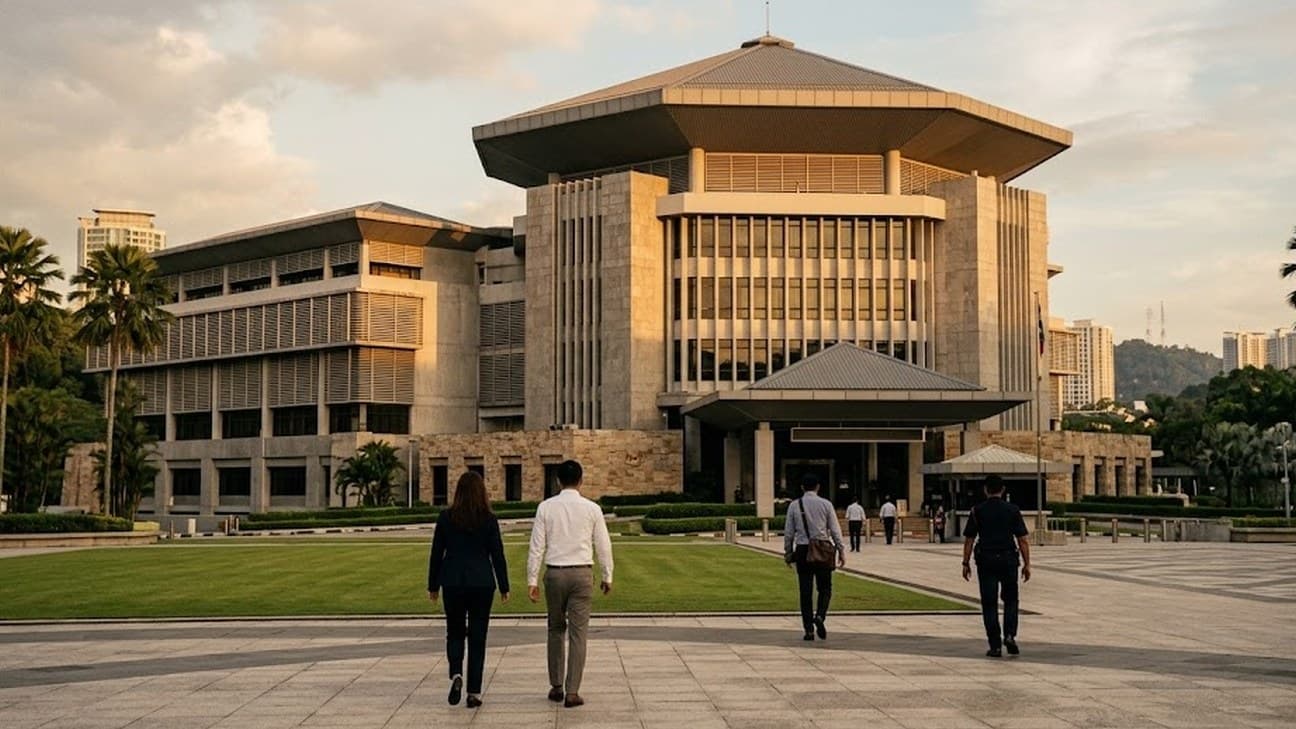
OpenAI Commits S$300 Million to Its First Applied AI Lab Outside the United States via MOU With Singapore's MDDI
On May 20, OpenAI signed a Memorandum of Understanding with Singapore's Ministry of Digital Development and Information (MDDI) under which the company will commit more than S$300 million (approximately US$234 million) to establish the OpenAI Singapore Applied AI Lab — its first such lab outside the United States. The local technical team will scale to more than 200 roles over the coming years, and OpenAI will launch a Singapore chapter of its online OpenAI Academy alongside an 'AI for All' initiative aimed at broader access for citizens, enterprises and the public sector.
The lab's announced focus areas are public services, finance, healthcare and digital infrastructure, with a training programme for mid-career engineers attached. OpenAI's Chief Revenue Officer Denise Dresser framed the partnership as a way to 'help more organisations put frontier AI to work, develop local talent, and expand access to the benefits.' The MOU is the first formal agreement between the Singapore Government and OpenAI.
Google Signs National AI Partnership With MDDI the Same Day, Ships Joint AI Agents Sandbox Whitepaper With CSA, GovTech and IMDA
On the same May 20 stage, Google and MDDI announced a National AI Partnership that expands a long-running collaboration first formalised in a 2022 MOU. The new agreement spans four pillars: research and development in health and life sciences (including AI co-clinicians and an agentic-research collaboration with the National Research Foundation and A*STAR), workforce development (extending the Majulah AI programmes, with Skills Ignition SG already at 28,000 trained Singaporeans), enterprise innovation (an expanded Google Cloud Forward Deployed Engineers team), and AI agents and governance.
Unlike OpenAI's announcement, Google did not disclose a fresh dollar number — the company has previously said it has invested more than US$5 billion in Singapore since 2011. The most substantive new artefact is the joint AI Agents Sandbox whitepaper authored by Google together with the Cyber Security Agency of Singapore (CSA), the Government Technology Agency of Singapore (GovTech) and the Infocomm Media Development Authority (IMDA), drawing on findings from the agencies' AI Agents Sandbox testing. Google also pledged research on 'computer use' agents for software testing and social assistance, and multilingual safety benchmarks developed with MLCommons.
SC and Bursa Malaysia Open LEAP Market 2.0 Consultation, Would Admit Retail Investors and Add an ECF-Led Listing Route
On May 18, Bursa Malaysia issued a public consultation paper, prepared jointly with the Securities Commission Malaysia, on proposed amendments to the LEAP Market and ACE Market Listing Requirements. The paper operationalises the LEAP Market 2.0 framework announced by Finance Minister II Datuk Seri Amir Hamzah Azizan in March 2026, and sits inside the SC's Capital Market Masterplan 2026–2030. Consultation closes on June 15, 2026.
Four changes are material. First, retail investors would gain access to the LEAP Market for the first time — LEAP has so far been restricted to sophisticated investors — subject to caps of RM250,000 per investor and RM100,000 per issuer in the primary market. Second, eligible equity crowdfunding issuers that have raised at least RM5 million in the past seven years would be permitted to list on LEAP without an approved adviser, using ECF operators or venture-capital and private-equity firms as listing agents. Third, listed firms could graduate to the ACE Market after two years on LEAP without further exit requirements. Fourth, disclosure documents are slated for simplification while retaining core investor-protection content. SC Chairman Dato' Mohammad Faiz Azmi noted that one ECF issuer has already transitioned to LEAP, and ten LEAP-listed firms have migrated to ACE.
Eyes on the Day Ahead
Three threads to track over the next 24–72 hours: (1) any same-week response from US foundation-model peers (Anthropic, Meta, Mistral) to OpenAI's Singapore commitment — Singapore has now set a public benchmark for what a first-mover Asia commitment looks like; (2) whether MDDI publishes the standalone AI Agents Sandbox whitepaper as a self-contained document rather than only inside the joint Google announcement, which would mark it as a multilateral artefact rather than a single-vendor one; (3) early signals from Malaysia's ECF operators (pitchIN, Ata Plus, MyStartr) on which existing campaigns they would route to a LEAP listing under the new ECF route — operator response, not regulator response, will determine whether the consultation produces real issuer flow before Q4 2026.
Layer 7 Ventures is a research-driven firm focused on AI and cryptocurrency in Southeast Asia. Views expressed are those of the firm and do not constitute investment advice.