All reports
Daily Brief · FinTech · Crypto · AI

SEA Daily Brief: AMRO warns Malaysia's maturing digital-finance sector faces BNPL and profitability gaps, Southeast Asia's $30 billion data-centre boom runs into a power wall, and Indonesia mandates certification for crypto influencers

AMRO published an assessment finding Malaysia's digital-finance ecosystem entering maturity but exposed on fintech profitability, rising fraud and regulatory gaps in fast-growing credit such as buy-now-pay-later. A TechNode analysis put Southeast Asia's data-centre market on track for US$30.47 billion by 2030 while regional power generation grows at under half the pace of compute demand, with Malaysia's data-centre electricity use projected to rise eightfold by 2030. And Indonesia's OJK issued Regulation No. 6 of 2026, requiring financial influencers to hold certifications and route crypto promotion through licensed firms.

June 26, 20264 min readMalaysia · Indonesia · Singapore · AI · Data Centers · Digital Banks · BNPL · Crypto · Regulation
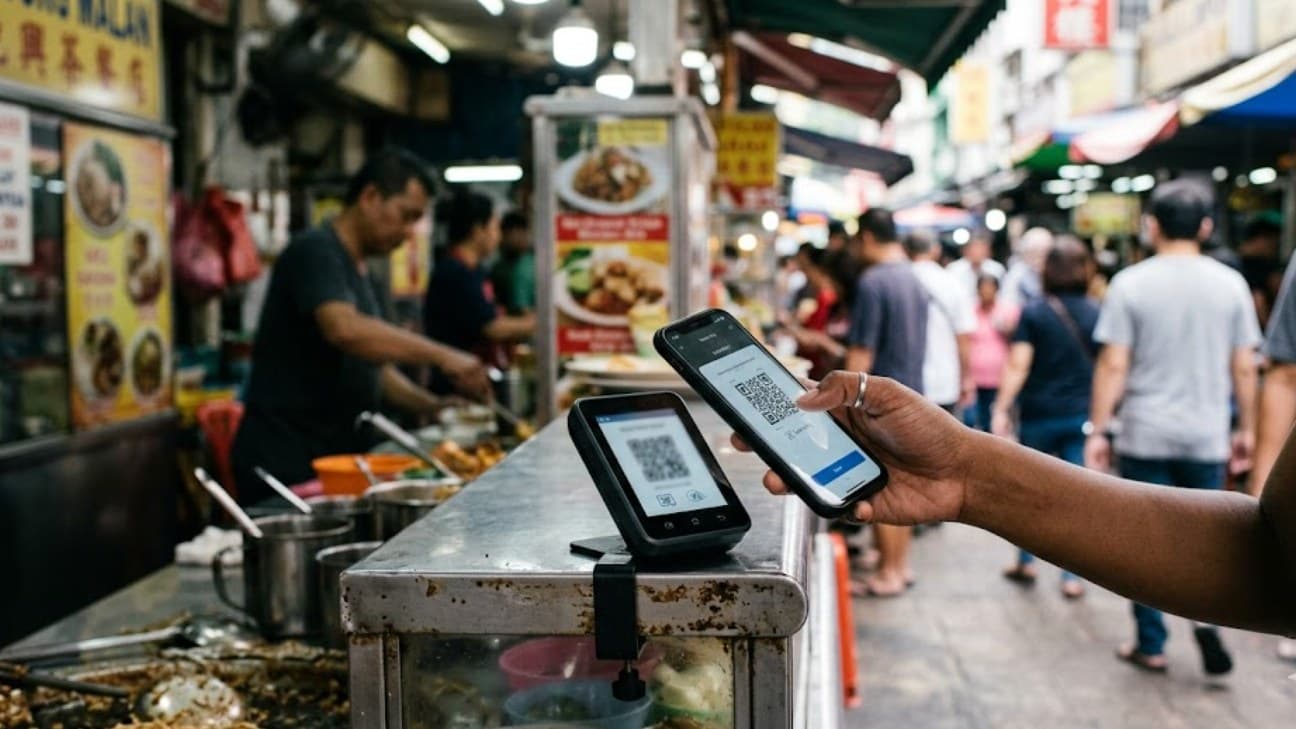
A customer holds a smartphone showing a mobile-wallet QR payment screen up to a contactless payment terminal clamped to a hawker stall counter in a busy Kuala Lumpur street-food lane.
Contactless payment at a Kuala Lumpur hawker stall. AMRO's latest assessment finds Malaysia's digital-finance ecosystem maturing, but flags profitability, fraud and BNPL regulatory gaps as the next phase begins.

AMRO says Malaysia's digital-finance ecosystem is maturing — and naming its structural weak points

The ASEAN+3 Macroeconomic Research Office (AMRO) published an assessment on June 23 finding that Malaysia's digital-finance ecosystem is entering a more mature phase, built on coordinated national policy through the MyDIGITAL blueprint, Bank Negara Malaysia's Financial Sector Blueprint and the Securities Commission's Capital Market Masterplans. The report credits that policy stack with widening financial inclusion, noting that digital banks are mandated to serve underserved and unserved segments — low-income households, micro-businesses and gig workers — and that Shariah-compliant funding now accounts for about 30 percent of total equity crowdfunding and peer-to-peer financing.

The more pointed message is on what maturity exposes. AMRO flags four structural challenges: profitability pressure on fintechs serving low-income segments despite heavy upfront investment; intensifying cybersecurity and fraud risk, particularly against rural and elderly users; regulatory gaps in fast-expanding credit segments such as buy-now-pay-later, where services like Atome and Grab PayLater are growing rapidly; and consumer-protection gaps that could leave vulnerable groups exposed. The throughline is a call to balance innovation with prudent regulation and to strengthen consumer trust as the sector scales.

Southeast Asia's $30 billion data-centre boom is running into a regional power wall

A TechNode Global analysis published on June 24 set out the central constraint on Southeast Asia's AI build-out: the regional data-centre market is on track to reach US$30.47 billion by 2030, growing at a compound annual rate of 14.24 percent, while regional power generation is expanding at less than 7 percent a year — less than half the pace of compute demand. The mismatch turns electricity, not capital or chips, into the binding constraint on the region's AI ambitions.

The country-level figures are stark. Malaysia's data-centre electricity consumption is projected to jump from 8.5 TWh in 2024 to 68 TWh by 2030 — an eightfold increase that could absorb roughly 30 percent of national power supply. Indonesia's is forecast to rise from 6.7 TWh to 26 TWh and the Philippines' from 1.1 TWh to 20 TWh over the same window. The analysis argues that intermittent renewables can realistically meet only about 30 percent of projected data-centre demand before hitting a plateau, leaving roughly 70 percent dependent on firm, dispatchable baseload — even as Southeast Asia operates zero commercial nuclear reactors today.

Indonesia's OJK orders crypto and finance influencers to get certified

Indonesia's Financial Services Authority (OJK) issued Regulation No. 6 of 2026 on June 24, establishing a formal framework for financial influencers — "finfluencers" — who promote financial products, including crypto and other digital financial assets. The rule requires influencers to hold specific licenses or certifications before disseminating financial recommendations, to disclose any direct or indirect economic benefit they receive, and to confine crypto promotion to the official channels of licensed providers rather than personal accounts.

The regulation pushes liability up the chain: licensed financial-services firms bear responsibility for the conduct of the influencers they engage, and the OJK can request that the Ministry of Communication and Digital Affairs suspend or block non-compliant accounts. Influencers may promote only assets listed on authorised exchanges, and endorsed providers must themselves hold valid OJK licenses; individuals already covered by separate licensing requirements are exempt. Coverage spans social posts, video, livestreams and podcasts, placing Indonesia among the most prescriptive jurisdictions in Asia by mandating qualifications up front rather than relying on after-the-fact enforcement.

Eyes on the Day Ahead

No single hard deadline lands in the next 24–48 hours, so the watch-list runs across the coming week. On Indonesia's new finfluencer rule, the open questions are the enforcement timeline and which bodies will administer the competency certifications — neither of which the OJK has yet published. In Malaysia, AMRO's flag on BNPL is the near-term policy catalyst: watch for Bank Negara to signal tighter consumer-credit supervision following its DIME inclusion framework. And on the power-versus-compute squeeze, Malaysia's data-centre electricity trajectory keeps national grid-capacity and tariff decisions — and any movement on firm baseload procurement — the structural story to track.

Layer 7 Ventures is a research-driven firm focused on AI and cryptocurrency in Southeast Asia. Views expressed are those of the firm and do not constitute investment advice.
More Research

A wide editorial photograph of an institutional government building facade in Hanoi at pre-dawn blue hour, with a couple of anonymous office workers crossing the forecourt, small in frame relative to the building, no legible text or logos.
Daily Brief · Crypto · AI · FinTech4 min

SEA Daily Brief: Vietnam Fines Unlicensed Crypto Trading, S&P Says Malaysia's Data-Centre Boom Needs $20 Billion, and Singapore's Whale Raises $40 Million More

Vietnam signed Decree 284/2026/ND-CP, imposing its first-ever fines on domestic investors trading crypto assets outside licensed platforms, effective September 1 as five shortlisted exchanges prepare to launch. S&P Global Ratings said Malaysia can nearly triple its data-centre capacity by 2030 but needs roughly $20 billion in financing beyond what domestic banks can supply. And Singapore's Whale raised a $40 million Series C extension from Hong Kong, Japanese, Thai and Korean strategic investors to fund its push into the Middle East and Europe.

A wide editorial photograph of a high-density data centre server corridor with exposed liquid-cooling manifolds and copper pipes under cool blue LED status lights, a technician in a hi-vis vest seen from behind mid-stride down the aisle checking a tablet, no legible text or logos.
Daily Brief · AI · Crypto · FinTech4 min

SEA Daily Brief: IFC Backs a $175 Million Johor Data-Centre Expansion, Malaysia Reaffirms Binance Remains Unlicensed, and Singapore's SimpleAI Raises $15 Million to Buy Accounting Firms

The International Finance Corporation approved up to $175 million in combined debt and equity financing for AirTrunk's two hyperscale data centres in Johor Bahru, adding multilateral development capital to Malaysia's AI-infrastructure build-out. Malaysia's Ministry of Finance told Parliament that Binance remains unlicensed and blocked in the country, clarifying that its 2024 removal from the Securities Commission's Investor Alert List was never an authorization to operate. In Singapore, AI accounting-automation startup SimpleAI raised $15 million — a $5 million seed round plus a $10 million debt facility — to acquire small accounting and fund-administration firms across the region.

A wide aerial editorial photograph of a mixed-use waterfront development with distinctive high-rise towers and canals at overcast midday, small distant pedestrians crossing a plaza far below, no legible text or logos.
Daily Brief · Geopolitics · Crypto · Real Estate4 min

SEA Daily Brief: An Immigration Raid Freezes a $122 Million Malaysia Bet, SBI Closes Its Coinhako Buyout, and Wahed Opens Fractional Property Investing

An immigration check at Balaji Srinivasan's Network School campus in Johor's Forest City has frozen a $122 million expansion pending assurances from Prime Minister Anwar Ibrahim's office, even after authorities cleared every one of the 266 foreign residents checked. In Singapore, SBI Holdings closed its majority buyout of Coinhako a day after partnering with Ondo Finance to tokenize Japanese equities through its JPYSC stablecoin, using MAS-regulated infrastructure as a settlement layer it can't yet build at home. And in Malaysia, Wahed opened its Securities Commission sandbox-stage fractional real estate platform to the public, letting investors buy into individual properties from RM500.

Stay Informed

Get the next report in your inbox.