All reports
Daily Brief · AI · Geopolitics

SEA Daily Brief: Malaysia's respond.io raises $62.5m, the US DFC anchors a $3b Indo-Pacific energy platform, and Galaxy Data Center secures $250m for SEA AI campuses

Malaysia-founded respond.io banked a $62.5m Series B led by Camber Partners to push its AI-driven messaging platform into North America and Europe. Washington's development-finance arm committed $1.5b alongside $1.5b from I Squared Capital to build LNG and energy infrastructure across South and Southeast Asia — the DFC's largest single project to date. And Galaxy Data Center raised $250m to fund gigawatt-scale AI campuses anchored on Singapore.

June 18, 20264 min readMalaysia · Singapore · AI · Venture Capital · Data Centres · Energy · Geopolitics
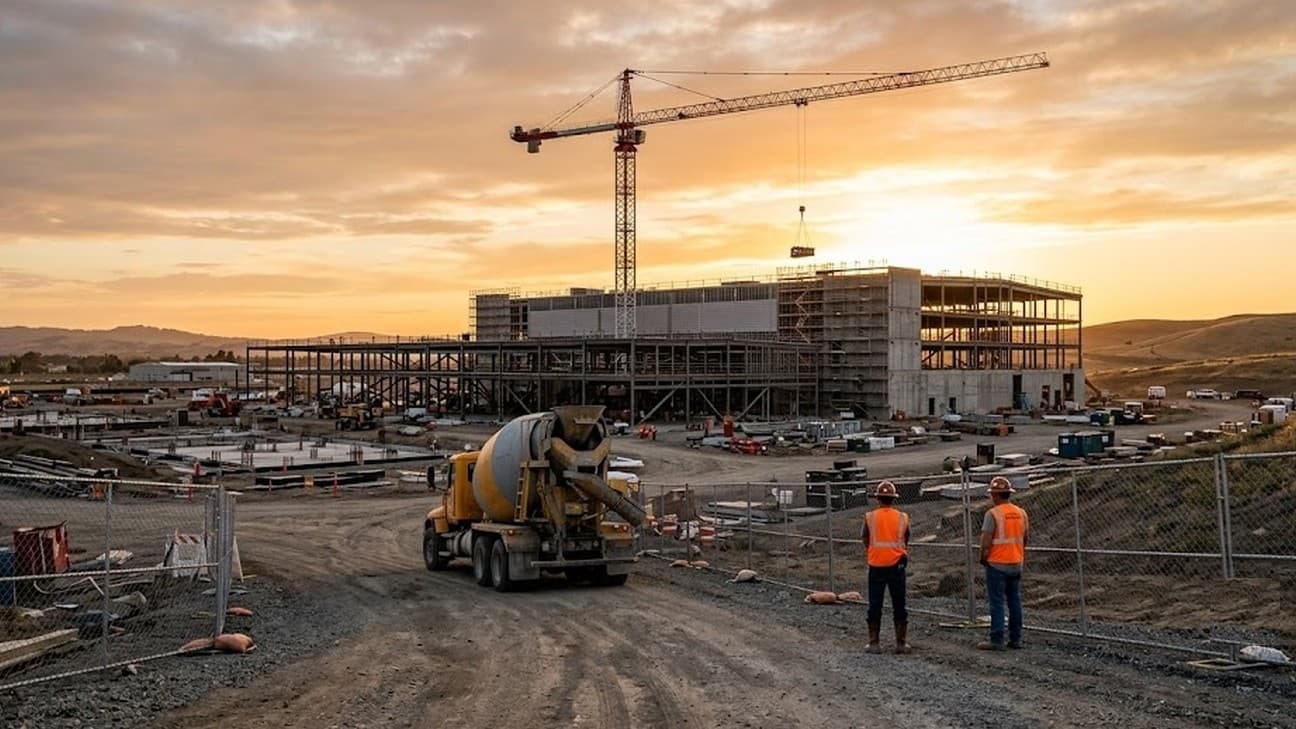
An active data-centre campus construction site at golden hour, a tower crane and concrete mixer truck beside a partially completed steel-framed building, two hi-vis construction workers near the site entrance
Galaxy Data Center raised $250m for gigawatt-scale AI campuses anchored on Singapore, as the binding constraint in the region's AI build-out shifts from chips to power and land.

Malaysia's respond.io Raises a $62.5m Series B to Take Its AI Messaging Platform Into North America and Europe

respond.io, the Malaysia-founded customer-conversation platform, closed a $62.5 million Series B led by New York's Camber Partners, with participation from Endeavor Catalyst and existing investors. The company manages business messaging across WhatsApp, Instagram, TikTok, Messenger, Telegram, WeChat, email and voice from a single interface, increasingly orchestrated by AI agents.

The round lands on unusually strong unit economics for a Southeast Asian software company: $35 million in annual recurring revenue, 169% year-on-year growth, a 30% margin, and roughly 2 billion messages processed each quarter across more than 10,000 businesses in 180-plus countries. Management framed the raise as offensive rather than necessary — the company is profitable — with proceeds earmarked for expansion into North America and Europe, which it expects to become its largest combined market within a few years, and for acquisitions of complementary technology or teams.

The US Development Finance Corporation Anchors a $3b Energy Infrastructure Platform Across South and Southeast Asia

I Squared Capital and the US International Development Finance Corporation (DFC) launched a $3 billion platform to build critical energy infrastructure across South and Southeast Asia, split evenly at $1.5 billion each. The DFC described it as the single largest project investment in its history. The mandate centres on expanding liquefied natural gas and petroleum import, storage and transportation infrastructure, explicitly to widen access to US LNG and related energy exports in the region.

The framing is geopolitical as much as commercial. DFC's Conor Coleman cast the deal as "strengthening allies, opening markets, and building a more secure and resilient Indo-Pacific," while I Squared's Sadek Wahba called energy security "one of the defining infrastructure challenges of our time." It builds on a relationship dating to 2016, through which the two have already mobilised roughly $2 billion for infrastructure across South and Southeast Asia and Latin America.

Galaxy Data Center Secures $250m to Build Gigawatt-Scale AI Campuses Anchored on Singapore

Galaxy Data Center, a London- and Singapore-based developer of hyperscale AI data-centre infrastructure, secured $250 million in an initial strategic financing round from an unnamed international investment institution. The capital funds platform development, project execution and high-density deployment, with the company planning gigawatt-scale AI data-centre campuses across Southeast Asia, using Singapore as its regional hub. The announcement emphasised green-energy integration and operational efficiency rather than disclosing specific capacity figures or country sites.

Chief executive Arthur Yang pointed to "rapidly evolving requirements from AI and cloud service clients" around capacity, delivery certainty and energy efficiency — the recurring bottlenecks as AI workloads outgrow legacy facilities. The raise lands the same week as the I Squared–DFC energy platform, underscoring that capital is flowing simultaneously into compute and the power that feeds it.

Eyes on the Day Ahead

Watch the deal flow out of TNGlobal and DealStreetAsia over the next 24–48 hours for follow-on detail: respond.io's named acquisition targets, the first country allocation under the I Squared–DFC platform, and any disclosed site or power commitment from Galaxy Data Center. On the policy side, keep an eye on Bank Negara Malaysia's Digital Asset Innovation Hub timeline — clearer stablecoin and tokenised-deposit rules are flagged for later in 2026, and any interim guidance would reset the region's digital-money roadmap.

Layer 7 Ventures is a research-driven firm focused on AI and cryptocurrency in Southeast Asia. Views expressed are those of the firm and do not constitute investment advice.
More Research

A wide editorial photograph of an institutional government building facade in Hanoi at pre-dawn blue hour, with a couple of anonymous office workers crossing the forecourt, small in frame relative to the building, no legible text or logos.
Daily Brief · Crypto · AI · FinTech4 min

SEA Daily Brief: Vietnam Fines Unlicensed Crypto Trading, S&P Says Malaysia's Data-Centre Boom Needs $20 Billion, and Singapore's Whale Raises $40 Million More

Vietnam signed Decree 284/2026/ND-CP, imposing its first-ever fines on domestic investors trading crypto assets outside licensed platforms, effective September 1 as five shortlisted exchanges prepare to launch. S&P Global Ratings said Malaysia can nearly triple its data-centre capacity by 2030 but needs roughly $20 billion in financing beyond what domestic banks can supply. And Singapore's Whale raised a $40 million Series C extension from Hong Kong, Japanese, Thai and Korean strategic investors to fund its push into the Middle East and Europe.

A wide editorial photograph of a high-density data centre server corridor with exposed liquid-cooling manifolds and copper pipes under cool blue LED status lights, a technician in a hi-vis vest seen from behind mid-stride down the aisle checking a tablet, no legible text or logos.
Daily Brief · AI · Crypto · FinTech4 min

SEA Daily Brief: IFC Backs a $175 Million Johor Data-Centre Expansion, Malaysia Reaffirms Binance Remains Unlicensed, and Singapore's SimpleAI Raises $15 Million to Buy Accounting Firms

The International Finance Corporation approved up to $175 million in combined debt and equity financing for AirTrunk's two hyperscale data centres in Johor Bahru, adding multilateral development capital to Malaysia's AI-infrastructure build-out. Malaysia's Ministry of Finance told Parliament that Binance remains unlicensed and blocked in the country, clarifying that its 2024 removal from the Securities Commission's Investor Alert List was never an authorization to operate. In Singapore, AI accounting-automation startup SimpleAI raised $15 million — a $5 million seed round plus a $10 million debt facility — to acquire small accounting and fund-administration firms across the region.

A wide aerial editorial photograph of a mixed-use waterfront development with distinctive high-rise towers and canals at overcast midday, small distant pedestrians crossing a plaza far below, no legible text or logos.
Daily Brief · Geopolitics · Crypto · Real Estate4 min

SEA Daily Brief: An Immigration Raid Freezes a $122 Million Malaysia Bet, SBI Closes Its Coinhako Buyout, and Wahed Opens Fractional Property Investing

An immigration check at Balaji Srinivasan's Network School campus in Johor's Forest City has frozen a $122 million expansion pending assurances from Prime Minister Anwar Ibrahim's office, even after authorities cleared every one of the 266 foreign residents checked. In Singapore, SBI Holdings closed its majority buyout of Coinhako a day after partnering with Ondo Finance to tokenize Japanese equities through its JPYSC stablecoin, using MAS-regulated infrastructure as a settlement layer it can't yet build at home. And in Malaysia, Wahed opened its Securities Commission sandbox-stage fractional real estate platform to the public, letting investors buy into individual properties from RM500.

Stay Informed

Get the next report in your inbox.