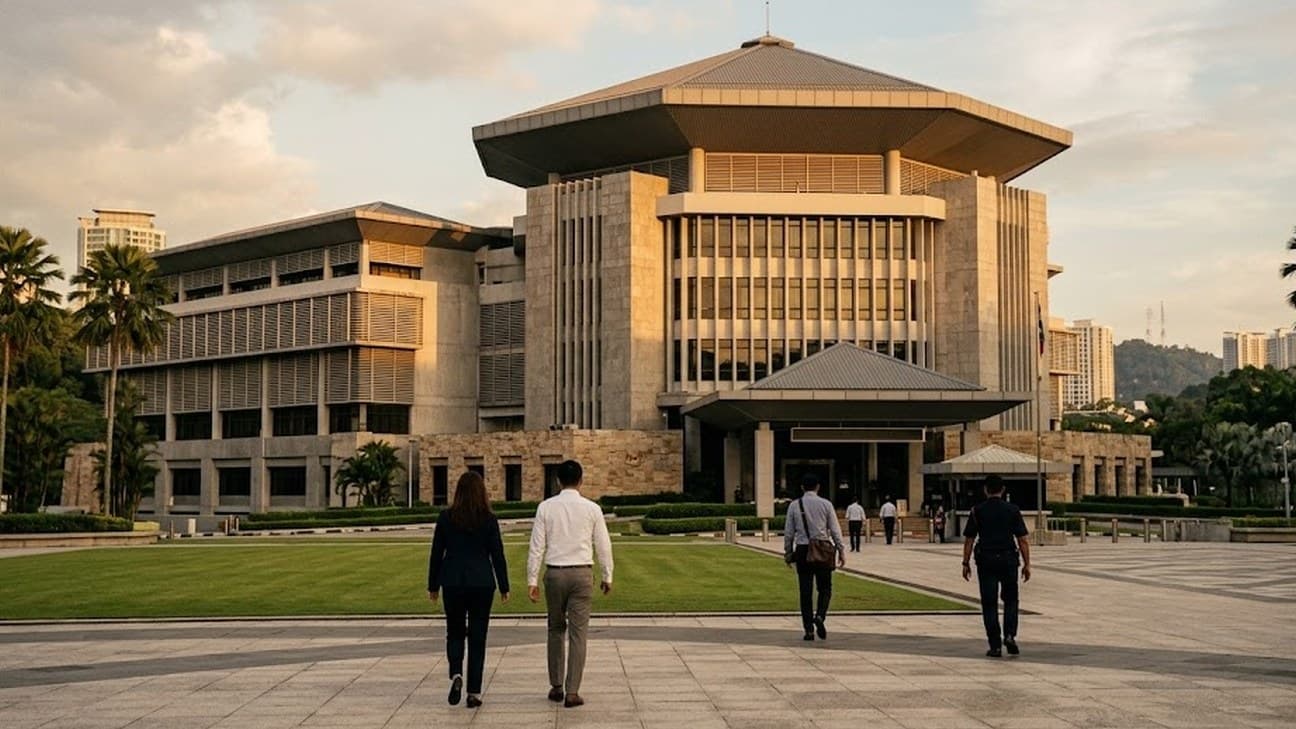
Indonesia's Danantara Raises $1.5b in a 3x-Oversubscribed Debut Dollar Bond, With US Investors Leading the Ten-Year
Danantara, Indonesia's sovereign wealth fund (Daya Anagata Nusantara), priced its inaugural international bond, raising US$1.5 billion in two equal US$750 million tranches — a five-year at a 5.35% yield and a ten-year at 5.95%. The deal was upsized from an initial US$1 billion target after the orderbook peaked at roughly US$4.6 billion during bookbuilding, more than three times the issuance size. Citigroup, DBS Bank, HSBC, Mandiri Sekuritas and Standard Chartered acted as joint bookrunners and lead managers; settlement is scheduled for 18 June. The tranches priced at spreads of roughly 32 to 34 basis points over Indonesia's sovereign curve.
The investor geography was the notable detail. For the ten-year tranche, US accounts took 52%, Europe and the Middle East 31% and Asia 17% — a sharp departure for an Indonesian credit that historically draws its demand from Asian buyers. CEO Rosan Roeslani ran an international roadshow presenting to 122 global investors ahead of pricing, and the fund framed the Western-led orderbook as evidence of institutional confidence in the new vehicle.
Singapore's Revised Single Family Office Framework Takes Effect, Swapping Case-by-Case Exemptions for a Class Exemption
The Monetary Authority of Singapore's revised framework for Single Family Offices (SFOs) took effect on 15 June 2026. The new approach is described as structure-agnostic, granting a straight-through class exemption from fund-management licensing to all qualifying SFOs operating in Singapore, in place of the prior patchwork of case-by-case licensing exemptions. To qualify, an SFO must notify MAS of its operations — within 14 days of commencing business — maintain an account with a MAS-licensed bank, and file a straightforward annual return reporting total assets under management and the name of its bank. As part of the notification, an SFO is expected to obtain a legal opinion supporting its exemption qualification.
Existing SFOs have a one-year transitional period, to 15 June 2027, to come into line with the revised rules; the licensing exemption an SFO currently relies on is withdrawn either when it files its initial notification or at the end of the transition, whichever comes first. MAS framed the changes — which incorporate feedback from its earlier public consultation — as streamlining entry while sharpening its visibility over a fast-growing pool of private capital.
Eight in Ten Malaysians Say AI Saves Them Time, but Confidence in Economy-Wide Benefit Splits — Ipsos
An Ipsos poll published on 16 June found that eight in ten Malaysians say AI tools have helped them save time and improve efficiency, and that more than 60% are comfortable with AI recommending treatments or diagnosing symptoms — both above global averages. Malaysians' optimism about AI's impact on daily life over the next three to five years runs well ahead of levels recorded in Western Europe and the United States, placing the country among Asia's more enthusiastic adopters.
The gap sits between the personal and the systemic: while most Malaysians believe AI is improving their own work, only around half are confident it will benefit the broader job market and the economy. That mirrors the regional reading from the Ipsos AI Monitor 2026, in which 62% of workers across 32 countries said AI had saved them time at work over the past year even as excitement and unease about the technology converged toward parity globally.
Eyes on the Day Ahead
Near-term, Danantara's debut bond settles on 18 June, after which attention turns to how — and how quickly — the fund deploys the dollar proceeds into the infrastructure and downstream bets it has been anchoring. In Singapore, the one-year transition clock on the revised Single Family Office framework is now running, and the first notifications under the new class exemption will be the early read on how many SFOs the lighter-touch regime pulls into the disclosure net. With no other hard regulatory deadline pinned to the next 24-48 hours, the watch list over the coming few days is whether other state-linked Southeast Asian issuers move to follow Danantara into a receptive dollar market.
Layer 7 Ventures is a research-driven firm focused on AI and cryptocurrency in Southeast Asia. Views expressed are those of the firm and do not constitute investment advice.