Singapore Launches the 17-Nation GUIDE Framework to Defend Southeast Asia's Subsea Cable Backbone — Without the US or China
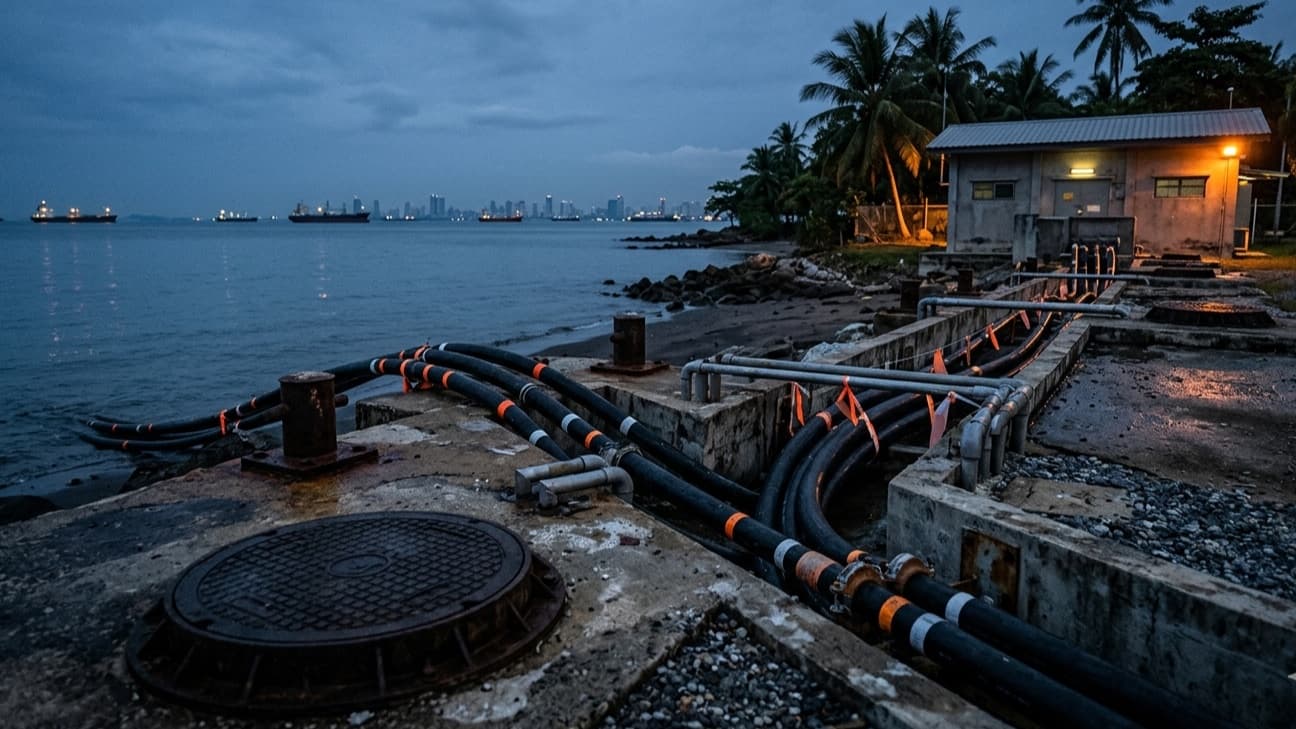
On May 30, on the sidelines of the 23rd Shangri-La Dialogue in Singapore, Defence Minister Chan Chun Sing launched the Guiding Principles for Underwater Infrastructure Defence Exchanges (GUIDE), a 17-nation framework to protect subsea telecommunications and energy cables from sabotage and accidental damage. Five Southeast Asian states — Singapore, Malaysia, Brunei, the Philippines and Thailand — joined alongside Australia, New Zealand, the United Kingdom, Qatar and seven European countries. The framework is voluntary and non-binding: it commits members to share early-warning information, technical knowledge and crisis-response practices rather than to any new legal obligation under international law.
Chan framed the rationale bluntly — "any attack on one part of the network is an attack on the entire network" — and pointed to the difficulty of responding outside territorial waters, where attribution, jurisdiction and enforcement are murky. The United States and China, the two powers with the largest stakes in global cable infrastructure, were notably absent from the list; analysts cautioned that their non-participation limits the pact's practical reach.
FPT Signs Six AI and Digital-Transformation Partnerships With Major Thai and Singaporean Corporates
During Vietnamese President To Lam's May 29 state visit to Singapore, technology group FPT signed six AI and digital-transformation partnerships with leading Thai and Singaporean corporations — among them Thailand's Charoen Pokphand Foods and SCG Group, and Singapore's United Overseas Bank, Sembcorp Industries, SATS and ComfortDelGro. The deals, exchanged around the Vietnam–Singapore Tech Connect Forum, span AI-driven manufacturing optimisation, predictive maintenance, smart supply chains, banking modernisation, data-centre and smart-city development, and logistics. The UOB tie-up — covering AI in banking, digital lending, payments and embedded finance — is to be detailed within 90 days.
FPT chief executive Nguyen Van Khoa framed the constraint as adoption, not access: "The biggest challenge is not access to technology, but embedding AI into the right processes, workforce and governance models." The cluster of agreements positions FPT as a regional AI-integration contractor rather than a domestic IT-services house, exporting Vietnamese engineering capacity into Thailand's and Singapore's largest industrial and financial groups.
CATL and Malaysia's Leaders Energy Sign a Battery-Storage MoU as ENERtec KL Spotlights AI's Power Bill
ENERtec Asia 2026 opened at the Kuala Lumpur Convention Centre on June 3, running through June 5, and the opening day's headline deal was a memorandum of understanding between CATL — the world's largest battery and energy-storage maker — and Leaders Energy, a Malaysian renewable-energy developer, to strengthen large-scale battery energy storage and clean-energy infrastructure across the region. The event, themed "Energy & AI: The Synergy for Energy Transition," was expected to draw more than 12,000 professionals from 60 countries and regions, with grid resilience and the power demands of AI data centres at the centre of the agenda.
The framing was explicit: organisers described renewable energy and intelligent storage as "critical infrastructure for economic growth" rather than a future consideration, as AI, data centres and advanced manufacturing drive Malaysian electricity demand. The MoU is a scope-setting agreement rather than a financed project, but it points at the supply-side response to a constraint Layer 7 flagged in last week's weekly signal — that the grid, not capital or chips, is becoming the binding limit on Southeast Asia's data-centre build-out.
Eyes on the Day Ahead
Nothing is hard-docketed in the next 24 hours, so watch the next few days. ENERtec Asia runs in Kuala Lumpur through June 5, so expect further energy-and-AI infrastructure announcements and MoUs from the show floor. On GUIDE, the signal to track is whether any member moves from the voluntary framework toward concrete joint cable-monitoring or information-sharing arrangements — and whether the US or China responds to a regional security pact built without them. And on FPT's partnerships, the 90-day window to detail the UOB tie-up is the first test of whether this week's signings convert into scoped, funded programmes.
Layer 7 Ventures is a research-driven firm focused on AI and cryptocurrency in Southeast Asia. Views expressed are those of the firm and do not constitute investment advice.